


Antique Hardwood Chair
When you handle an antique hardwood chair, you are holding centuries of joinery, from Qing Dynasty thrones to Victorian dining seats.
Antique Hardwood Chair
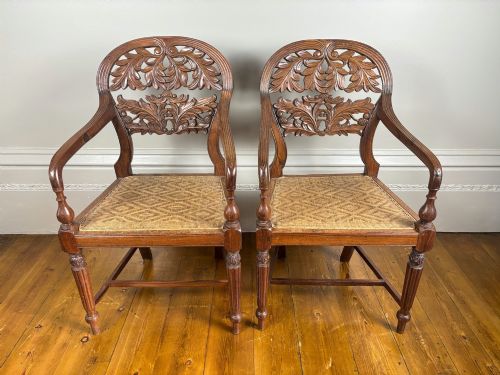
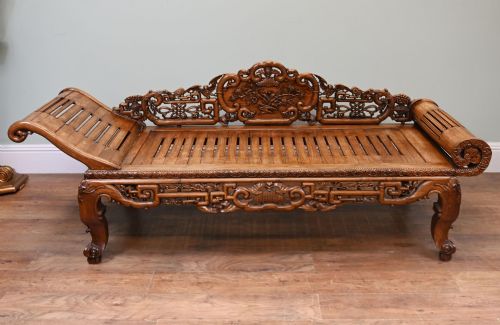
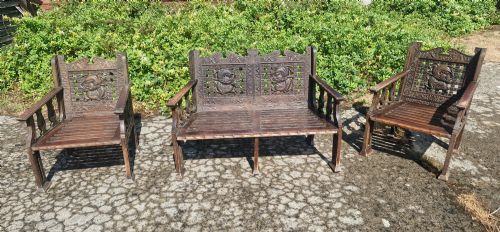
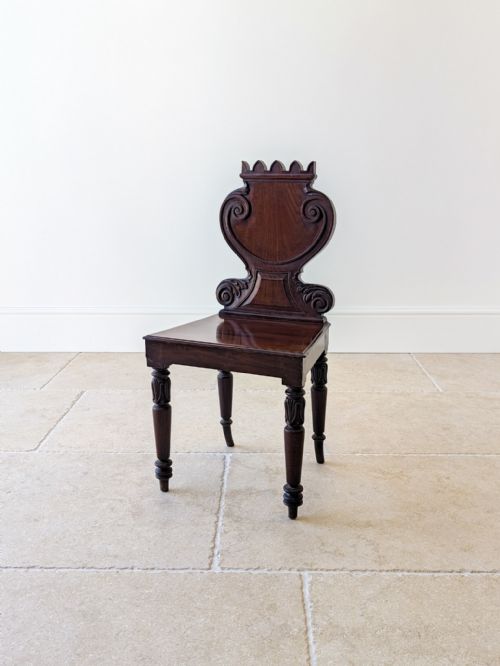
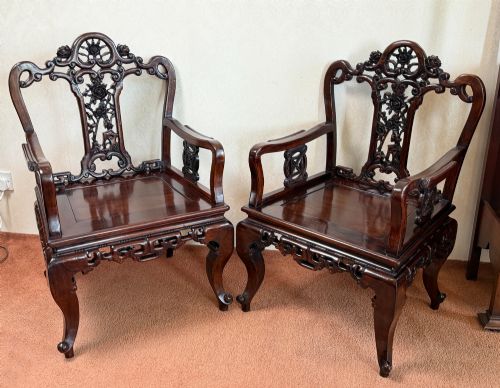
An antique hardwood chair encompasses diverse seating forms, ranging from dining chairs and side chairs to armchairs, folding horseshoe-back throne chairs, and benches. Buyers seeking this phrase encounter pieces originating from China, India, Burma, and Britain across periods spanning the seventeenth through the early twentieth centuries.
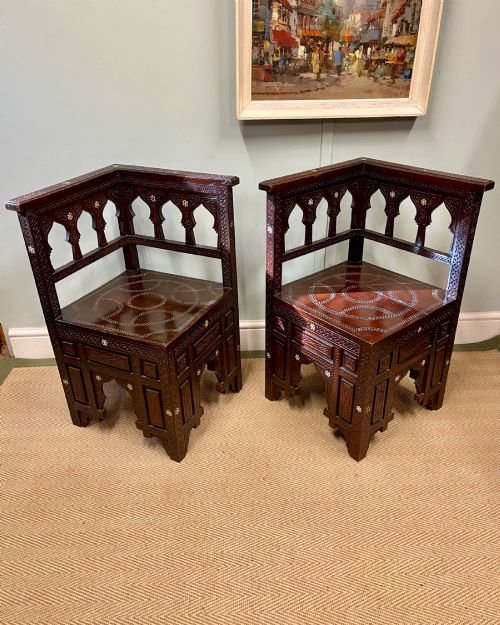
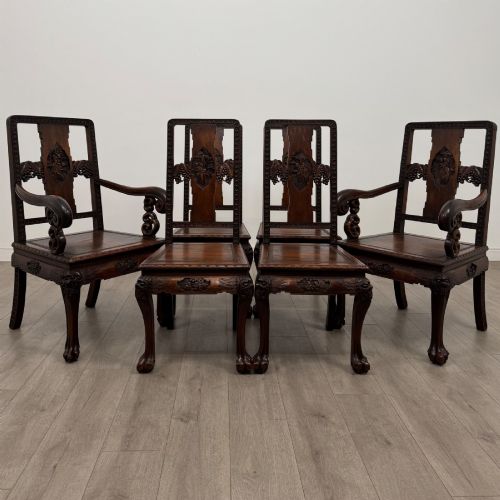
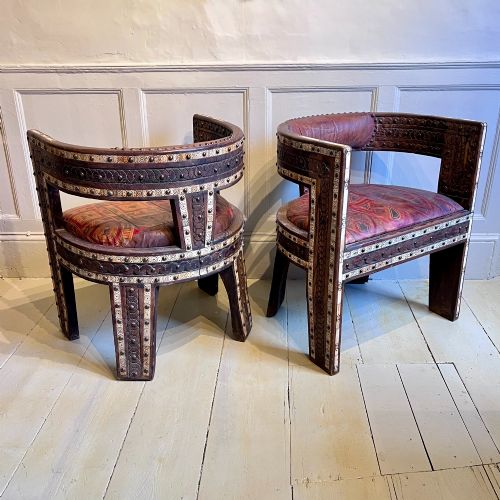
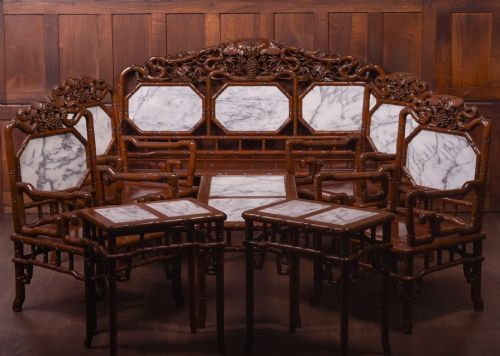
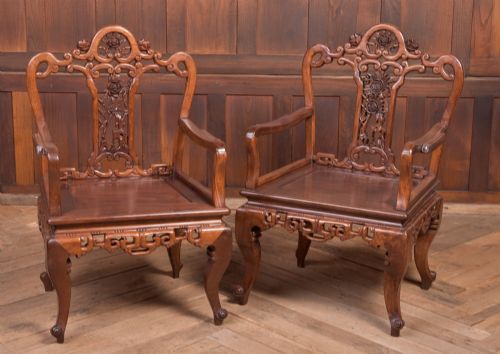
The selections on this page lean heavily towards Chinese export and Qing Dynasty designs, alongside Anglo-Indian and Moorish revival pieces. You will find sturdy elm, dense rosewood, and teak shaped into horseshoe backs, carved parlour suites, and hall furniture.
How They Were Made
Cabinetmakers utilised heavy timbers such as rosewood, teak, ebony, huanghuali, and elm, relying on dense grain and natural weight for stability rather than metal fasteners. Frames were constructed using precise mortise and tenon joinery that allowed the timber to expand and contract naturally.
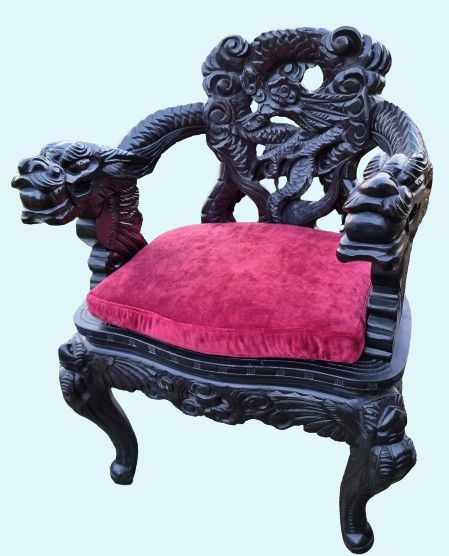
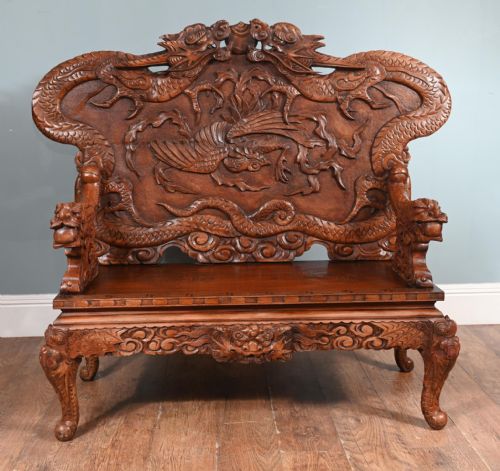
Surface ornamentation involved intricate hand-carving depicting dragons, foliage, and geometric patterns, occasionally augmented with brass inlay, marble inserts, or cane seating panels. Lacquer finishes and cinnabar were also applied to protect the timber and add depth to the carved decoration.
Antique Hardwood Chair Retail Price Guide 2026
Typical asking prices for hardwood chair among the pieces listed under this phrase on Sellingantiques today, from the lower quarter to the upper quarter. They describe what is for sale here now, not the wider market.
What Varies in Quality
The distinction between ordinary and exceptional examples rests upon the crispness of the hand-carving and the integrity of the original timber. Deeply undercut, spirited dragon motifs and well-preserved joints indicate superior workshop standards from periods like the Qing Dynasty.
Proportion and balance dictate the appeal of an antique hardwood chair, where eccentric curves and correct ergonomic proportions elevate a piece far above stiffer, plain-grained counterparts. Original surfaces, untouched patination, and matching sets command greater interest than heavily restored or mismatched items.
The Antique Hardwood Chair Glossary
- Hardwood
- Slow-growing timber from deciduous trees, prized in antique seating for its density, durability, and resistance to wear. Woods like rosewood, teak, and elm fall into this category.
- Horseshoe-back
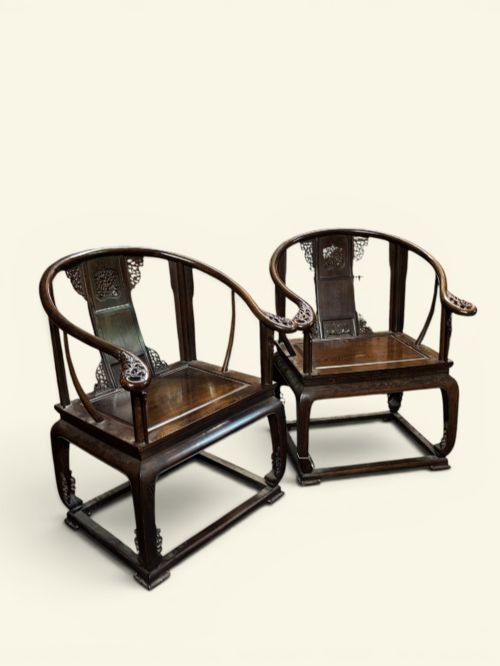
- A traditional chair design featuring a continuous curved top rail that sweeps down to form the armrests. This form provides ergonomic support and appears frequently in Chinese throne chairs.
- Carver
- An armchair designed to match a set of smaller side chairs, typically placed at the head of a dining table. They offer wider proportions and elbow rests.
- Cane
- Woven rattan material used for seat panels and backrests to provide flexible support. It requires skilled hand-weaving to maintain tension across the wooden frame.
- Hongmu
- A translation meaning red wood, referring to various dense tropical hardwoods used in traditional Chinese furniture. It develops a rich, dark patina over centuries of handling.
Antique Hardwood Chair: Frequently Asked Questions
How do I identify a Qing Dynasty chair?
Look for dense hardwoods like rosewood or huanghuali combined with traditional joinery and motifs such as carved dragons or intricate scrolling. These pieces often feature horseshoe-back designs or throne proportions.
Examine the patination on the timber and the depth of the hand-carving. Genuine examples show natural wear patterns consistent with age rather than uniform machine finishing.
Where should I place an antique hardwood chair?
These chairs suit hallways, studies, and living rooms where their sculptural forms and carved details can be appreciated without heavy daily wear. Pair a single armchair with a side table or incorporate dining chairs around a table.
Keep them away from direct heat sources and strong sunlight to prevent the dense timber from drying out or splitting. Stable indoor humidity preserves both the wood and any cane inserts.
What is an Anglo-Indian chair?
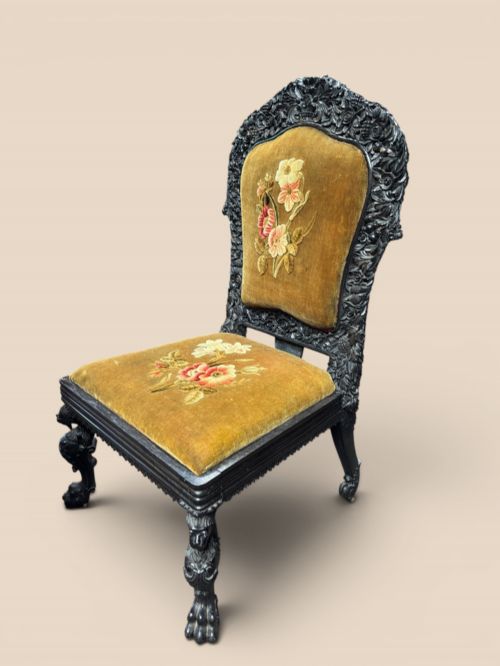
An Anglo-Indian chair combines British furniture forms with traditional Indian carving techniques and native timbers such as rosewood and ebony. They emerged during the colonial period as craftsmen adapted local styles for European tastes.
Expect rich surface decoration featuring floral motifs, pierced panels, and dense relief work. These pieces demonstrate a distinct cross-cultural exchange in design and construction.
How do I care for antique hardwood?
Dust the timber regularly with a soft, dry cloth to prevent grit accumulation in the carved recesses. Avoid silicone-based polishes that can build up a sticky film over the original finish.
Feed dry timber occasionally with appropriate wax to maintain the natural lustre of the grain. Ensure the room environment remains stable to protect joints and prevent warping in heavy woods.