



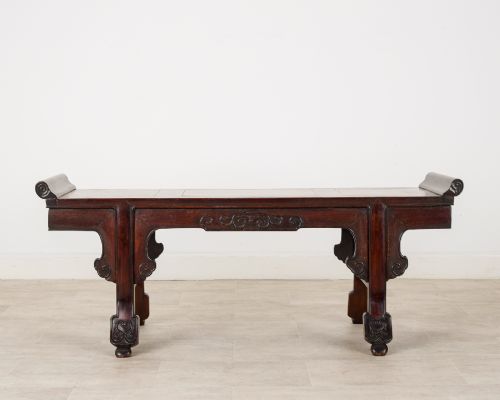

Antique Hardwood Bench
An antique hardwood bench brings dense timber grain and regional carving traditions into a room, offering substantial seating with centuries of history.
Antique Hardwood Bench
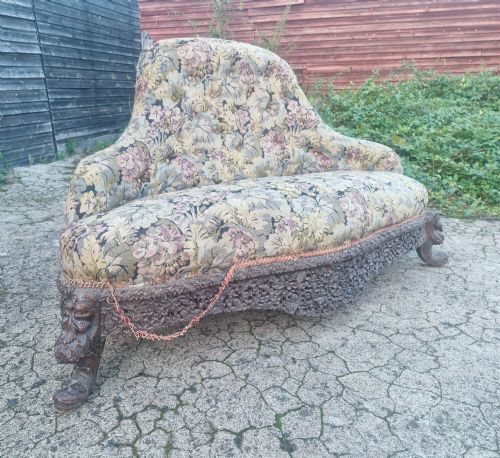
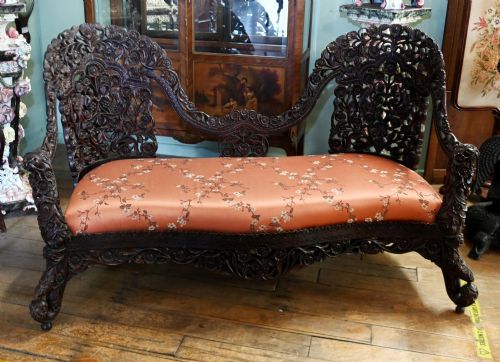
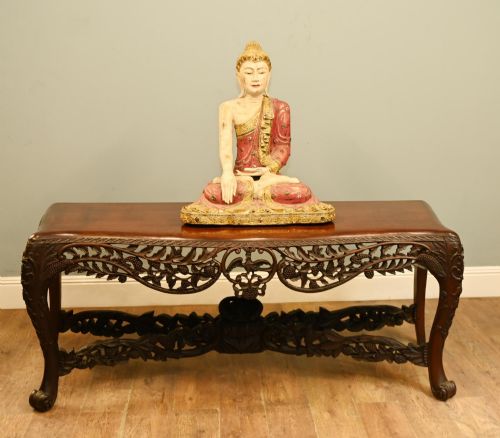
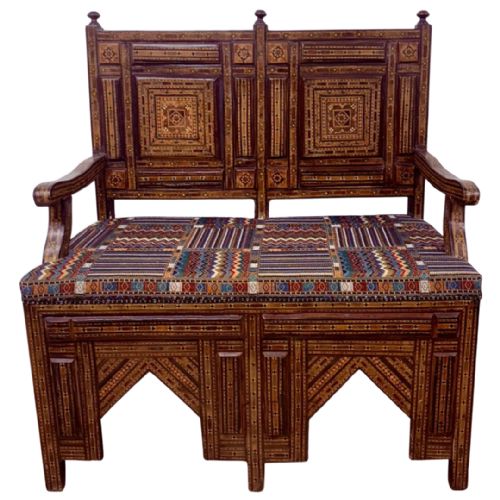
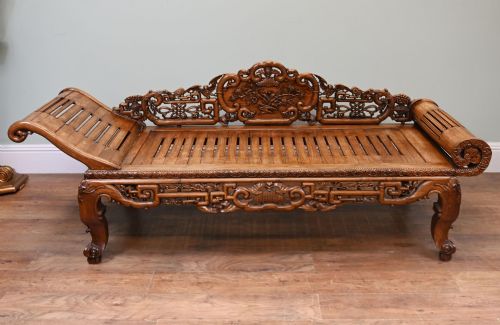
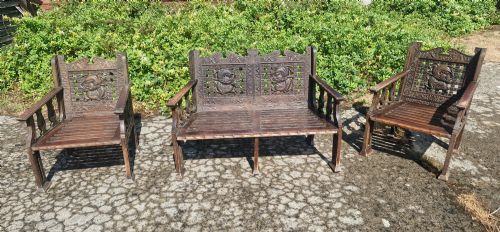
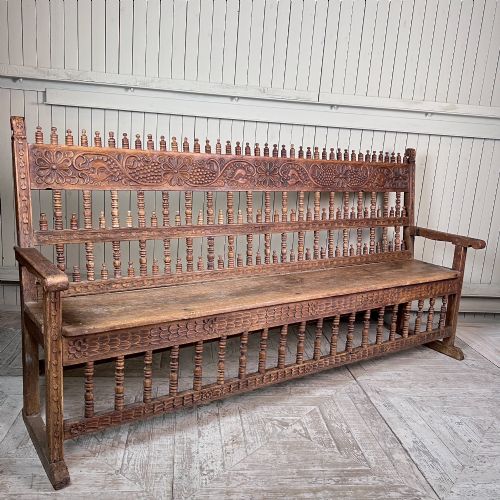
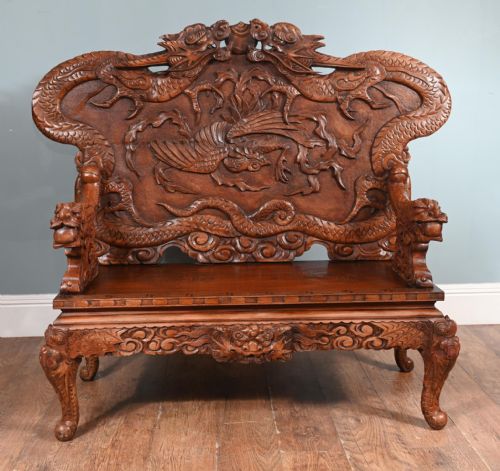
An antique hardwood bench encompasses heavily carved Chinese Qing Dynasty daybeds, rustic European pig benches, and inlaid Syrian or Anglo-Indian hall seating. These pieces serve as functional seating or low tables within domestic interiors.
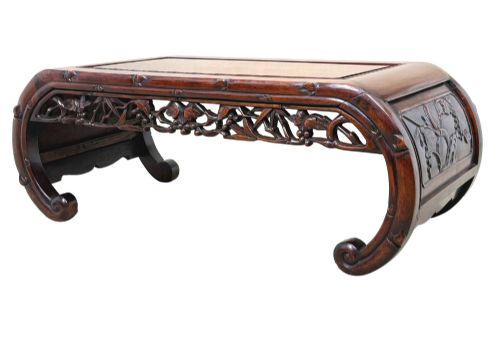
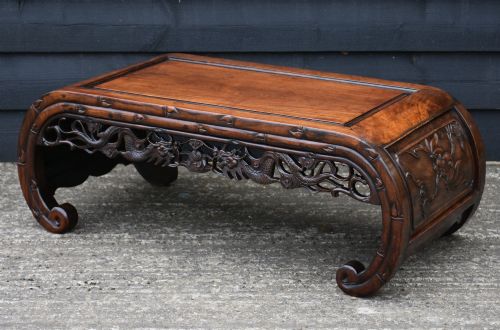
The most common examples on this page originate from Chinese workshops, taking the form of opium beds, altar benches, and scroll-end kang tables utilising dense timbers.
Regional variations span Spanish Colonial forms, Hungarian oak and hardwood boards, and Burmese conservatory suites, connecting diverse vernacular traditions through durable timber construction.
How they were made
Maker workshops utilised dense hardwoods such as teak, mahogany, huali, and hongmu, often shaped by hand into plank tops, structural frames, and deep relief carvings.
Surface ornamentation involved mother-of-pearl inlay, cinnabar lacquer, brass decoration, and cane paneling, applied to structural joints assembled without modern metal fasteners.
Antique Hardwood Bench Retail Price Guide 2026
Typical asking prices for hardwood bench among the pieces listed under this phrase on Sellingantiques today, from the lower quarter to the upper quarter. They describe what is for sale here now, not the wider market.
Listings feature items spanning the 18th century through the 1930s, incorporating materials such as marble, fabric, brass, and cane.
What varies in quality
Quality depends upon the density and selection of the timber, alongside the depth and crispness of the hand-carved motifs found on the apron and backrest.
The integrity of traditional joinery and the survival of original decorative elements, such as inlaid mother-of-pearl or lacquer, determine the standing of individual examples.
The Antique Hardwood Bench Glossary
- Kang
- A low platform bed or seating area traditionally used in Chinese domestic spaces for sitting or resting. These platforms often feature carved aprons and scroll ends.
- Huali
- A fragrant, durable hardwood utilised in Chinese furniture making during the Qing Dynasty. It displays distinct grain patterns and takes a fine polish.
- Hongmu
- A category of dense, dark Asian hardwoods translated literally as red wood. Craftsmen employed it for substantial seating and tables.
- Pig bench
- A narrow, utilitarian European vernacular form constructed from oak and hardwood. These robust planks now function frequently as low coffee tables.
- Cinnabar
- A mineral pigment applied in multiple layers of lacquer and carved with intricate motifs. It appears on select decorative seating surfaces.
Antique Hardwood Bench: Frequently Asked Questions
How were antique hardwood benches used?
These pieces functioned primarily as seating, sleeping platforms, or low display surfaces within traditional households across Asia, Europe, and the Middle East. Lower forms served domestic duties for resting or dining, while hall benches occupied entryways for visitors.
Over time, many of these utilitarian items transitioned into living spaces as focal points for conversation or repurposed coffee tables.
What woods were used for these benches?
Carpenters selected dense timbers capable of supporting heavy structural loads and withstanding regional climates. Common materials include teak, oak, elm, rosewood, and specialised Asian hardwoods like huali and hongmu.
Surface treatments such as lacquer, wax, or plain weathering protected the underlying grain while developing patinas through decades of handling.
How do I identify a Qing Dynasty bench?
Qing Dynasty examples typically exhibit deep hand-carved motifs, scroll ends, and traditional joinery executed in dense tropical hardwoods. Formats include low opium beds, altar benches, and window seats with characteristic panel construction.
Details such as mother-of-pearl inlay or cinnabar lacquer provide further indicators of high-status workshops from this period.
Can I use an antique bench outdoors?
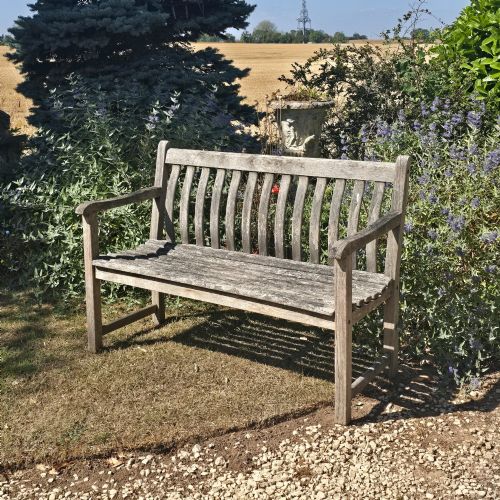
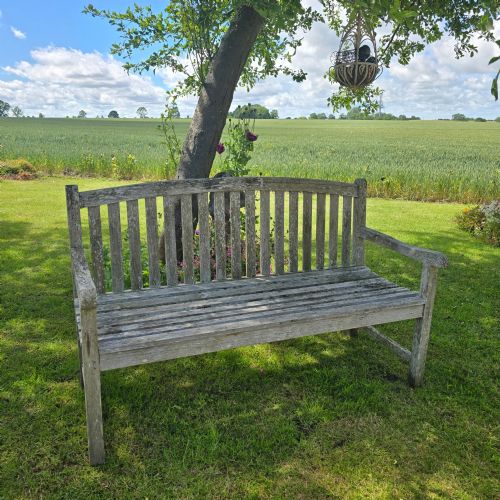
Weathered teak and garden-specific variants tolerate exterior placement when exposed to mild seasonal changes. These pieces naturally develop a silvery patina under outdoor elements.
Indoor forms, such as lacquered or inlaid seating, require protection from moisture and direct sunlight to preserve their delicate decorative surfaces.