



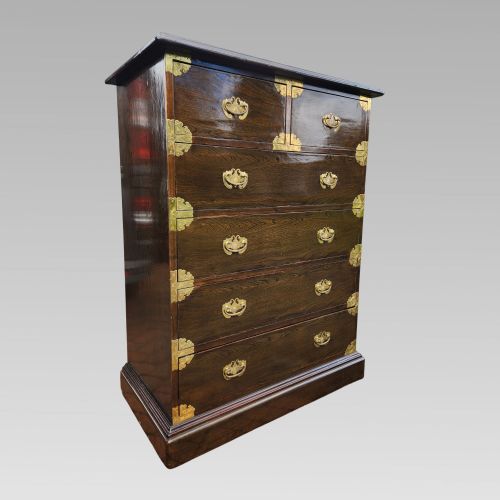


Antique Hardware Chest
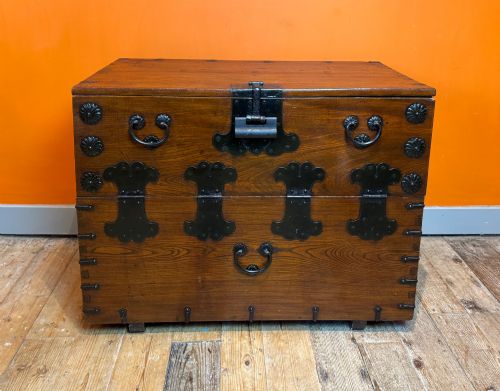
An antique hardware chest is a heavy storage piece fitted with robust metal mounts, built to organise tools, documents, or valuables.
Antique Hardware Chest
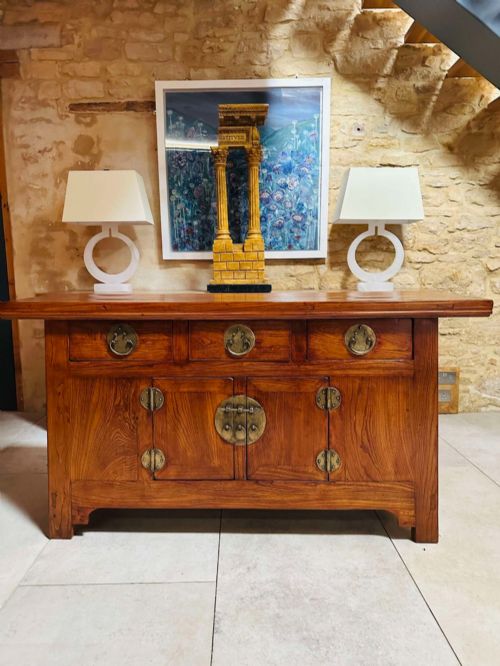
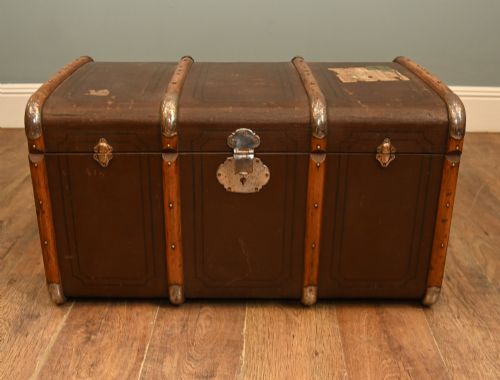
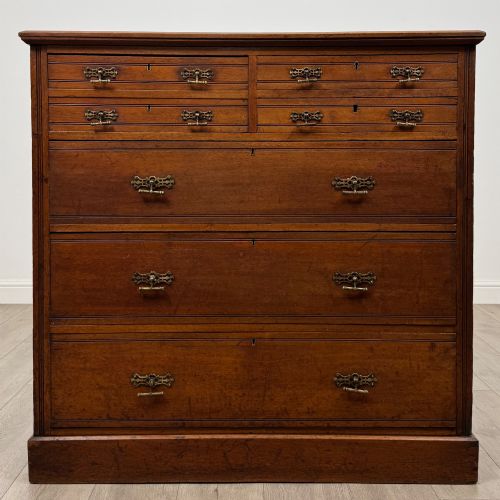
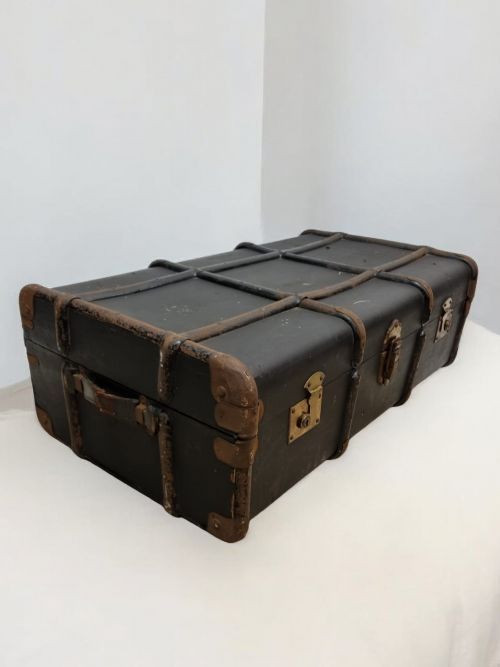
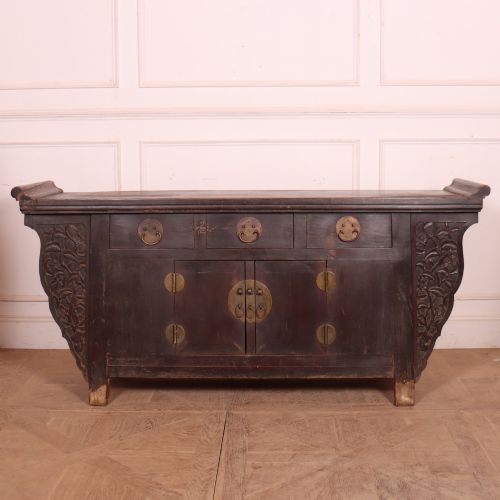
An antique hardware chest encompasses sturdy banks of drawers, travel trunks, and campaign storage units equipped with prominent metal fittings. These functional items cross international boundaries, spanning British campaign furniture, French commodes, and Asian tansu cabinets.
The selections on this page rely heavily on nineteenth-century pieces, alongside eighteenth-century walnut and oak examples. Buyers frequently encounter utilitarian banks of drawers from the Edwardian era and Victorian campaign chests designed for travel.
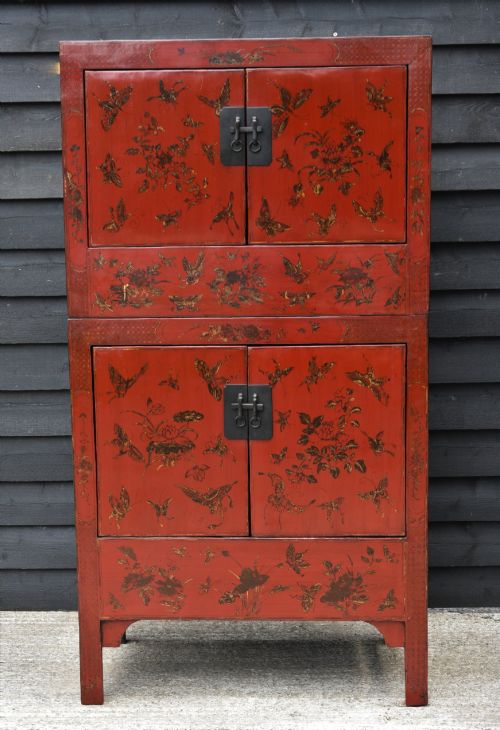
Forms vary widely from multi-drawer shop counters to lacquered storage trunks fitted with drop handles. Wood choices range from walnut and elm to aromatic camphor and cedar.
How they were made
Joinery relies on solid timbers like elm, pine, oak, and walnut, frequently assembled with dovetailed drawer construction to withstand heavy daily use. Camphor wood is utilised for its insect-repellent properties in travel trunks.
Metal hardware forms an integral part of the construction, featuring brass, iron, and bronze drop handles, corner plates, and strap hinges secured by hand. Surface finishes span French polish, red lacquer, and natural waxed wood.
Antique Hardware Chest Retail Price Guide 2026
Typical asking prices for hardware chest among the pieces listed under this phrase on Sellingantiques today, from the lower quarter to the upper quarter. They describe what is for sale here now, not the wider market.
Listings feature woods such as elm, pine, walnut, camphor wood, and cedar alongside iron and brass hardware.
What varies in quality
The standard of these chests depends upon the integrity of the original hardware and the crispness of the timber joinery. Retaining factory or original handmade brass mounts without replacement elevates a piece considerably.
Finer examples display careful selection of burr elm or figured walnut veneers matched across the drawer fronts. Construction depth and the survival of makers' marks or stamps further distinguish superior items.
Jas Shoolbred
The Antique Hardware Chest Glossary
- Campaign chest
- A portable storage unit made in two or more sections, designed for military officers and fitted with recessed brass handles and corner brackets. These pieces break down cleanly for travel.
- Tansu
- A traditional Japanese mobile storage chest constructed from woods such as cedar or elm, featuring elaborate iron or copper hardware. They were built for specific domestic uses like clothing or document storage.
- Commode
- A low French chest of drawers or cabinet dating often to the eighteenth century, frequently featuring serpentine fronts and decorative mounts. The term denotes a refined storage piece for the main rooms of a house.
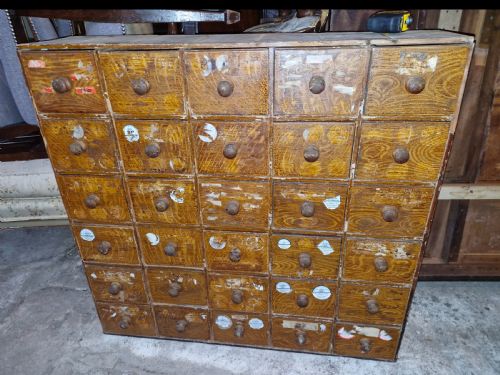
- Bank of drawers
- A utilitarian multi-drawer unit originally utilised in shops, offices, or workshops for inventory organisation. They prioritise heavy storage capacity over decorative veneer work.
Antique Hardware Chest: Frequently Asked Questions
What is an antique hardware chest?
An antique hardware chest is a utilitarian storage container defined by its visible metal handles, straps, and corner brackets. These pieces include shop drawer banks, campaign trunks, and tansu cabinets.
They were engineered to secure and transport goods or organise small items effectively in homes and workplaces.
How were tansu chests used?
Japanese tansu chests served multiple household purposes, storing garments, account books, and valuables safely. Their modular design allowed families to stack them or move them quickly during fires.
Craftsmen fitted them with heavy iron hardware to protect the corners and reinforce the structure.
How do I care for camphor wood?
Camphor wood requires regular dusting with a dry lint-free cloth and protection from direct sunlight to prevent the timber from drying out. Avoid harsh chemical polishes that can damage the natural wax or oil finish of the wood.
Maintaining stable room humidity helps preserve both the aromatic timber and the original brass hardware.
How do I date an antique chest?
Dating relies on examining the timber species, joinery techniques such as hand-cut dovetails, and the style of the metal hardware. Eighteenth-century pieces typically show different wood preparation compared to Edwardian shop fittings.
Associated stamps or structural quirks like hand-forged iron fixings also provide clear chronological clues.