

Antique Half Moon Tables
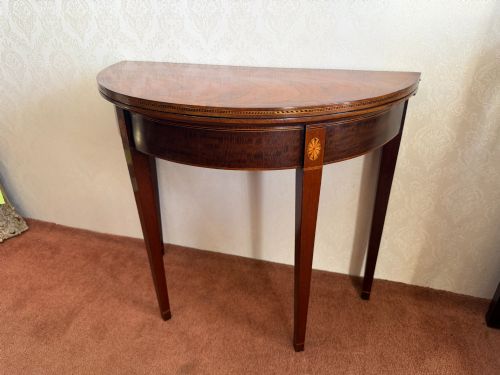
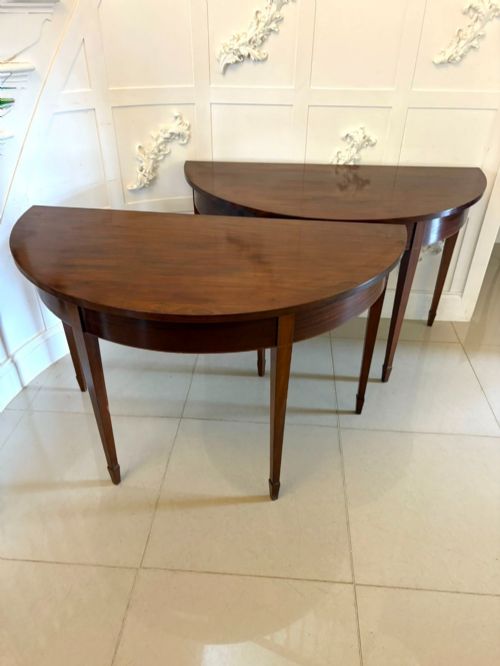
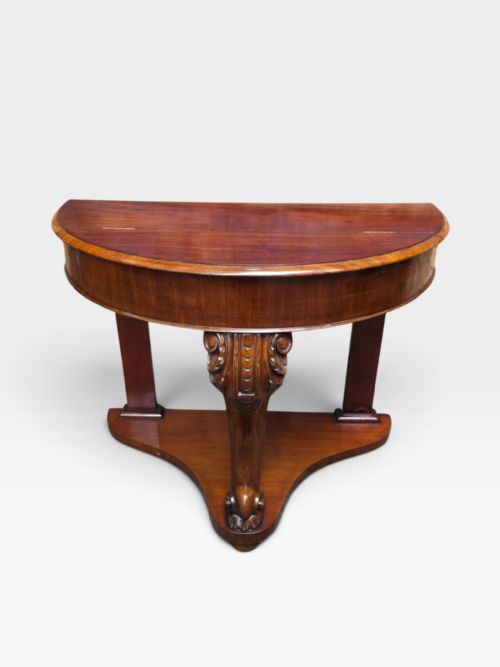
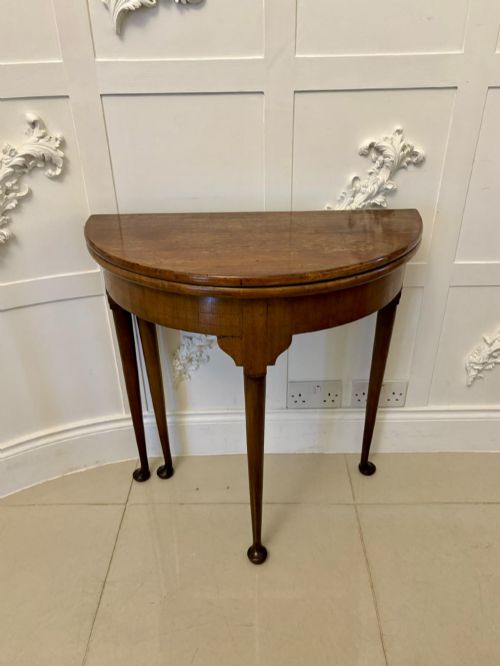
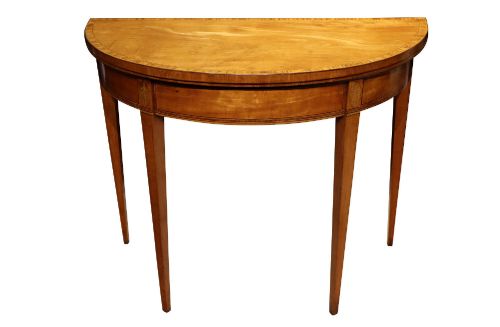
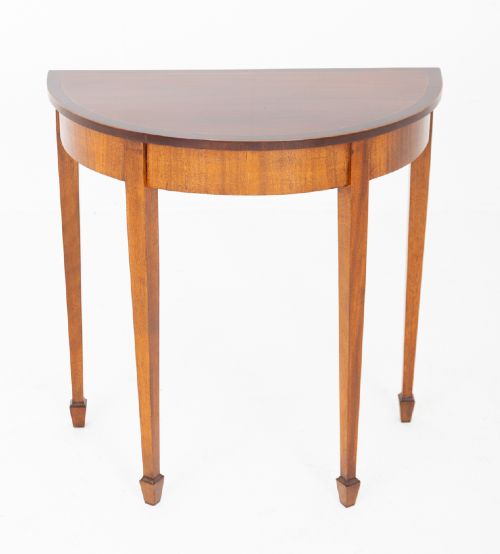
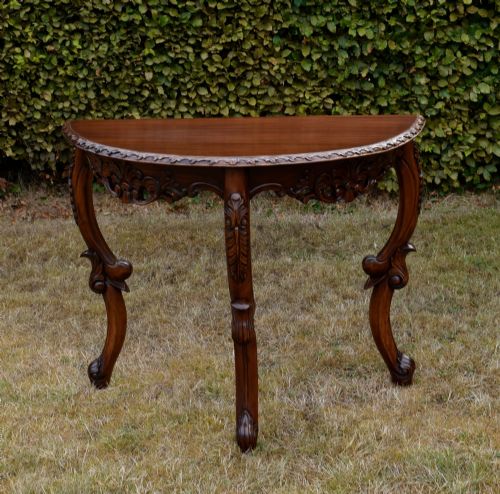
Antique half moon tables arrive as console and card tables shaped to fit neatly against flat walls.
Antique Half Moon Tables
Originating largely from British and European workshops, these items adapt architectural curves into practical domestic furniture. Georgian and Regency makers established the classic proportions, while Edwardian and later interpretations introduce lighter satinwood and painted treatments. The semicircular profile allows the furniture to save floor space while providing a distinct surface for display.
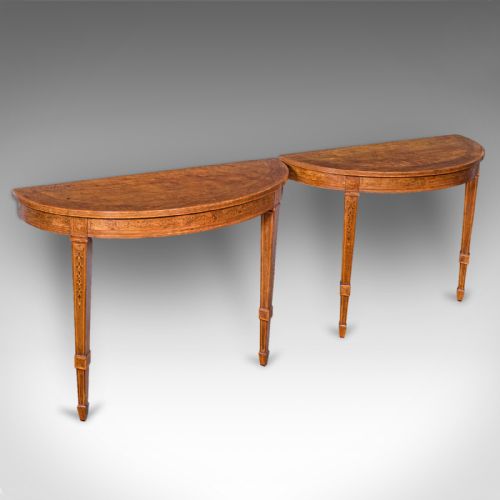
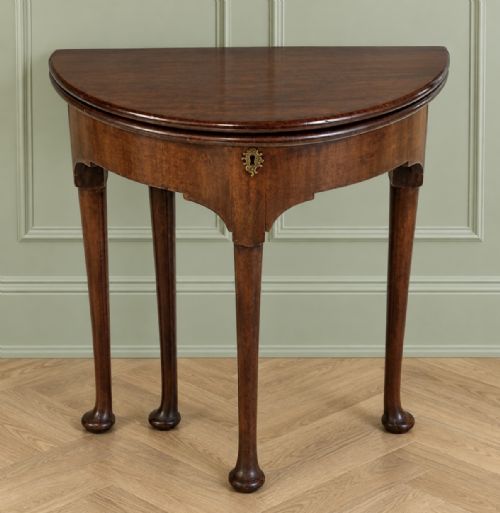
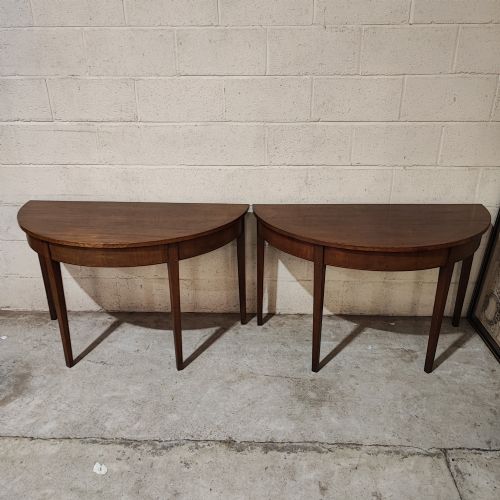
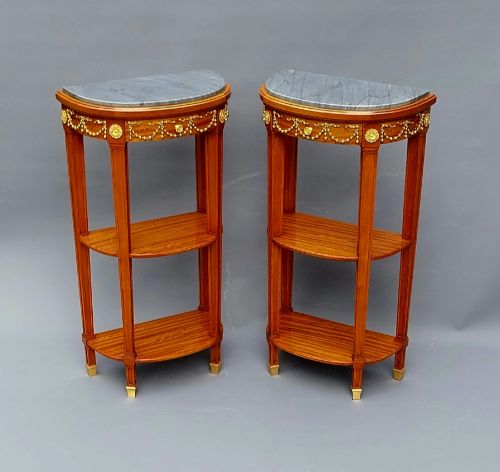
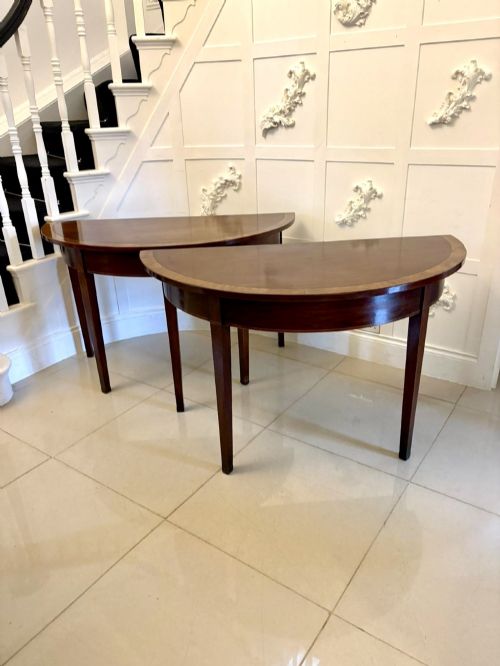
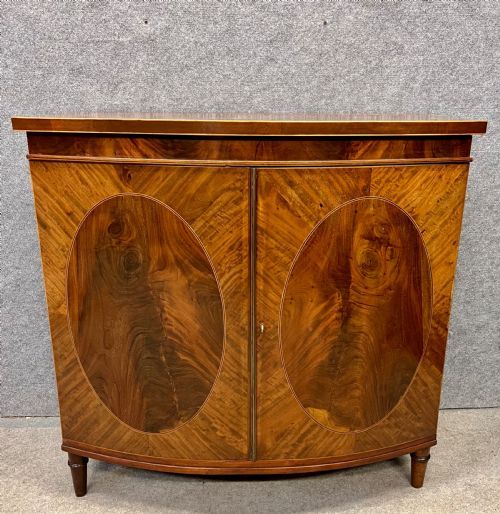
Card and games tables within this group often feature hinged tops that unfold to reveal baize-lined surfaces supported by swinging legs. Console variations remain fixed against the wall, sometimes appearing as matched pairs suitable for balancing a room's symmetry. Cabinets, chests of drawers, and sideboards also adopt the demi-lune silhouette to soften rectangular room layouts.
Materials and Construction
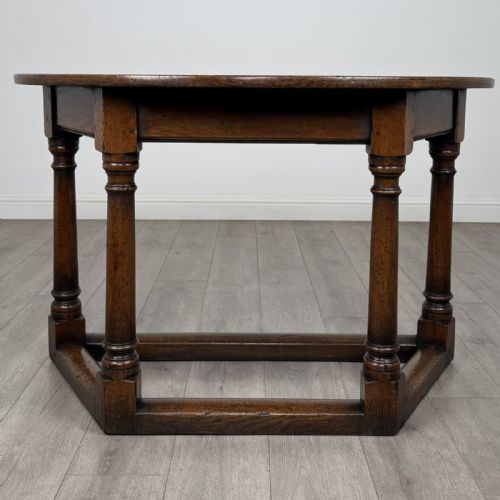
Cabinet makers utilised dense timber foundations of mahogany, walnut, and oak, frequently applying finely figured veneers and crossbanding in satinwood, boxwood, and kingwood. These woods respond well to traditional joinery methods that allow curved frames to retain structural stability over centuries of use. Secondary timbers such as pine or fruitwood support the internal framework of drawers and folding tops.
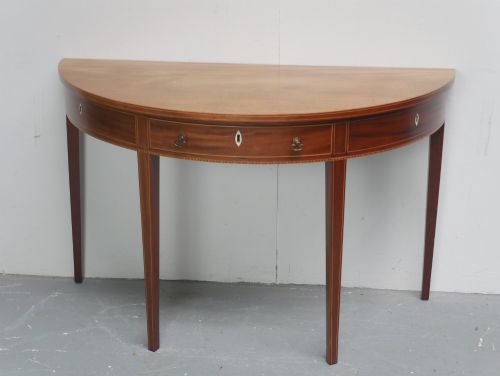
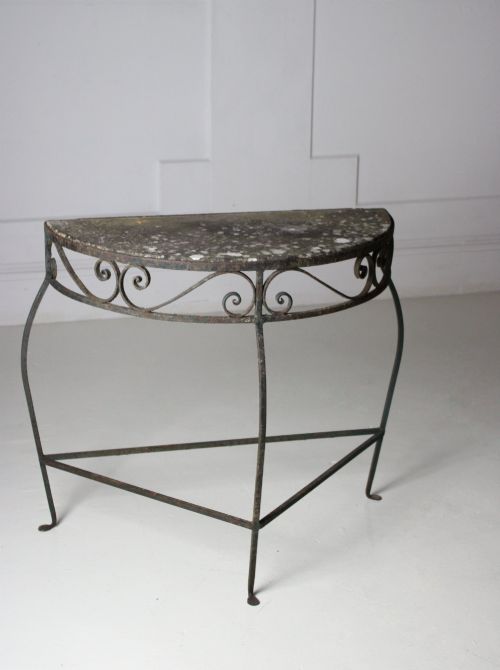
Surface embellishment relies on hand application of gilt bronze mounts, painted decoration, and intricate stringing inlaid into the primary wood. Marble tops appear on several continental and French country variations, mounted firmly onto wooden or wrought iron frames. French polishing and traditional wax finishes seal the timber while highlighting the natural grain patterns across the curved top.
Antique Half Moon Tables Retail Price Guide 2026
Typical asking prices for half moon tables among the pieces listed under this phrase on Sellingantiques today, from the lower quarter to the upper quarter. They describe what is for sale here now, not the wider market.
Many a midnight card game relied on these folding tops opening up without a wobble to save the royal flush.
Design and Execution
The degree of refinement in the timber selection and the precision of the inlay set the finer examples apart from standard production. Figured mahogany or meticulously matched satinwood veneers require expert hand-cutting and placement to maintain symmetry around the curved edge. Simpler painted or solid oak versions rely instead on the integrity of the carving and the balance of the proportions.
Mechanical execution on folding card tables dictates the longevity of the piece, particularly the tightness of the hinges and the smoothness of the gate leg action. Quality construction ensures the semicircular top meets flush when closed and remains level when opened for play. Superior console tables exhibit crisp mouldings and securely fitted marble or timber tops without movement in the frame.
The Antique Half Moon Tables Glossary
- Demi-lune
- A French term meaning half moon, describing furniture with a semicircular flat back and curved front edge. This shape became popular during the eighteenth century for space-saving console and card tables.
- Crossbanding
- A strip of veneer applied to the border of a table top or drawer front with the wood grain running perpendicular to the main panel. It creates a contrasting frame that highlights the central timber.
- Console table
- A table designed to be fixed against a wall, traditionally supported by two front legs or brackets while the rear relies on wall attachment. Many antique examples are built as freestanding demi-lune units.
- Card table
- A folding table intended for gaming, featuring a hinged top that opens to double the surface area. The interior is frequently lined with felt, baize, or leather.
- Frieze
- The horizontal band situated directly beneath the table top, sometimes plain or decorated with carved details, stringing, or fitted drawers.
- Stringing
- Thin lines of contrasting wood or light-coloured inlay set flush into the surface of furniture to create geometric borders and decorative outlines.
Antique Half Moon Tables: Frequently Asked Questions
Where should I place a half moon table?
These tables suit hallways, narrow landings, and reception rooms where a deep rectangular piece would obstruct movement. Their curved profile allows them to sit gracefully against flat walls without dominating the floor space.
Matched pairs work particularly well flanking a fireplace or anchoring a pair of windows. Single tables often serve as pier tables beneath a wall mirror or support a decorative lamp.
How do demi-lune card tables function?
The hinged top unfolds outward to create a full circular or semicircular playing surface supported by a pivoting third or fourth leg known as a gate leg. This clever mechanism distributes weight evenly across the open leaf.
When closed, the table folds flat against the wall as a standard console. The internal void often stores cards and gaming counters in period examples.
How do I care for antique wood surfaces?
Maintain polished mahogany and walnut by dusting with a soft, dry cloth and applying natural beeswax periodically to nourish the timber. Avoid placing these pieces in direct sunlight or near heat sources that could dry out the wood.
Marble tops require simple wiping with a damp cloth and mild soap. Protect the stone from acidic liquids and harsh chemical cleaners.
How can I tell the period of a table?
Georgian and Regency versions typically display heavy reliance on figured mahogany, crisp carved details, and restrained inlay work. Edwardian pieces introduce lighter satinwood, painted floral motifs, and delicate spade feet.
Construction marks, screw types, and secondary woods inside drawers provide further clues to the manufacturing decade. Examining the underside reveals hand-cut joinery methods characteristic of earlier craftsmanship.