





Antique Half Hoop Ring
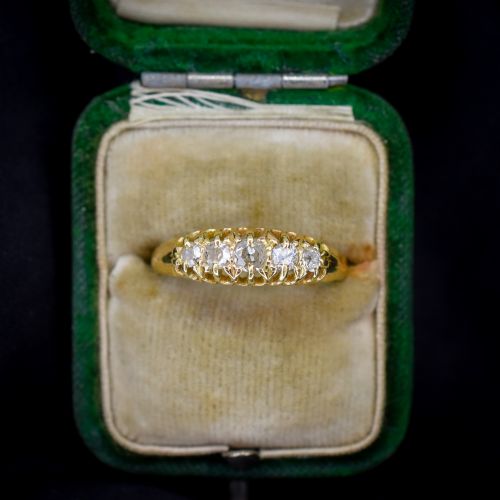
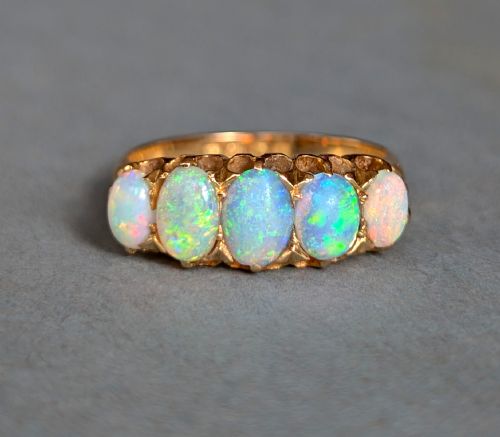
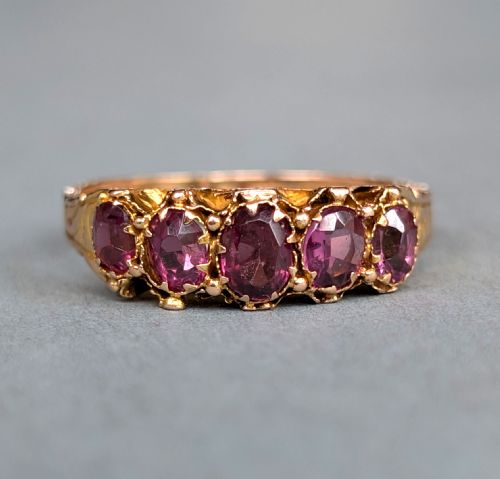
An antique half hoop ring presents a row of matched stones set side by side in yellow gold, offering a classic silhouette that sits neatly alongside other bands.
Antique Half Hoop Ring
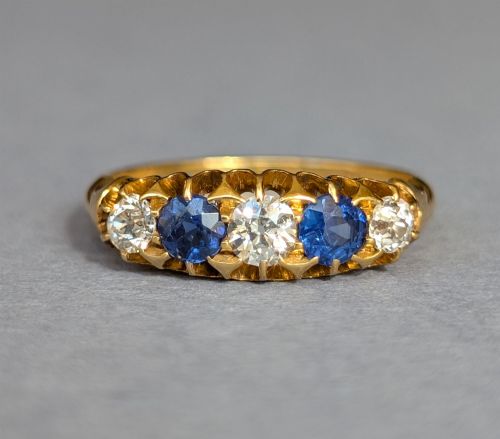
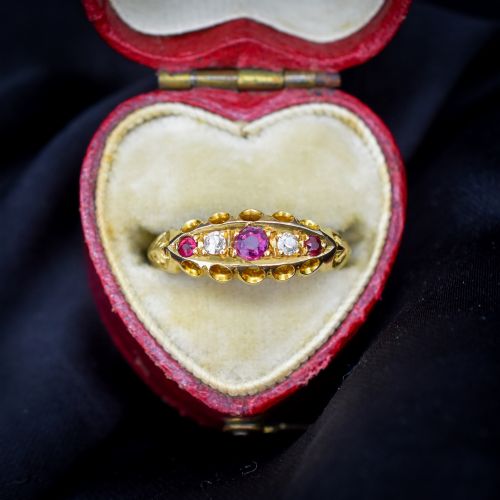
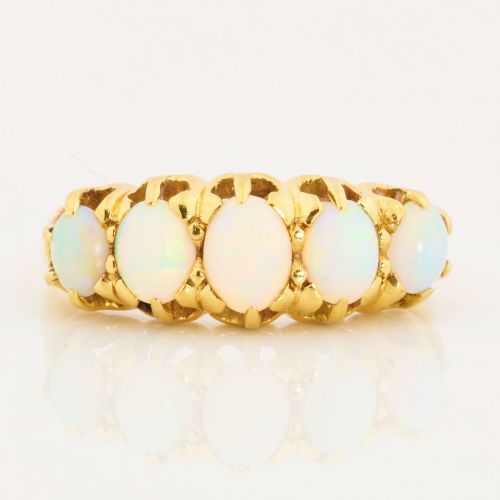
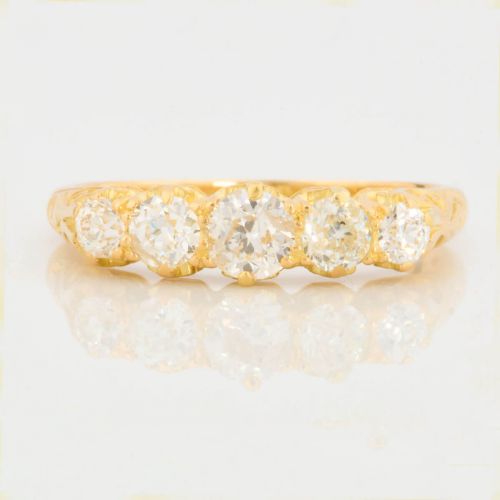
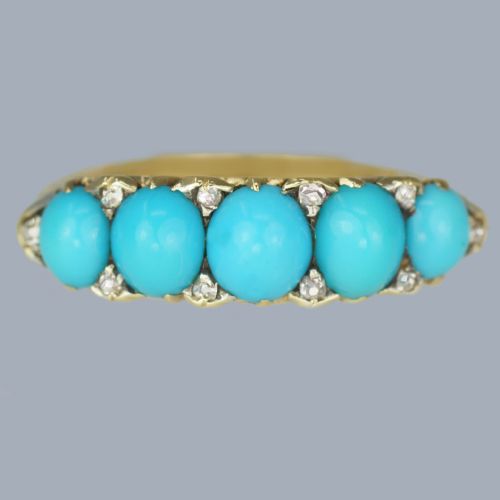
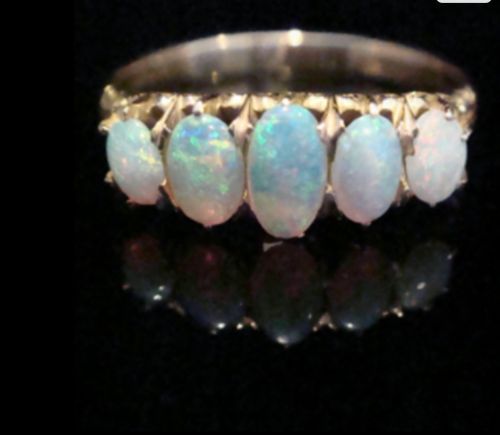
The antique half hoop ring typically takes the form of a graduated or uniform row of stones mounted across the finger, often referred to as a five-stone arrangement. Most examples encountered hail from the Victorian and Edwardian eras, rendered in eighteen-carat yellow gold with old cut diamonds, sapphires, rubies, or opals.
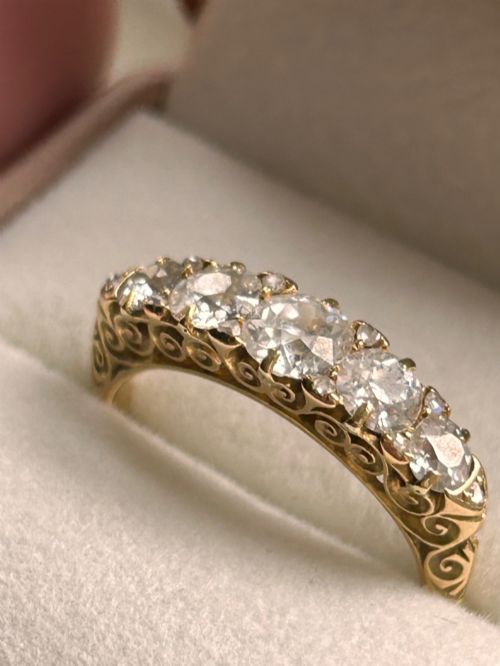
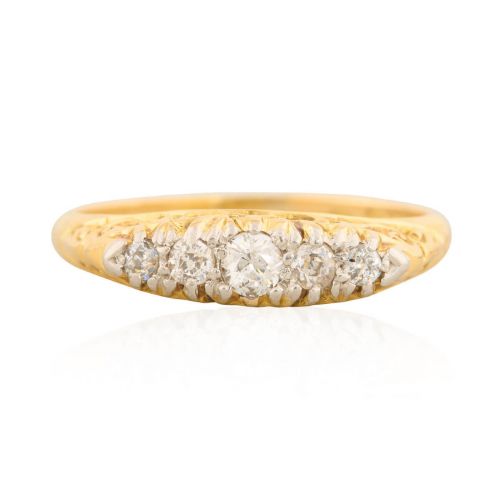
Makers of the nineteenth and early twentieth centuries favoured this design for its elegant profile and adaptability as an engagement or dress ring. Variations include boat-shaped settings and carved half hoops where the metal between the gems receives decorative scrolling or foliage.
The layout prioritises direct visual impact on the hand, spreading light evenly across the finger without the bulk of a high cluster. Whether set with fiery opals, deep blue sapphires, or lively old cut diamonds, the antique half hoop ring remains a durable staple of period jewellery.
Materials and Construction
Construction relies heavily on eighteen-carat yellow gold, providing a warm, substantial foundation for the claw or grain settings that secure each gem. Metalsmiths shaped the bands by hand, often incorporating sturdy shoulders that taper smoothly toward the back of the hoop.
Gems were individually selected to graduate in size or match precisely in colour and spread across the finger. Hand-cut stones such as old mine cuts and early European cuts dominate these pieces, displaying smaller tables and open culets characteristic of pre-machine cutting techniques.
Listings feature yellow gold predominantly in eighteen-carat purity, alongside occasional examples in fifteen-carat and fourteen-carat gold.
Distinctions in Standard and Execution
Quality rests significantly on the selection and matching of the stones, where uniform colour and well-proportioned cuts create a cohesive line across the finger. Higher-grade examples display minimal inclusions in diamonds and vibrant, saturated hues in rubies and sapphires.
The integrity of the metalwork defines the durability of the piece, visible in the crispness of any engraved shoulders and the remaining thickness of the claws holding each gem. Finer specimens maintain robust galleries and clear hallmarks from assay offices like Chester, Birmingham, or London.
The Antique Half Hoop Ring Glossary
- Half hoop ring
- A ring featuring a row of stones across the upper portion of the band, leaving the lower shank plain. This layout was immensely popular throughout the Victorian and Edwardian periods.
- Old cut diamond
- A hand-faceted diamond cut before modern optical symmetry was standardised, typically featuring a smaller table and a prominent open culet. These stones catch candlelight warmly.
- Boat ring
- A setting shaped like a traditional boat hull, curved gently along the finger to cradle a row of gems. It often incorporates engraved shoulders.
- Carved half hoop
- A variation where the gold framing the stones is shaped or chased with botanical motifs rather than left as plain metal.
- Culet
- The small flat facet at the very bottom of a gemstone, visible as a tiny open circle through the table of an old cut diamond.
Antique Half Hoop Ring: Frequently Asked Questions
Can I wear an antique half hoop ring daily?
These rings were built for everyday wear in gold, but softer stones like opals or pearls require caution against hard knocks and moisture.
Checking the claws periodically with a jeweller ensures the stones remain secure in their original settings.
How do I tell a Victorian ring from an Edwardian one?
Victorian pieces often display heavier gold weights and richer yellow tones with robust gypsy or boat settings. Edwardian examples tend toward lighter, airier mounts, frequently platinum-topped or featuring delicate millegrain detailing around diamonds.
Hallmarks stamped inside the band provide definitive dates and assay office locations to confirm the era.
What is an old cut diamond?
An old cut diamond is a gemstone shaped by hand prior to the twentieth century, designed to maximise sparkle under artificial light.
These stones possess unique proportions, including steeper crown angles and larger facets that give them a distinctive, softer brilliance.
Are these rings suitable for modern engagements?
The low profile and straight band make these rings practical and popular choices for modern proposals, sitting flush against wedding bands.
Their historical character offers an alternative to contemporary mass-produced diamond solitaire designs.