



Antique Guest Luggage
Antique guest luggage stands are sturdy folding frames designed to hold visitors' cases off the floor, offering a practical touch of country house hospitality.
Antique Guest Luggage
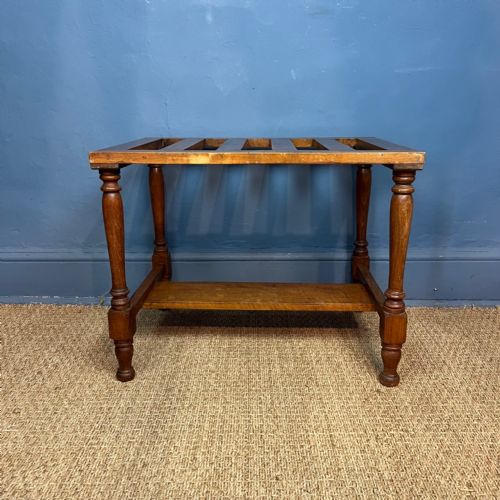
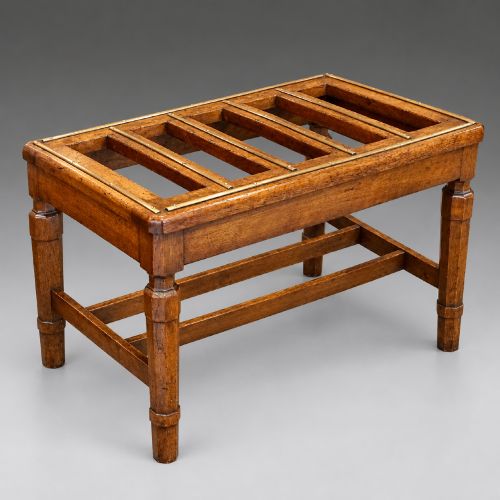
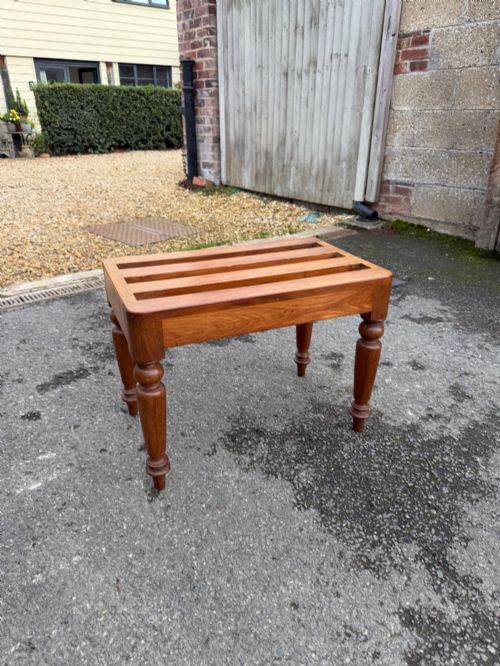
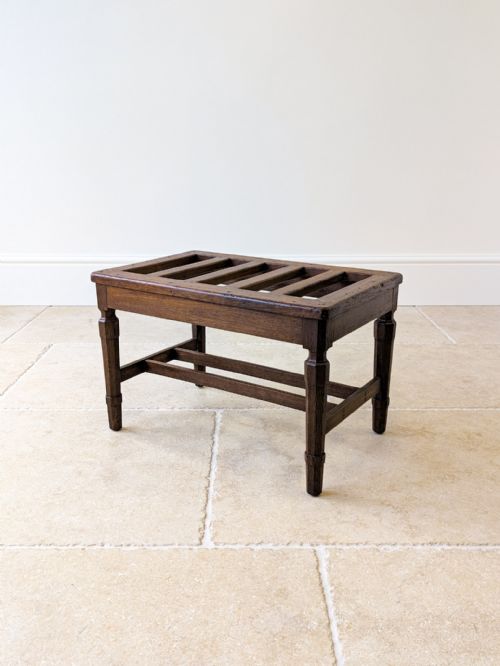
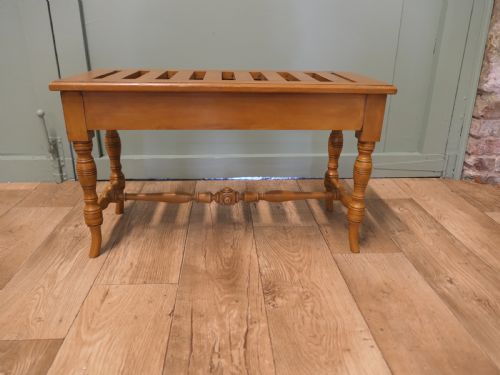
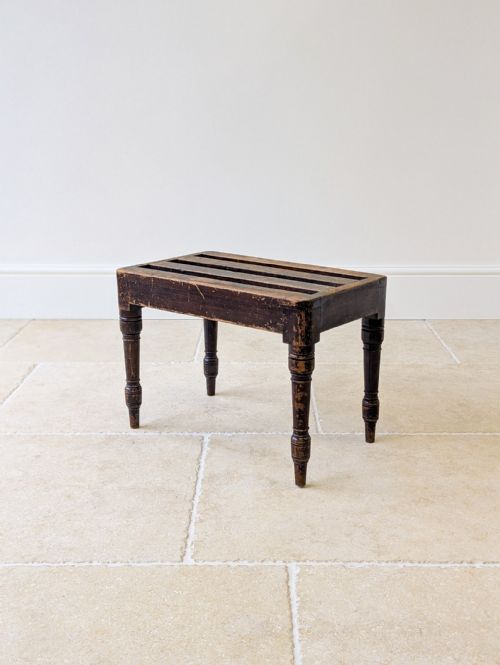
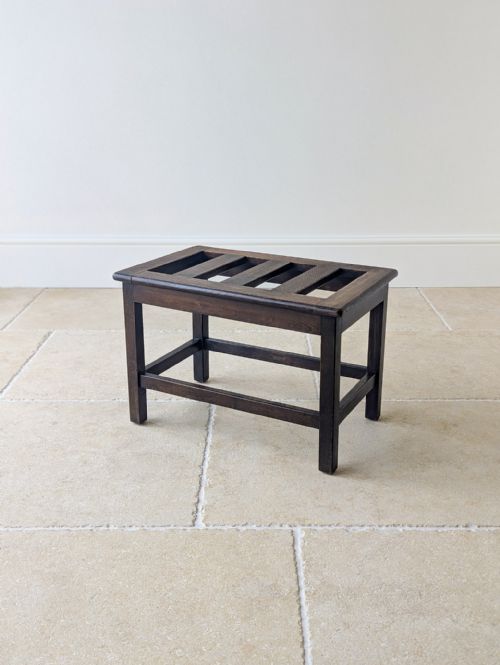
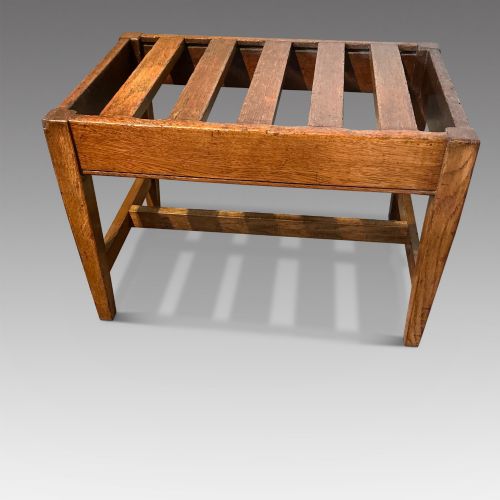
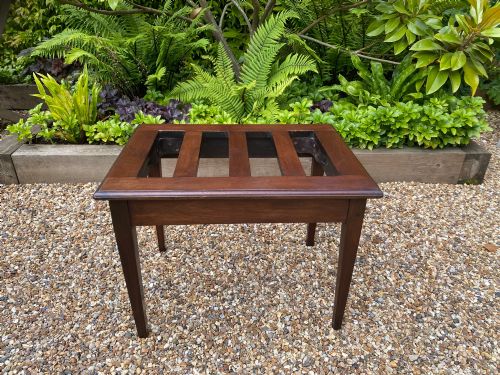
When you search for antique guest luggage, you encounter practical furniture designed for domestic hospitality, predominantly taking the form of luggage stands and luggage racks originating from the nineteenth and early twentieth centuries. These pieces were built to keep visitors' suitcases and travelling chests elevated and accessible in bedrooms across English country houses and smaller residences alike.
The versions most frequently met on this page span the Victorian and Edwardian eras, with a strong representation of simpler pieces from the nineteenth century. Makers constructed these stands using robust timbers to withstand the weight of heavy luggage, employing folding wooden frames that could be tucked away when not in use.
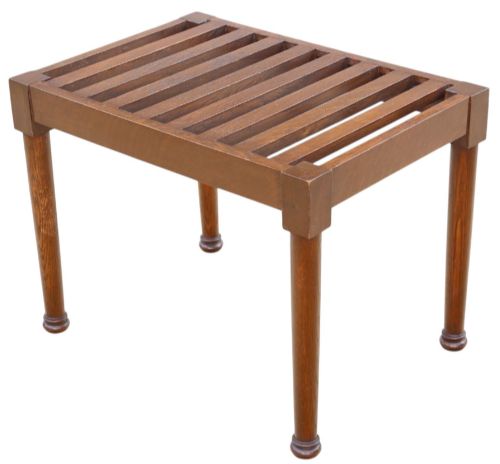
The selection ranges from straightforward oak examples to pieces rendered in walnut, mahogany, beech, pine, and yew wood. Styles vary from utilitarian designs to the distinct aesthetic of the Arts and Crafts movement, reflecting the interior tastes of their respective periods.
How they were made
Cabinet makers relied primarily on solid hardwoods such as oak, mahogany, walnut, beech, and yew wood to construct the load-bearing frames of these pieces. Softer timbers like pine appear when painted finishes were desired for domestic bedrooms.
Construction techniques focussed on stability and folding mechanisms, allowing the stands to support heavy suitcases while remaining portable. Joints were secured to handle the repetitive stress of opening and closing.
Antique Guest Luggage Retail Price Guide 2026
Typical asking prices for guest luggage among the pieces listed under this phrase on Sellingantiques today, from the lower quarter to the upper quarter. They describe what is for sale here now, not the wider market.
The listings show pieces spanning from the nineteenth century through the Edwardian period into the early twentieth century.
What varies in quality
The distinction between standard utility pieces and finer examples rests largely on the choice of timber and the nuance of the carpentry. Stands executed in yew wood or figured mahogany demonstrate a higher level of material selection than standard pine or beech.
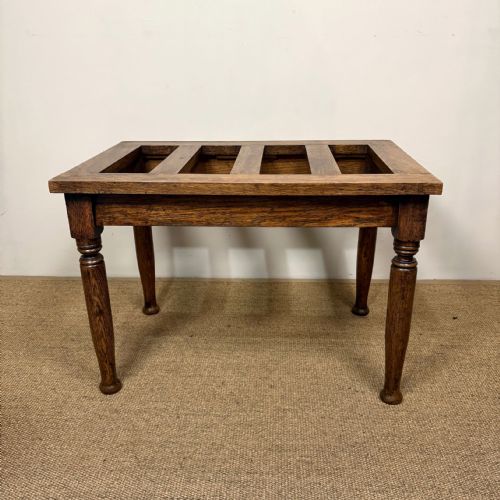
Attention to detail in the turning of the legs and the integrity of the folding frame separate workshop pieces intended for prominent guest chambers from simpler utilitarian items.
Brown & Lamont
The Antique Guest Luggage Glossary
- Luggage stand
- A folding wooden frame designed to support a suitcase or travel chest at a convenient height for unpacking. These pieces typically feature webbing or wooden slats across the top.
- Luggage rack
- An alternative term for a stand, often used interchangeably in period descriptions. They served the same functional purpose in guest bedrooms.
- Arts and Crafts
- A design movement valuing handcraftsmanship and simple forms over mass production. Pieces from this style often display honest oak construction and understated decorative touches.
- Yew wood
- A dense, highly figured timber prized for its rich grain patterns and warm tones. Its use marks a piece out from more common domestic woods.
Antique Guest Luggage: Frequently Asked Questions
What is antique guest luggage?
Antique guest luggage primarily comprises folding wooden stands and racks built to hold visitors' cases in nineteenth and early twentieth-century homes.
These utilitarian pieces kept heavy travel trunks off floor surfaces and made unpacking straightforward for house guests.
How were luggage stands used?
They were placed in spare bedrooms so visitors could rest their suitcases at a comfortable height.
When not in use, the folding frames were collapsed and stored flat against a wall or inside a wardrobe.
Which woods are most common?
Oak and mahogany appear most frequently in surviving pieces, reflecting the preference for durable hardwoods.
Beech, walnut, pine, and yew wood also turn up across the various nineteenth-century and Edwardian examples.
How do I date a piece?
Dating relies on observing the timber, construction style, and characteristic turning of the legs against known periods.
Design influences from the Victorian, Edwardian, or Arts and Crafts movements help narrow down the decade of manufacture.