



Antique Grey Horse
These antique grey horse pieces bring the power and presence of the animal indoors through carved wooden forms, oil paintings, and watercolours.
Antique Grey Horse
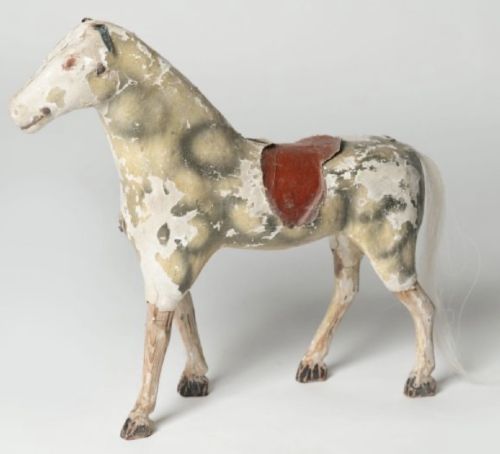
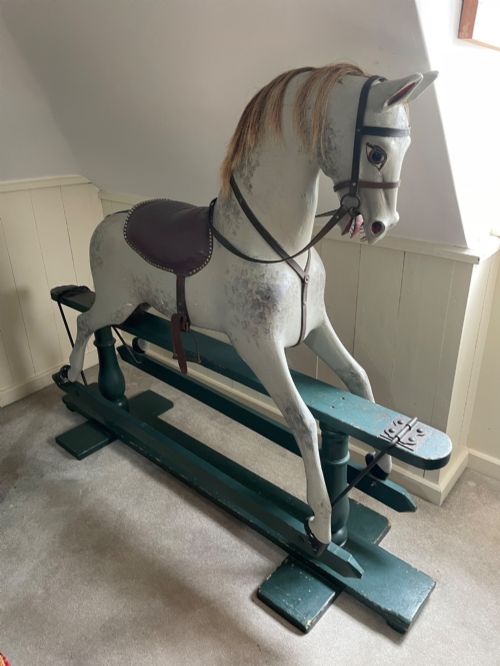
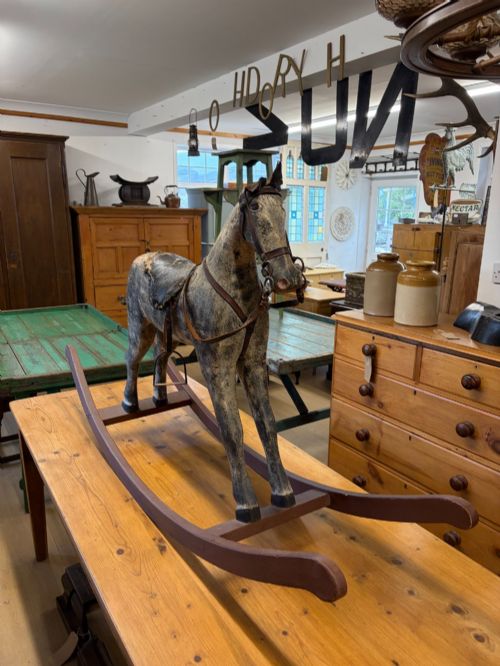
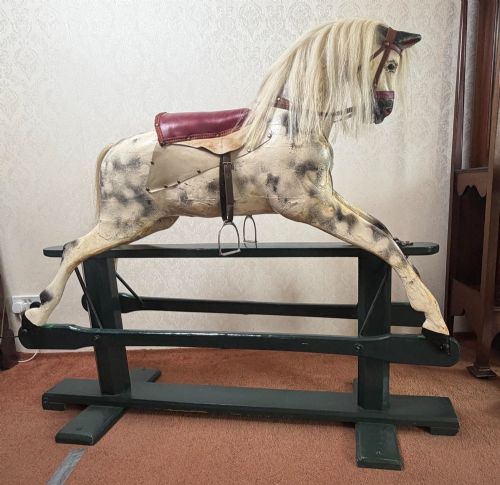
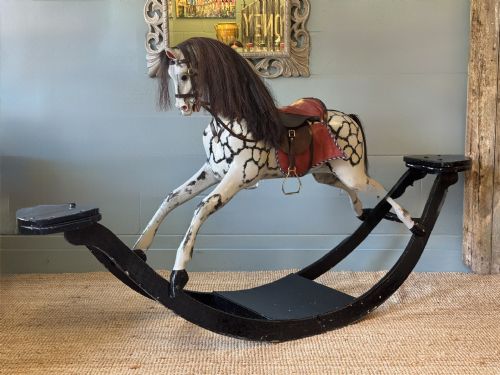
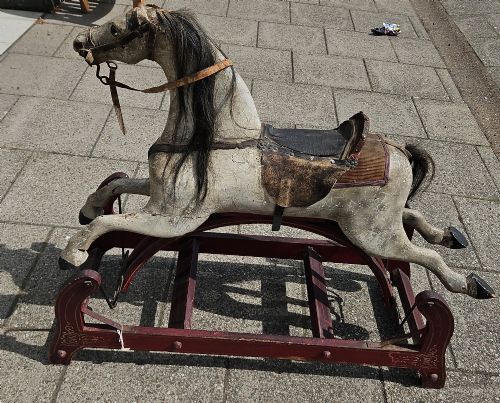
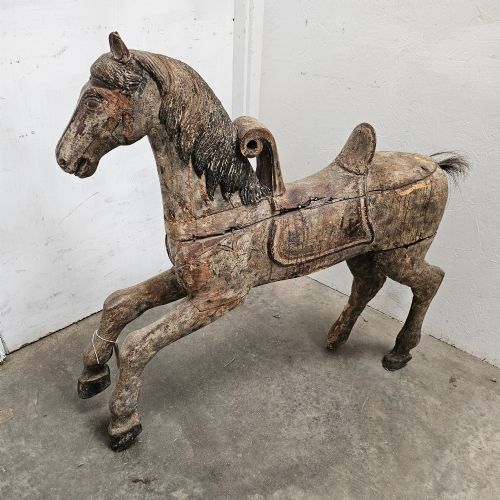
When you search for an antique grey horse, you encounter a distinct grouping of nineteenth and early twentieth century rocking horses, sporting oil paintings, and watercolours. The rocking horses dominate the form, fashioned from carved wood and mounted on original rockers or safety stands.
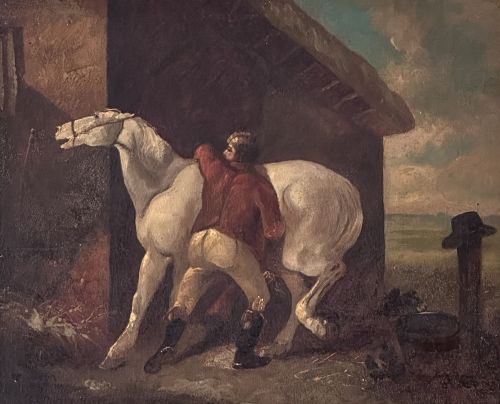
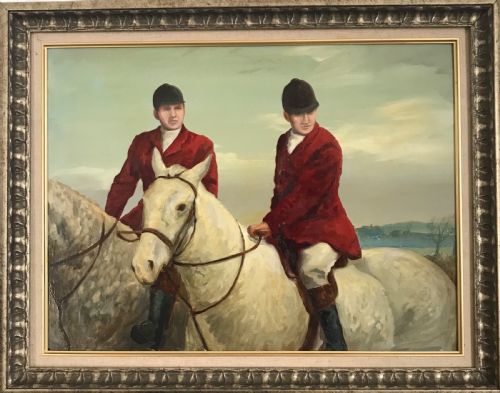
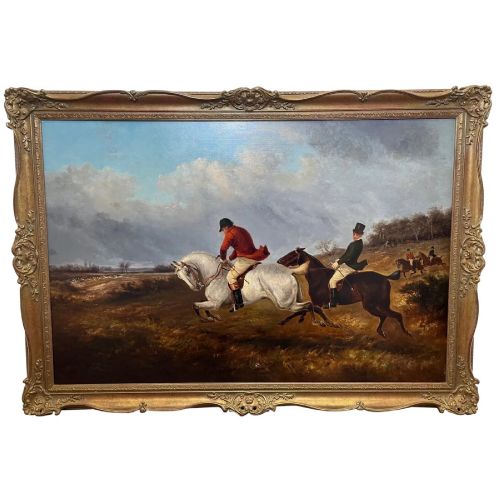
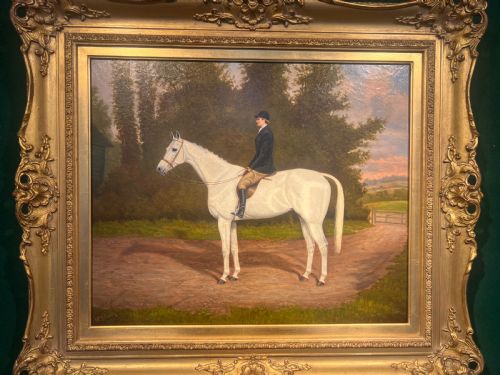
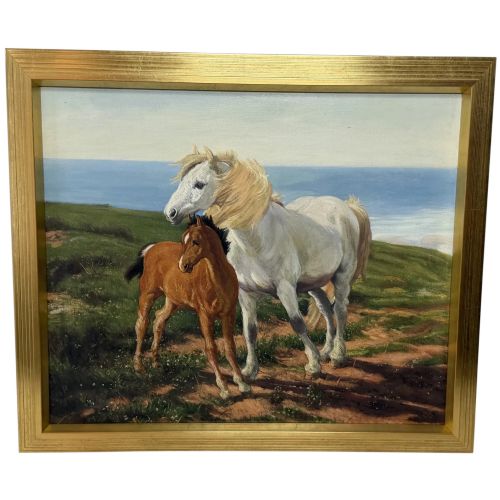
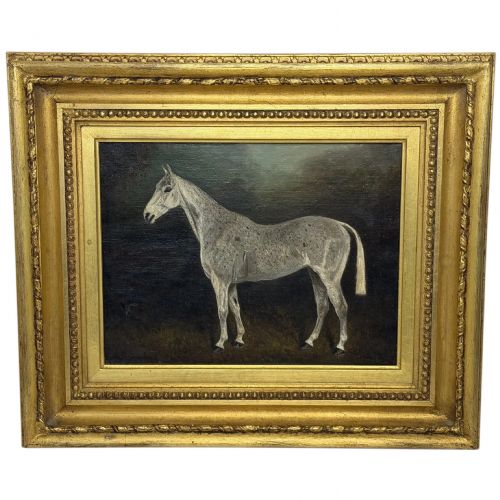
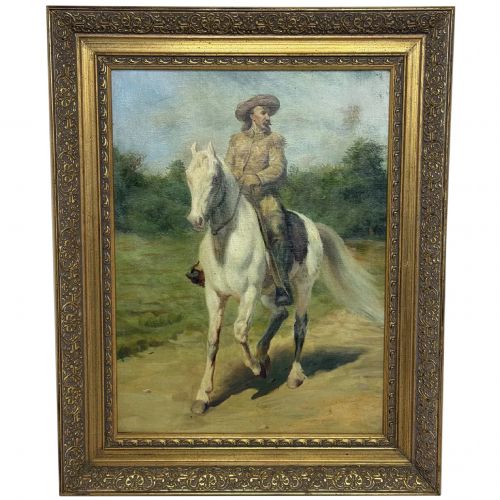
Alongside the carved figures, you find equestrian art depicting grey mares, hunters, and cart horses in landscape settings. These flat works range from Victorian folk art to British impressionism, capturing the animal in hunting scenes, portraiture, and agricultural life.
The materials reflect a mix of domestic utility and artistic representation, moving from iron doorstops and marble dust reliefs to embroidered ceremonial saddle covers. Each piece records a Victorian or Edwardian fascination with equine subjects, whether as children's playthings or fine art portraits.
How they were made
Carved wooden rocking horses utilise solid timber frames finished with painted surfaces, glass eyes, real horsehair manes, and leather tack. Makers shaped the bodies from multiple joined pieces of wood before applying gesso and paint to create the dappled grey coat.
The flat works employ oil on canvas and watercolour on paper, capturing tonal shifts in grey coats through layered brushwork and pigment. Cast iron and marble dust feature in heavier decorative objects, formed through casting and moulding techniques suited to domestic hardware and relief sculpture.
Antique Grey Horse Retail Price Guide 2026
Typical asking prices for grey horse among the pieces listed under this phrase on Sellingantiques today, from the lower quarter to the upper quarter. They describe what is for sale here now, not the wider market.
Listings combine nineteenth and twentieth-century rocking horses with oil paintings, watercolours, cast iron doorstops, and embroidered textile covers from various origins.
What varies in quality
Quality in carved rocking horses rests upon the depth of anatomical modeling in the head and shoulders, alongside the survival of original paint, leather tack, and wooden rockers. A master carver achieves liveliness in the expression and correct proportion in the limbs, separating workshop production from naive folk art.
In painted works, execution lies in the handling of light across the horse's flank and the correct rendering of movement in a gallop or trot. Signatures from established sporting artists elevate a piece above anonymous studio output, though strong primitive works retain independent visual force.
G and J Lines·F H Ayres·Collinson·Lines Bros
The Antique Grey Horse Glossary
- Rocking horse
- A carved wooden toy mounted on curved rockers or a safety swing frame designed for children to ride. These figures often feature leather saddles and real horsehair.
- Sporting art
- A genre of painting depicting field sports, hunting scenes, and individual animal portraits. These works record prized hunters and famous racehorses in detailed landscapes.
- Grisette
- A term used in equine naming to denote a grey mare, frequently appearing in nineteenth-century sporting records and canvas titles.
- Folk art
- Utilitarian or decorative objects created by self-taught makers outside academic traditions. These pieces display direct, unpretentious carving and painting techniques.
Antique Grey Horse: Frequently Asked Questions
How do I date an antique rocking horse?
Dating relies on construction methods, body shape, and surviving original paint layers. Earlier examples often feature chunky carved bodies and simple bowed rockers.
Later Victorian and Edwardian models show more refined anatomical carving and frequently transition to safety swing stands bearing maker plates.
What is the difference between oil paintings and watercolours here?
Oil paintings on canvas offer heavier impasto and deeper colour saturation, making them suited for large sporting scenes and formal animal portraits.
Watercolours on paper provide a lighter, more translucent medium often employed for rapid sketches, hunt scenes, and topographical views.
Were these rocking horses meant for children?
Most carved wooden horses on this page originated as robust toys intended for the nurseries of affluent Victorian and Edwardian households. Their substantial timber construction allowed them to withstand decades of heavy use by children.
Over time, many survived through generations to become decorative objects in domestic interiors.
How do I care for horsehair manes and leather tack?
Preserving organic materials requires stable room temperatures away from direct sunlight and excessive humidity. Leather benefits from occasional specialist conditioning to prevent cracking.
Horsehair manes should remain untouched by harsh cleaning agents and gently cleared of dust with a soft brush.