



Antique Green Man Cupboard
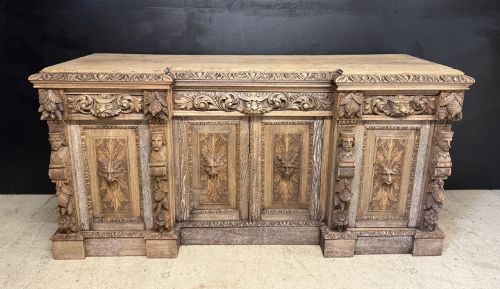
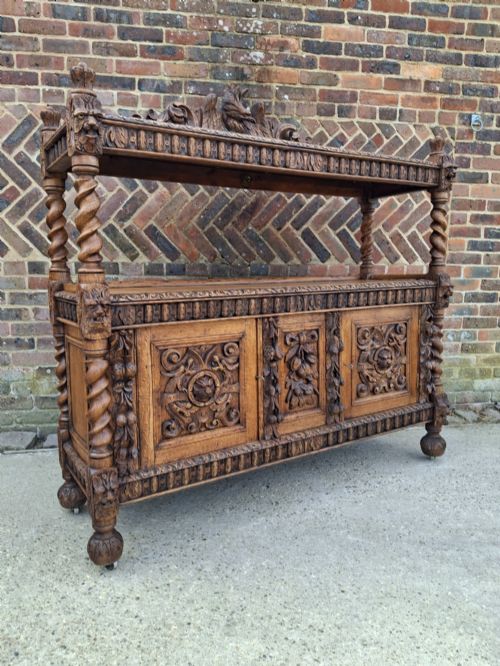
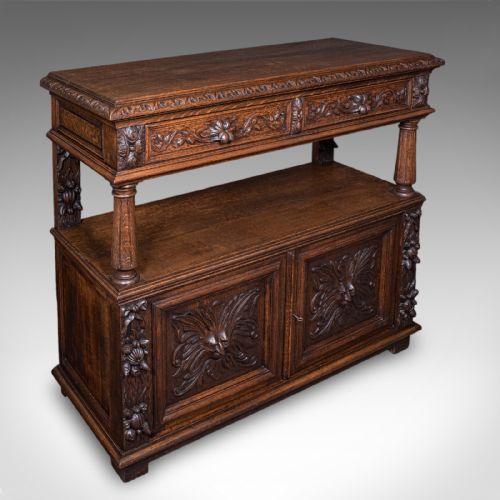
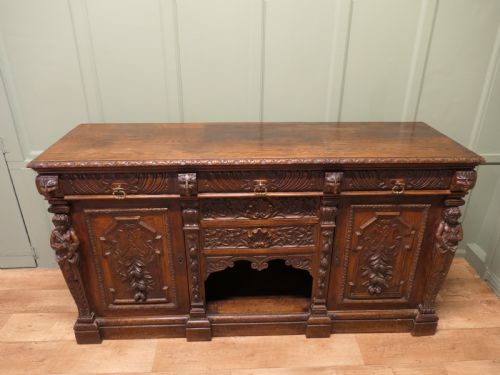
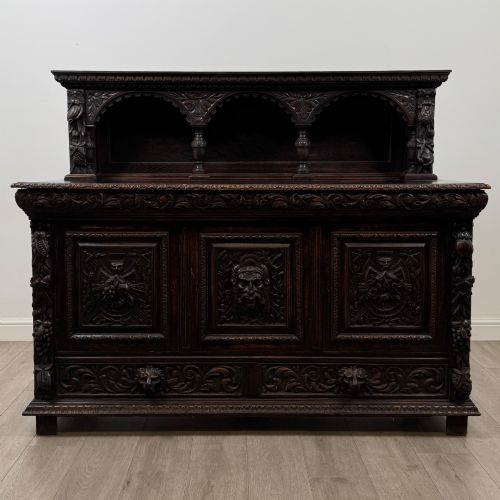
An antique green man cupboard brings the formidable folklore of the nineteenth century straight into a room through deep-relief foliage masks carved in solid oak.
Antique Green Man Cupboard
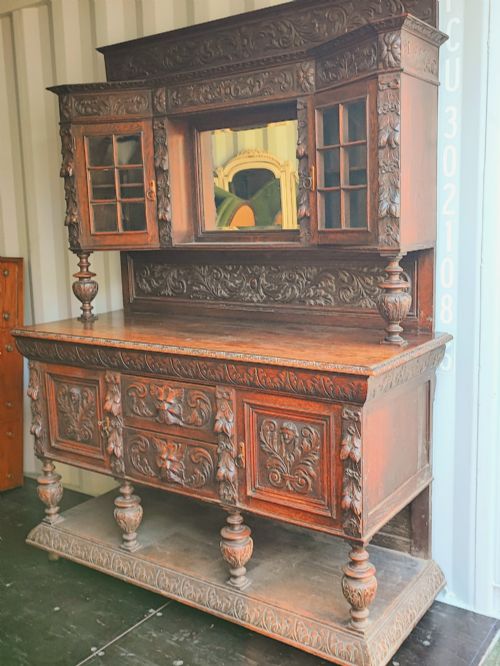
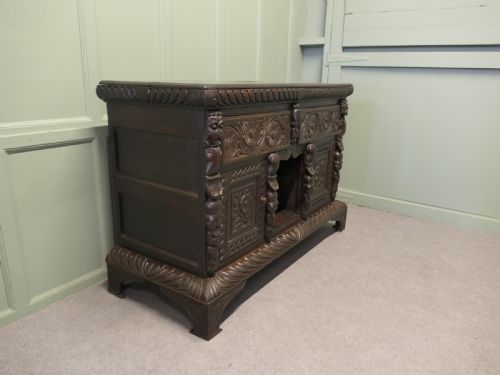
An antique green man cupboard comprises heavy timber cabinetry from the nineteenth century, including Victorian sideboards, dresser bases, wardrobes, and bookcases adorned with foliate mask carvings. These pieces emerge predominantly from Victorian Gothic Revival and Renaissance Revival movements, where dense ornamentation defined domestic furniture.
The version most commonly encountered on this page is the substantial oak sideboard or dresser base, heavily carved with the characteristic leafy visage peering from panels or drawer fronts. Such items span decades from the early nineteenth century through the late Victorian era, maintaining a consistently dark and tactile timber presence.
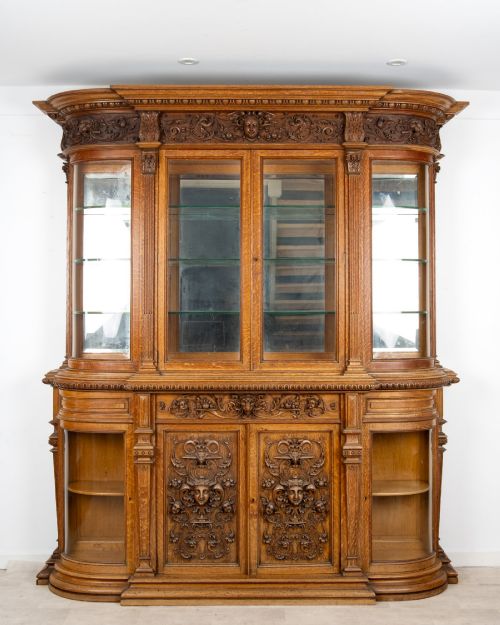
Buyers also find monumental library bookcases and fitted wardrobes alongside smaller side cupboards, all sharing the same robust oak construction and theatrical carving traditions. The form serves simultaneously as practical storage and as an architectural statement within a room.
How they were made
Makers relied on solid oak throughout these constructions, shaping thick boards by hand and mechanical sawing to build load-bearing frameworks for sideboards and bookcases. Timber selection favoured dense, mature grain capable of supporting profound sculptural depth without splitting.
Antique Green Man Cupboard Retail Price Guide 2026
Typical asking prices for green man cupboard among the pieces listed under this phrase on Sellingantiques today, from the lower quarter to the upper quarter. They describe what is for sale here now, not the wider market.
Even the library bookcases cannot hide from the foliage, as leafy wooden spirits peer out between the heavy tomes.
What varies in quality
The standard of carving dictates the artistic merit of the piece, distinguishing shallow, mechanical incisions from deeply undercut foliage and expressive, lifelike facial contours. Finer examples display meticulous attention to anatomical proportion within the leaves and vines surrounding the mask.
Structural ambition and scale also separate ordinary utility cupboards from monumental library bookcases and heavily carved sideboards with fitted interiors. The integration of balanced proportions across very large case pieces reflects the capability of the workshop that produced them.
The Antique Green Man Cupboard Glossary
- Green man
- A sculptural motif showing a human face emerging from or entwined with foliage, symbolizing rebirth and the spirit of nature. It appears frequently on nineteenth-century Gothic Revival furniture.
- Dresser base
- The lower section of a kitchen or dining dresser, comprising cupboards and drawers beneath a flat top surface. These pieces often functioned independently as sideboards.
- Gothic Revival
- An architectural and decorative style drawing inspiration from medieval forms, pointed arches, and heavy ornamentation. It dominated much of Victorian design.
- Renaissance Revival
- A eclectic nineteenth-century style incorporating classical motifs, robust proportions, and heavy relief carving. It often merged with Gothic elements on large cabinets.
- Bevelled glass
- Glass panes with angled edges cut and polished to a thinner margin around the perimeter. This technique adds refractive detail to cabinet doors and mirrors.
Antique Green Man Cupboard: Frequently Asked Questions
What rooms suit an antique green man cupboard?
These imposing oak pieces anchor large dining rooms, libraries, or hallways where their dark timber and deep carvings complement traditional architecture. They demand ample space to balance their substantial visual weight.
Smaller side cupboards adapt easily to living rooms or studies as television stands or drinks cabinets, bringing historic character without overwhelming the floor plan.
How do I care for solid oak furniture?
Maintain the timber by keeping it away from direct heat sources and dramatic humidity shifts that can cause splitting in nineteenth-century oak. Dust regularly with a dry cloth and apply natural beeswax occasionally to nourish the grain.
Avoid silicone-based sprays, which build up over time and dull the original patina achieved through decades of handling.
How do I date a Victorian carved oak sideboard?
Examine the construction methods behind the doors and drawers, looking for hand-cut dovetails, tool marks, and the weight of the solid oak timbers. Earlier pieces from the beginning of the nineteenth century often show simpler vernacular lines before the exuberant Gothic Revival took hold.
Stylistic cues such as cabriole legs on later nineteenth-century bowfront pieces also help narrow the decade of production alongside the complexity of the foliate carving.
Can I use a wardrobe as a hallway cupboard?
A fitted Victorian wardrobe offers exceptional enclosed vertical storage for coats, boots, and household equipment when placed in a suitably grand hallway or boot room. Ensure you measure ceiling height and clearance before placement, as these case pieces are exceptionally tall.
Internal configurations can sometimes be adapted with additional shelving while preserving the exterior carved facade.