


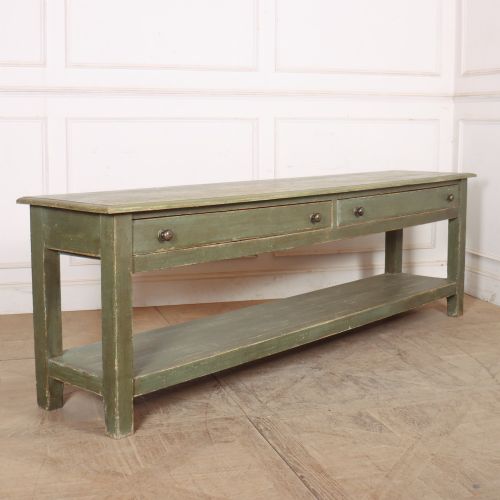
Antique Green Console Table
An antique green console table brings painted character and architectural form to a hallway or reception room, anchored in centuries of cabinet-making tradition.
Antique Green Console Table
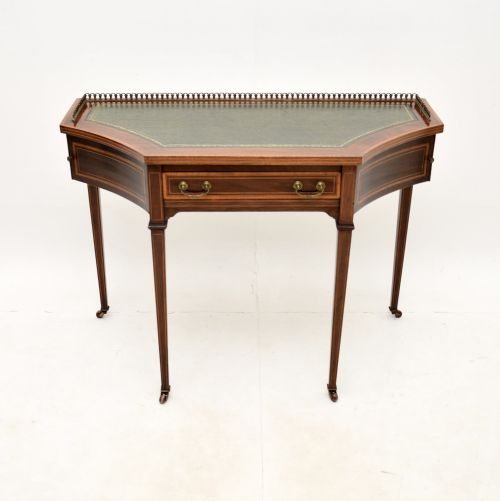
An antique green console table encompasses forms such as side tables, serving tables, and demi-lune hall tables surfaced in various shades of paint. The selection spans 18th century Gustavian and French provincial pieces to Victorian oak examples and early 20th century Italian designs.
Buyers encounter long painted pine tables alongside polished mahogany, rosewood, and walnut pieces, frequently detailed with marble tops or intricate carving. Many items demonstrate regional characteristics from English country workshops to Swedish and Venetian studios.
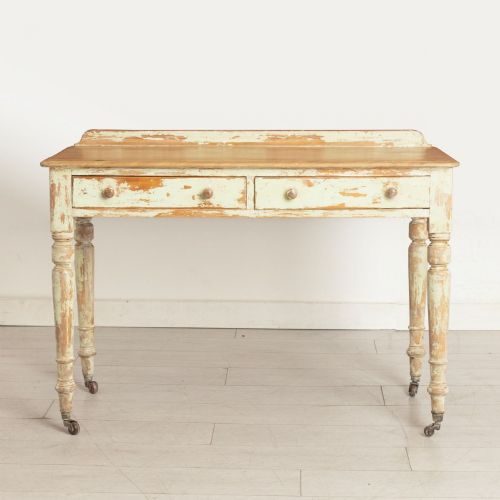
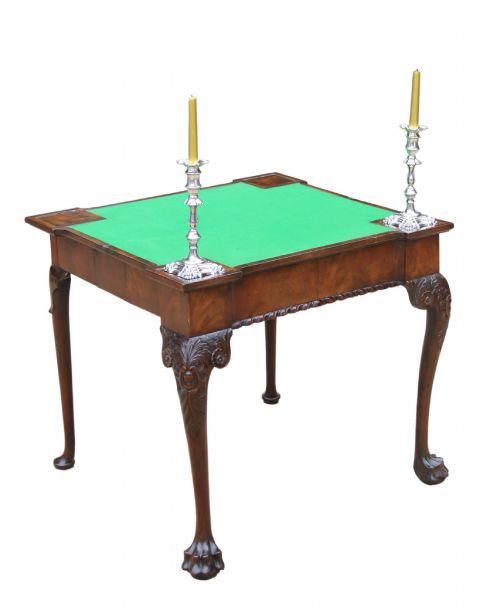
The category overlaps closely with writing tables, card tables, and lowboys adapted for display against a wall. Painted surfaces define the majority of these pieces, pairing structured timber bases with decorative finishes.
Materials and construction
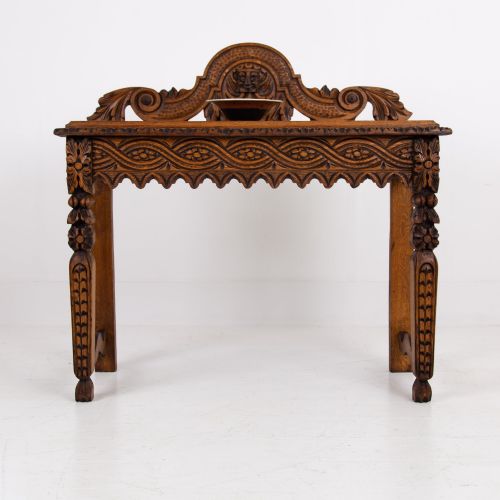
Makers utilised solid timbers including pine, oak, mahogany, and birch, often combining them with applied decorative elements like brass mounts and cast iron. Carved details in oak and giltwood frequently complement painted pine carcasses.
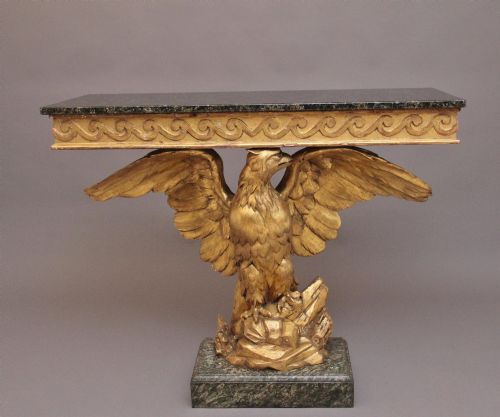
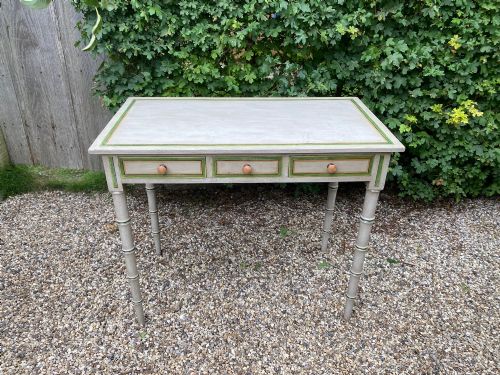
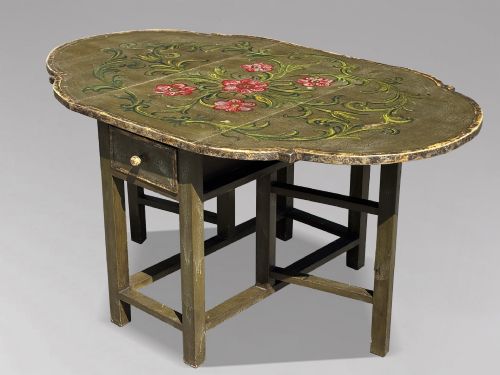
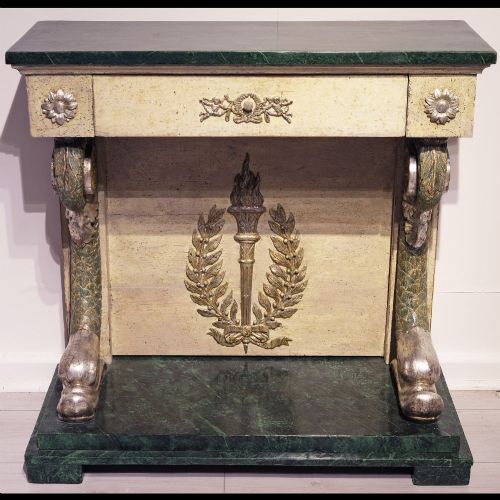
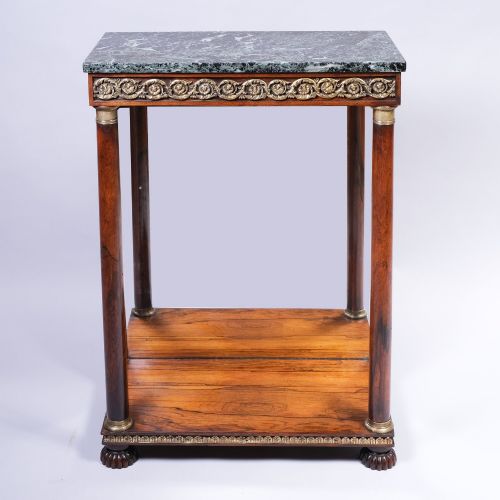
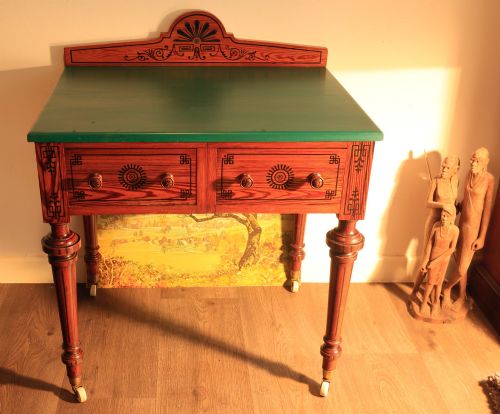
Surfaces received multiple coats of paint, sometimes incorporating faux bamboo effects, gilt highlights, or hand-painted motifs. Marble slabs served as heavy, durable tops for neoclassical and Italian console forms.
Listings feature woods spanning pine, oak, mahogany, birch, rosewood, and walnut, paired with marble and brass.
Judging the standard
Quality rests upon the integrity of the timber framing and the preservation of the original painted surface rather than later redecoration. Original hardware, such as brass mounts and hinges, separates standard production from finer workshop output.
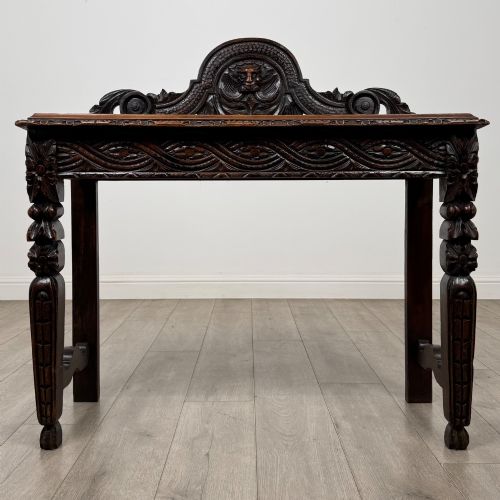
The crispness of carved details, particularly on oak Green Man motifs or neoclassical mouldings, indicates the competence of the carver. Proportions and the balanced integration of marble or timber tops determine the aesthetic success of each piece.
The Antique Green Console Table Glossary
- Console table
- A table designed to stand against a wall, traditionally fixed with brackets or resting on front legs. These items often served decorative functions in formal reception rooms.
- Demi-lune
- A half-moon shape characteristic of side and console tables designed to sit flush against a wall. This profile became popular during the late 18th and 19th centuries.
- Gustavian
- The Swedish interpretation of French neoclassical style, characterised by pale painted finishes and restrained carving. Pieces from this tradition often feature muted green or grey tones.
- Green Man
- A sculptural motif depicting a human face emerging from or entwined with foliage and vines. Victorian Gothic Revival furniture frequently employed this imagery on oak supports.
- Potboard
- An open lower shelf fitted to serving tables and dresser bases for storing kitchen pottery. This practical addition provides structural stability to the base of the table.
Antique Green Console Table: Frequently Asked Questions
Where should I place a console table?
Console tables suit narrow transition spaces like hallways, entrance passages, and landings where depth is restricted. They also function beneath mirrors or artwork in living rooms and dining spaces.
Their shallow profile allows them to provide surface space without obstructing walkways, while the painted finish introduces colour to neutral walls.
How do I care for a painted antique table?
Dust surfaces regularly with a soft, dry cloth to prevent the accumulation of grit on the painted finish. Avoid harsh chemical cleaners and excessive moisture that might lift historic paint layers.
Maintain stable indoor humidity levels to protect underlying timbers like pine and oak from seasonal expansion and contraction.
What is the difference between a console and a side table?
Console tables traditionally rely on the wall for structural support or feature flat backs intended to abut vertical surfaces. Side tables are freestanding units finished on all sides and capable of floating within a room.
In practice, historic terminology often overlaps between the two forms, particularly within vernacular furniture categories.
Are marble tops original to these tables?
Marble inserts frequently accompanied neoclassical, French, and Italian console tables to provide a durable, heat-resistant surface for serving or display. Many 19th century pieces integrated stone slabs directly into carved wooden frames.
Inspecting the rebate and underside of the frame helps confirm whether the stone rests securely within its original design parameters.