

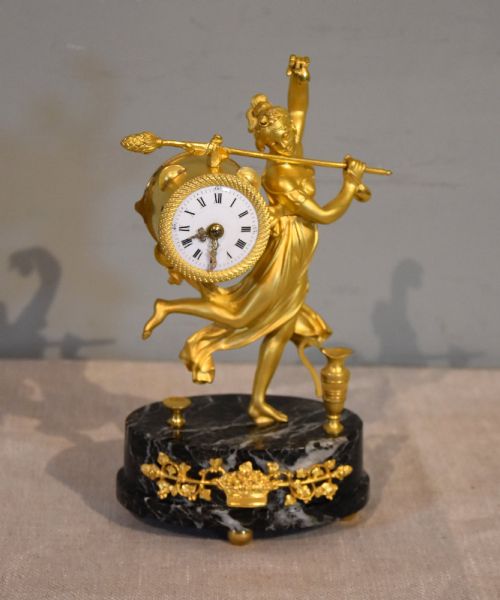


Antique Green Clock
An antique green clock brings colour and mechanical precision together, spanning grand longcases to striking mantel pieces.
Antique Green Clock
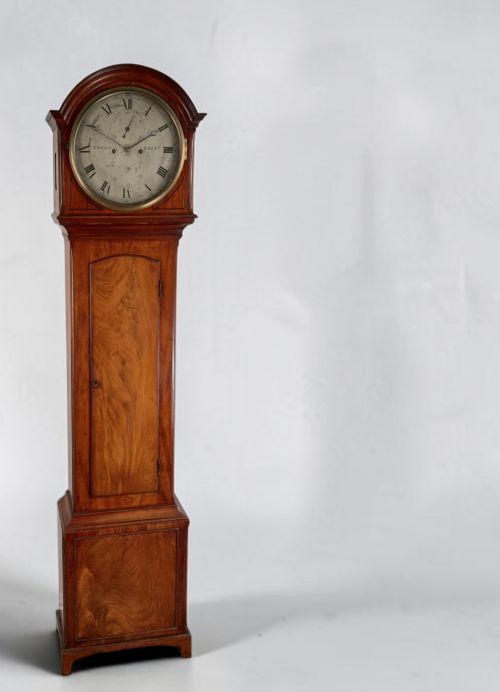
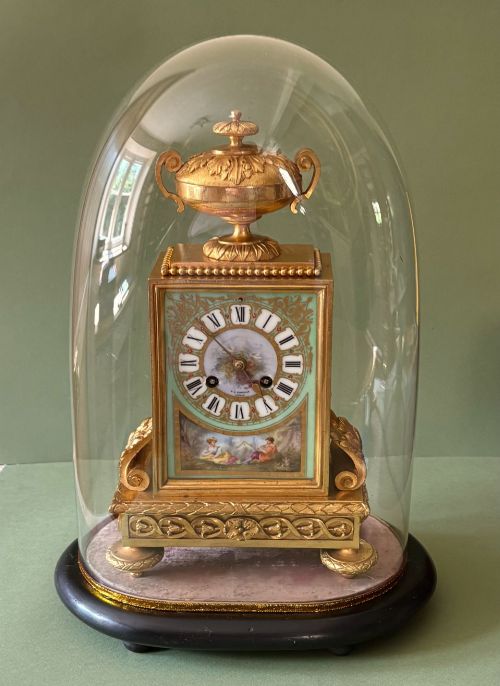
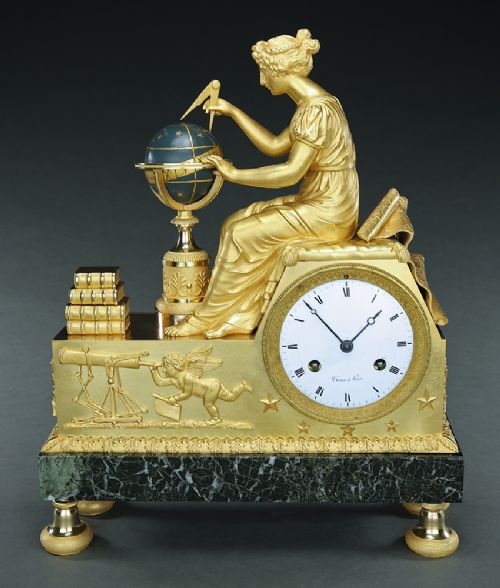
When searching for an antique green clock, buyers encounter several distinct forms shaped by centuries of horological design. The selection ranges from tall longcase clocks with lacquered cases to compact mantel pieces and garniture sets placed upon domestic hearths.
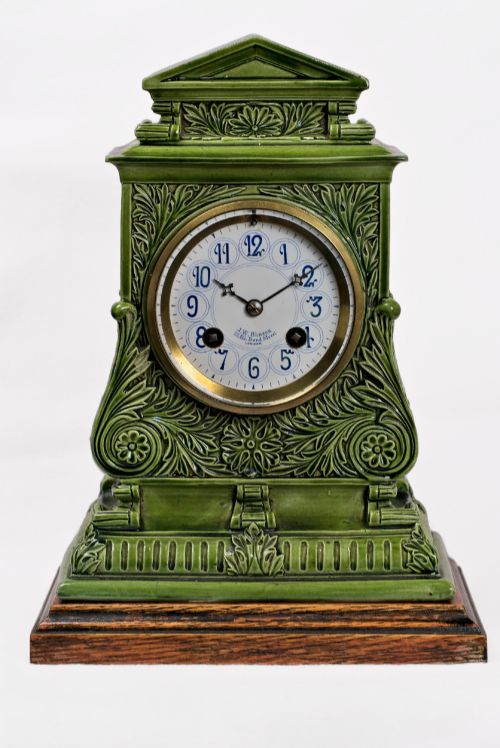
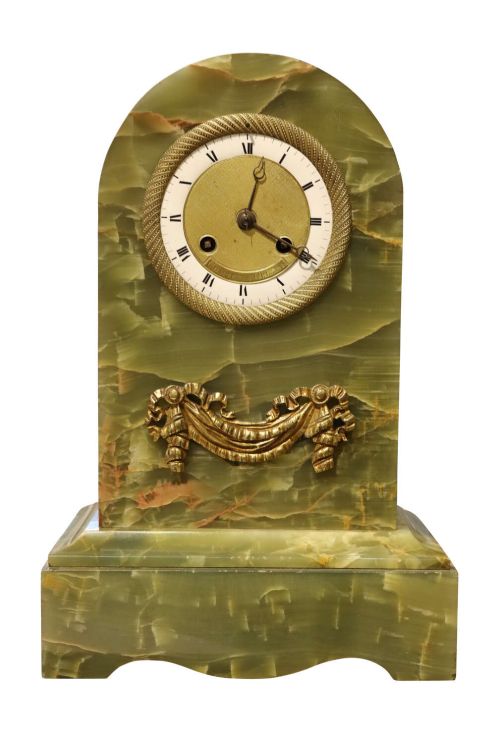
The periods represented span the eighteenth, nineteenth, and early twentieth centuries, drawing on Georgian chinoiserie, Victorian marble, and Art Deco modernist movements. Longcase clocks often display lacquered green finishes, whereas nineteenth-century examples frequently utilise green onyx, marble, or bronze.
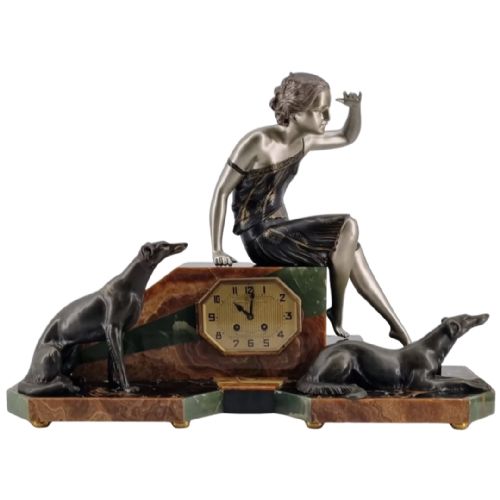
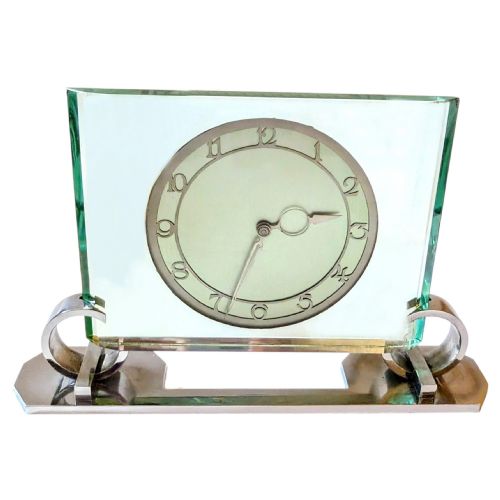
Art Deco pieces from the nineteen-thirties introduce vibrant opaline glass, chrome, and streamlined geometry to the category. Mantel clocks dominate the smaller formats, often accompanied by matching side urns or sculpted figures.
Materials and construction
Horologists combined substantial structural materials with intricate surface decoration to produce these timepieces. Wood longcases received multiple layers of green lacquer, sometimes featuring gilt chinoiserie figures and landscapes executed by hand.
Desk and mantel models incorporated heavy mineral substances such as green marble, slate, and green onyx, frequently mounted with brass, ormolu, or gilt bronze. Later twentieth-century items utilised chromium plating and moulded uranium glass.
Mechanical movements relied on brass gear trains, fusee or spring drives, and enamel dials. Cabinets incorporated glass viewing panels, hand-carved stone, and cast metal sculptures.
Antique Green Clock Retail Price Guide 2026
Typical asking prices for green clock among the pieces listed under this phrase on Sellingantiques today, from the lower quarter to the upper quarter. They describe what is for sale here now, not the wider market.
Listings feature longcase clocks, mantel clocks, and desk clocks spanning the Georgian, Victorian, and Art Deco eras in marble, brass, and glass.
Distinctions in execution
Quality in these timepieces rests upon the crispness of the casting, the depth of the stone polishing, and the refinement of the dial work. Finer examples display carefully chased ormolu mounts and hand-painted lacquer scenes rather than printed decoration.
The standard of the mechanical movement dictates overall merit, separating mass-produced utility items from bespoke workshop production. Complete matching garniture sets with original sidepieces command greater appreciation than isolated units.
John fielder of Alton·Green of Edinburgh·Charles à Orléans·Smiths Clockmakers·Winterhalder & Hofmeier·Elliott·William Kipling London·Mappin & Webb·Auguste Moreau·Michel Decoux·Chater & Son·Ferdinand Priess
The Antique Green Clock Glossary
- Garniture
- A set consisting of a central clock flanked by matching decorative objects such as urns or candelabra. These matched groupings were designed to adorn a mantelpiece as a unified decorative scheme.
- Chinoiserie
- European decorative style employing imitation Chinese motifs and lacquer techniques. This aesthetic appears frequently on eighteenth-century longcase clock cases.
- Fusee
- A conical pulley used in spring-driven clocks to equalise the torque of the mainspring as it unwinds. This mechanism improves timekeeping accuracy across the power reserve.
- Ormolu
- Gilt bronze ornamentation applied to furniture and clock cases. The technique involves coating metal objects in a mercury and gold amalgam before firing.
- Boulle
- Marquetry technique utilising tortoiseshell and brass inlay. It surfaces on select nineteenth-century mantel clock designs.
Antique Green Clock: Frequently Asked Questions
How do I wind an antique clock?
Most mechanical clocks utilise a key inserted into the dial face to tension the internal springs or lift suspended weights. Care must be taken not to over-wind the mechanism.
Consulting the specific movement type ensures the correct winding direction and tension limits are maintained for reliable daily operation.
Where should I place a heavy marble clock?
Heavy stone and slate timepieces require a sturdy, level surface such as a firm mantelpiece or low sideboard. The weight demands solid support to prevent shifting.
Ensuring the base rests evenly prevents the escapement from going 'out of beat' and stopping the movement.
What is a clock garniture set?
A clock garniture is a matched suite comprising a central mantel clock accompanied by two matching side ornaments, typically urns or candelabra. They were manufactured together as a decorative ensemble.
Displaying them together on a mantle creates a balanced decorative arrangement popular in nineteenth-century interiors.
How do I identify an Art Deco clock?
Art Deco clocks feature geometric forms, streamlined chrome framing, and modern materials such as opaline glass and green onyx. They often date to around nineteen thirty.
The styling moves away from historic revival motifs towards clean modernist lines and industrial elements.