

Antique Gold Turquoise
Antique gold turquoise pieces bring together vibrant blue cabochons and warm precious metals across rings, pendants and brooches from the Victorian and Edwardian eras.
Antique Gold Turquoise
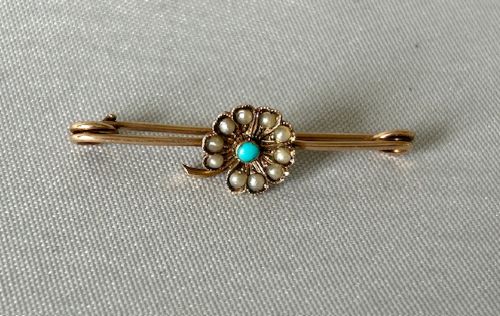
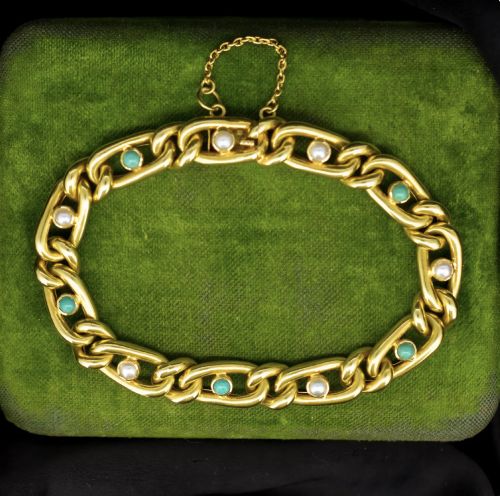
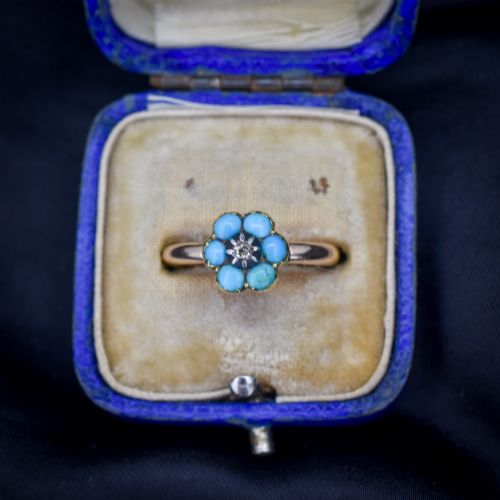
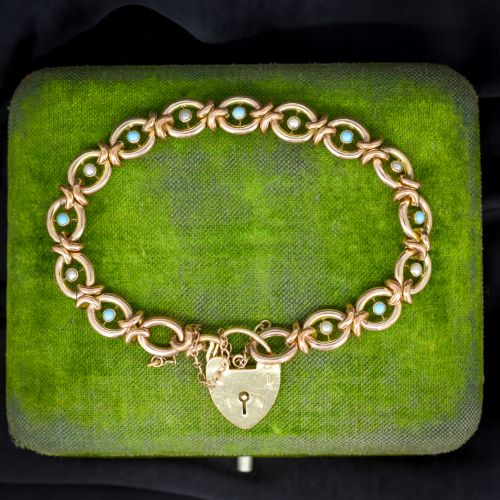
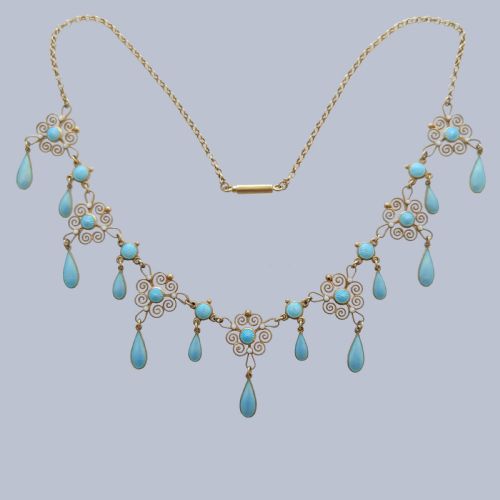
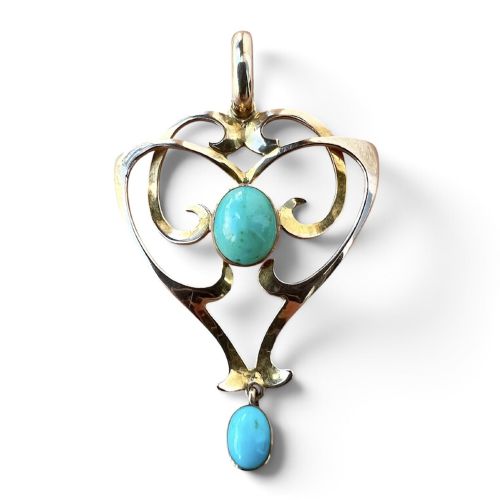
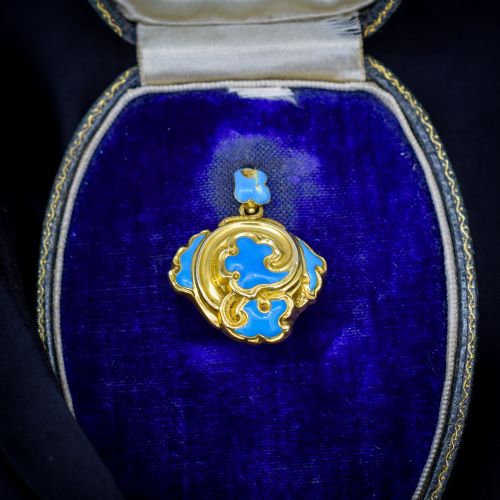
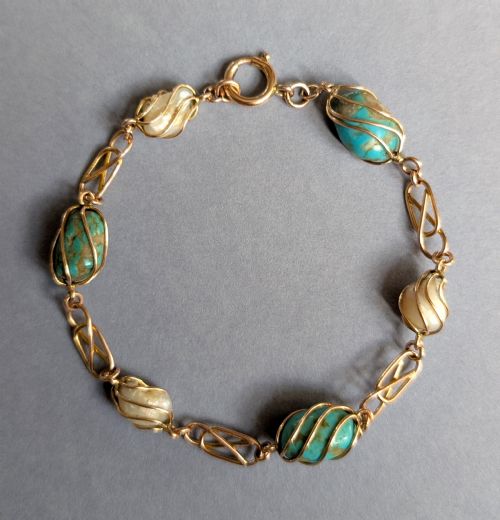
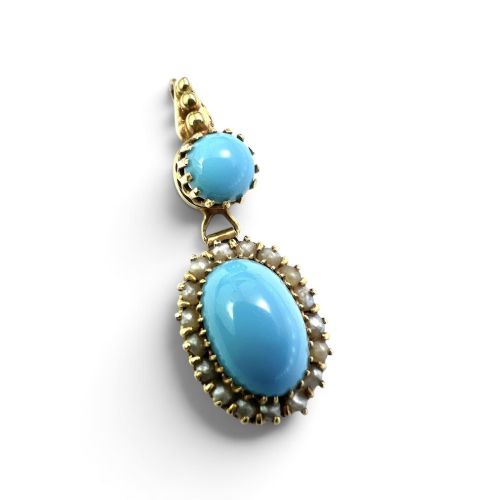
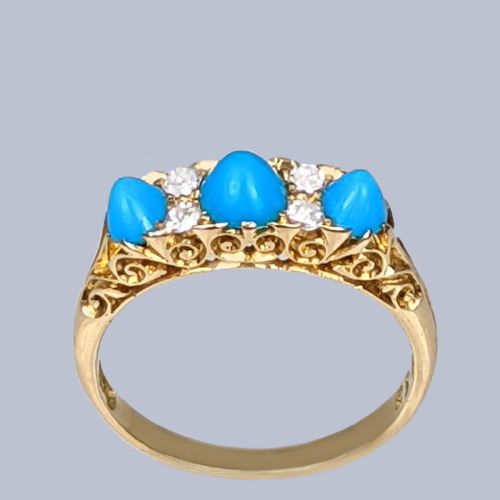
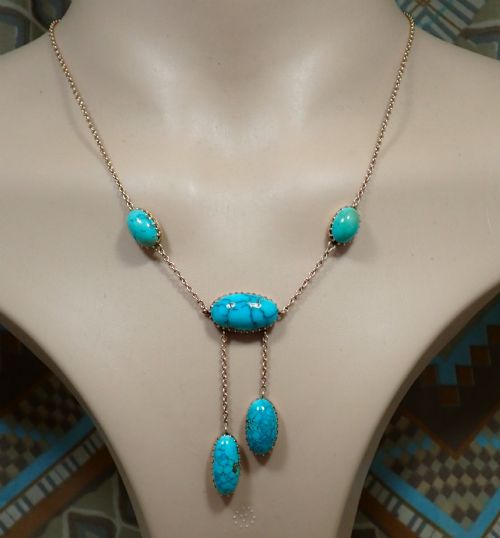
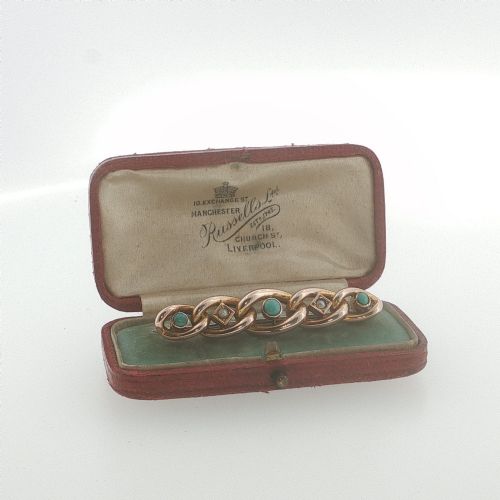
When searching for antique gold turquoise, a buyer encounters a diverse selection of jewellery and decorative objects spanning the nineteenth and early twentieth centuries. The pieces on this page most frequently take the form of rings, brooches and pendants shaped by Victorian and Edwardian makers.
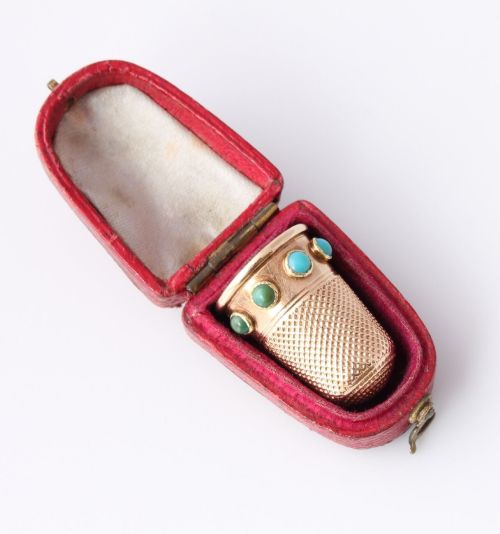
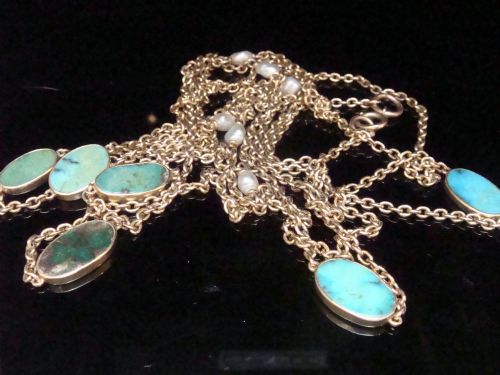
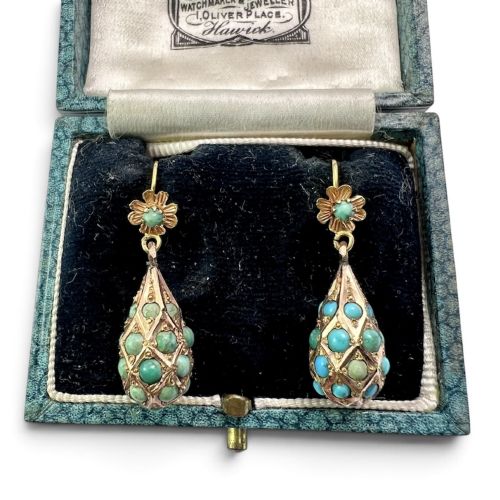
The items range from delicate seed pearl cluster rings and floral drop earrings to substantial longuard chains and mourning lockets. Alongside wearable jewellery, the selection occasionally includes utilitarian items and decorative objects incorporating turquoise cabochons or stone inlays.
Materials and Techniques
Craftsmen built these pieces using varying purities of gold, predominantly nine-carat, fifteen-carat and eighteen-carat, shaped into delicate wirework, cast mountings and heavy link chains. Turquoise stones appear primarily as polished cabochons or matrix fragments, frequently paired with natural pearls, diamonds and blue enamel.
Techniques such as Etruscan revival granulation, delicate collet settings and intricate piercing define the metalwork across Victorian and Edwardian examples. Artisans combined these gold and turquoise elements with silver in specific multi-stone settings to enhance the brilliance of accompanying diamonds.
Antique Gold Turquoise Retail Price Guide 2026
Typical asking prices for gold turquoise among the pieces listed under this phrase on Sellingantiques today, from the lower quarter to the upper quarter. They describe what is for sale here now, not the wider market.
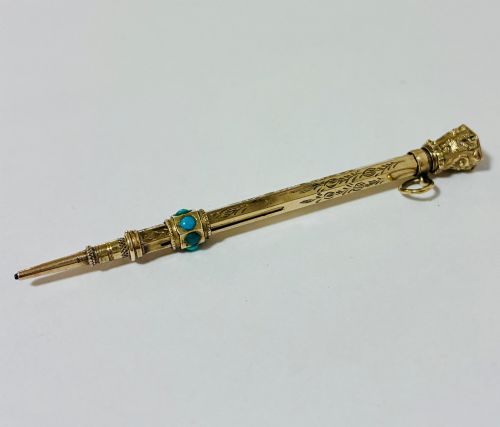
A nineteenth-century propelling pencil fitted with a turquoise charm pendant proves that Victorian writers enjoyed coordinating their stationery with their lapels.
Markers of Quality
The standard of a piece rests heavily on the natural colour uniformity and matrix stability of the turquoise stones, alongside the crispness of the surrounding gold fabrication. Superior examples display evenly matched robin-egg blue hues without extensive surface pitting or discolouration.
Construction detail distinguishes finer items, seen in secure stone settings, well-finished reverse sides and integrated maker marks. Pieces that retain their original clasps, fitted cases or intricate multi-part linkages demonstrate a higher level of original craftsmanship.
Deakin & Francis·Murrle Bennett
The Antique Gold Turquoise Glossary
- Cabochon
- A gemstone shaped and polished with a smooth, convex domed surface rather than faceted. This cut preserves the natural blue colour and subtle matrix patterns characteristic of antique turquoise.
- Matrix
- The host rock material remaining within or attached to a turquoise stone, creating web-like patterns across the surface. Matrix turquoise appears frequently in Arts and Crafts and Edwardian designs.
- Longuard chain
- An exceptionally long watch chain or guard chain worn draped around the neck, often fitted with a slide or swivel clasp. These substantial gold chains frequently incorporate turquoise stations or charm pendants.
- Mourning locket
- A hinged pendant designed to hold a lock of hair or miniature portrait beneath glass, often decorated with enamel and turquoise. These pieces commemorate deceased loved ones in Victorian sentiment.
- Suffragette chain
- Jewellery incorporating the symbolic colour combination of green, white and violet, represented here by turquoise, pearls and amethyst or peridot. These pieces reflect early twentieth-century political movements.
Antique Gold Turquoise: Frequently Asked Questions
How do I care for antique turquoise jewellery?
Turquoise is a relatively soft and porous gemstone that absorbs oils, cosmetics and water easily. Clean these pieces only with a dry or very slightly damp soft cloth, and remove them before washing hands or applying lotions.
Store antique gold turquoise items individually in lined boxes to prevent harder gemstones like diamonds from scratching the polished cabochon surfaces.
How can I tell Victorian turquoise from Edwardian pieces?
Victorian items typically feature heavier, warmer gold alloys such as fifteen-carat and eighteen-carat, often incorporating sentimental motifs like knots, hearts and mourning elements. Stone settings during this period tend to be robust, sometimes backed with foil or closed backs in earlier examples.
Edwardian pieces generally utilise nine-carat rose or yellow gold alongside platinum or silver settings, favouring lighter, airier openwork designs like garlands, bows and delicate drops.
Were turquoise rings worn for specific meanings?
Turquoise held significant symbolic value during the nineteenth century, frequently representing forget-me-nots, enduring friendship and good fortune. Jewellers combined turquoise with pearls and diamonds in ring and brooch designs to convey specific romantic or sentimental messages.
Specific configurations, such as forget-me-knot motifs and multi-stone cluster rings, were chosen by givers and wearers to express loyalty and remembrance.