




Antique Gold Cuff Links
These antique gold cuff links are gentlemen's shirt fastenings shaped by decades of shifting style, pairing solid metal with pearls, diamonds, and enamel.
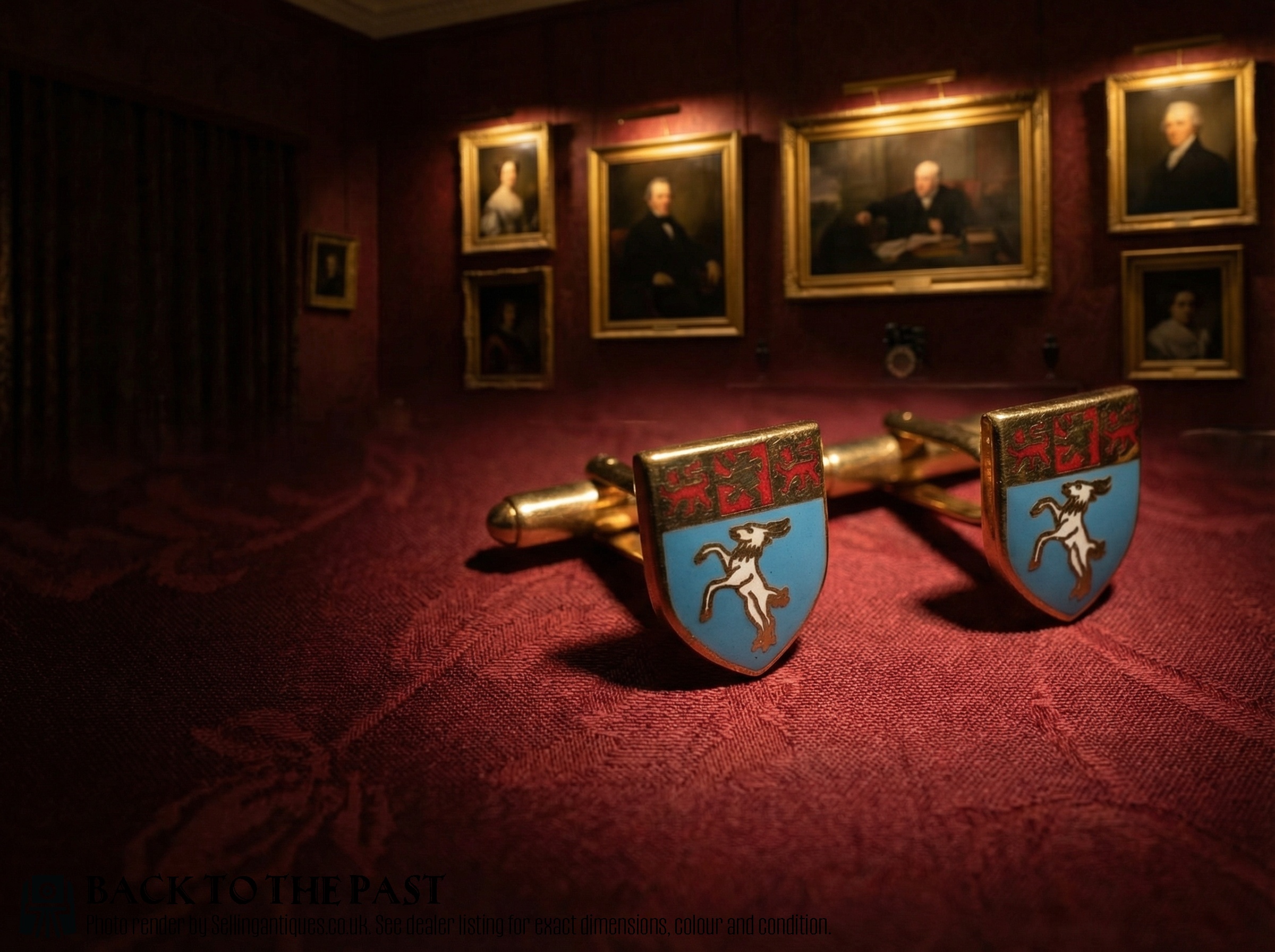
Antique Gold Cuff Links
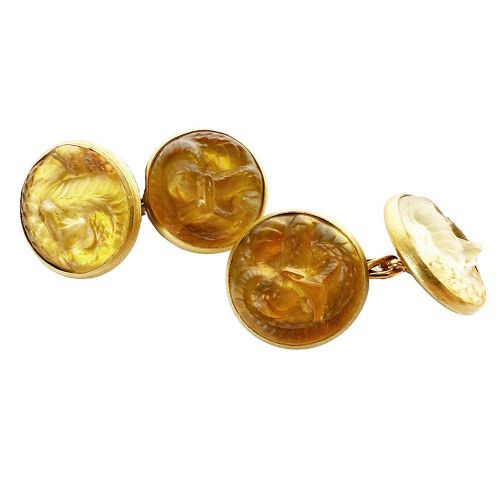
When searching for antique gold cuff links, collectors encounter everything from Victorian foliate engravings to clean-lined Mid-Century British pieces and 1960s makers' marks. The selection spans distinct eras including the Belle Epoque, Art Nouveau, Edwardian, and Art Deco periods, encompassing both simple chain-linked designs and more elaborate dress sets with matching studs.
Materials and construction
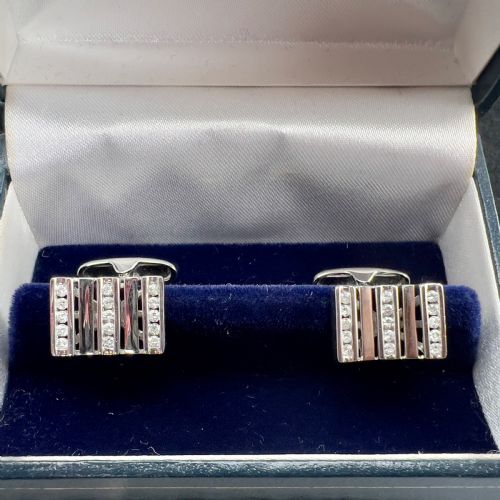
The foundation of these pieces relies on high-grade metalworking, utilising nine-carat, fourteen-carat, eighteen-carat yellow, rose, and white gold, alongside platinum accents. Goldsmiths frequently integrated sterling silver settings on the face to brighten the appearance of diamonds.
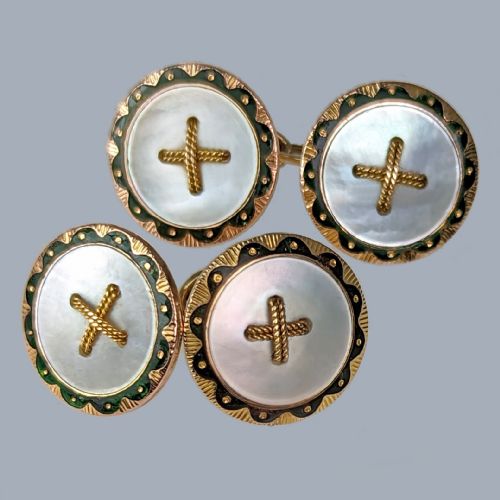
Surface ornamentation involved skilled lapidary and enamel work, incorporating vitreous enamel, blue guilloche enamel, mother of pearl, and onyx. Gemstones such as old-cut diamonds, rose-cut diamonds, split pearls, amethysts, rubies, and corundum were flush-set or star-set by hand into the gold panels.
Materials recorded across the archive include mother of pearl, onyx, enamel, diamonds, rubies, amethysts, and pearls.
Standards of craftsmanship
Quality rests upon the weight of the gold and the crispness of the chased or engraved foliate details, distinguishing heavy cast pieces from lighter stamped alternatives. Superior examples retain intact hallmarking and crisp maker's stamps from assay offices in Birmingham and Chester.
The refinement of the decorative face dictates the upper tier of the range, seen in translucent guilloche enamel laid over engine-turned metal or precisely matched mother of pearl panels framed by platinum and diamonds. The integration of robust chain links or original fitted boxes further separates standard everyday wear from high-status dress accessories.
Taye Kenning & Spencer Ltd·J Aitkin & Son·Wilson & Gill·Alexander Clark·Abraham Meyer Blanckensee
The Antique Gold Cuff Links Glossary
- Guilloche enamel
- A decorative technique where translucent enamel is layered over mechanically engraved metal. This method creates a repeating geometric wave pattern beneath the coloured glass.
- Torpedo back
- A tubular or bullet-shaped toggle attached by a short chain or post. It swivels flat to pass easily through stiff double cuffs.
- Belle Epoque
- A period of refined design running roughly from the late nineteenth century to the First World War. It is characterised by delicate platinum settings and intricate diamond work.
- Split pearl
- A small pearl that has been halved and glued or pegged into a gold setting. These are typical of Victorian and Edwardian cluster designs.
- Chain link
- A flexible connection joining two decorative faces of a cuff link instead of a rigid post. This style allows both sides to sit comfortably flat against the fabric.
Antique Gold Cuff Links: Frequently Asked Questions
How do I fasten antique cuff links?
Many older pieces utilise a short chain link connecting two decorative faces or a rigid bar with a fixed or torpedo back. You thread the smaller end through both buttonholes of a turned-back French cuff.
Rigid torpedo backs require tilting the toggle parallel to the post for insertion before it drops flat to secure the fabric. Chain-linked versions need manual adjustment to align the face properly against the cuff.
Can I wear them every day?
Solid gold and platinum pieces from the Victorian and Edwardian eras are robust enough for regular wear if handled with care. However, fragile elements like enamel inlays or split pearls require gentler treatment to avoid chipping.
Checking the security of connecting chains and jump rings helps prevent loss during active daily use. Storing them in dedicated compartments prevents surface scratching against modern jewellery.
What is a dress set?
A dress set includes matching shirt studs alongside the cuff links, designed for formal evening wear with stiff-fronted shirts. These coordinated suites often feature identical mother of pearl, diamond, or onyx faces mounted in gold.
They emerged strongly during the Edwardian and Art Deco periods when uniformity in gentlemanly accessories was paramount. Finding a complete set in its original fitted box is particularly prized.
How do I date an antique pair?
Official hallmarks stamped on the metal provide the most reliable dating evidence, showing assay office symbols and date letters. Birmingham and Chester assay marks frequently appear on British pieces alongside standard purity stamps like nine-carat or eighteen-carat.
Stylistic markers also help narrow the era, such as platinum-topped Edwardian diamond clusters or bold geometric Art Deco lines. Patination and construction techniques further confirm whether a pair belongs to the nineteenth or twentieth century.