


Antique Gold Cross
When you search for an antique gold cross, you enter a diverse tradition of devotional and decorative jewellery spanning several centuries.
Antique Gold Cross
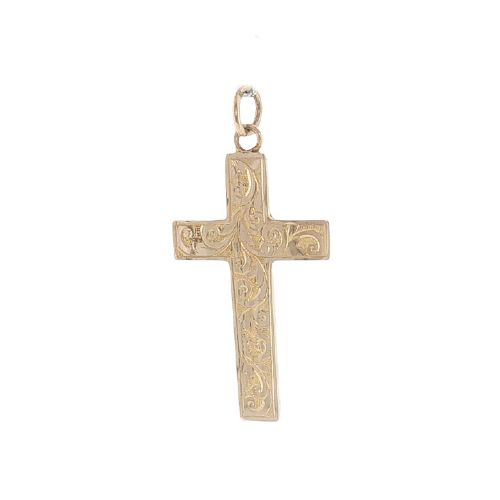
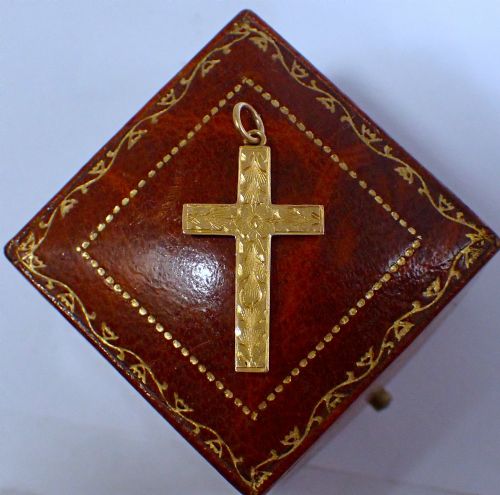
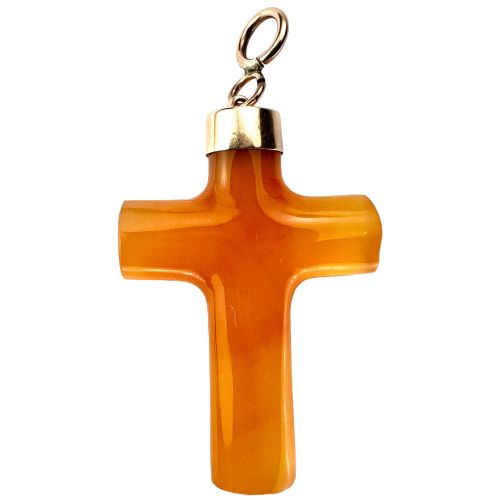
An antique gold cross carries deep historical and decorative significance, taking the form of pendants, brooches, and charms designed to be worn close to the body. You will most frequently encounter Victorian and Edwardian examples fashioned from yellow or rose gold, often embellished with stones or intricate engraving.
Many of these pieces serve as direct expressions of faith, while others function purely as sentimental or decorative adornments. The selection encompasses plain hallmarked gold designs alongside elaborate iterations incorporating seed pearls, turquoise, and diamonds.
The material origins stretch from Georgian workshops to early twentieth-century makers, reflecting shifting aesthetic preferences across decades. Whether you examine a small budded pendant or a large hinged crucifix locket, each object preserves the distinct craftsmanship of its era.
Materials and Techniques
Goldsmiths of the nineteenth and early twentieth centuries relied primarily on nine-carat, fifteen-carat, and eighteen-carat gold, employing casting, stamping, and hand-engraving to shape the metal. Surface decoration often included chased scrollwork, applied wirework, and black or red enamel fills.
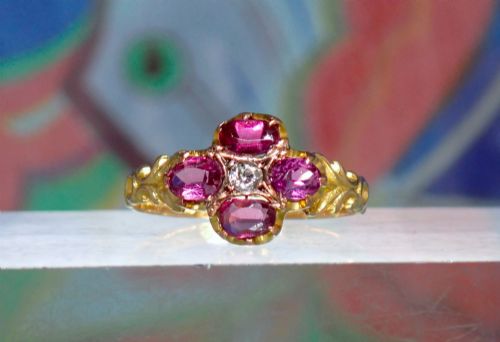
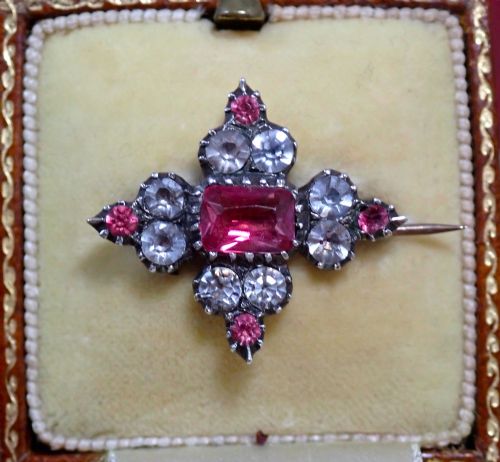
Gemstone setting techniques varied according to the period, with early pieces utilising closed-back foils for pastes and garnets, and later Victorian examples adopting star-set diamonds and rubies. Pearls and turquoise beads were frequently stitched or pegged directly onto gold backing plates.
Structural reinforcement was achieved through internal brass cores or silver linings in specific multi-metal configurations, ensuring durability while maintaining the outward appearance of solid gold.
One remarkably social cross managed to double as a mourning locket and a photo holder while still looking devout.
Distinctions in Execution
Quality in an antique gold cross rests upon the crispness of the hand-engraving and the structural integrity of the soldered joints. Superior pieces exhibit precise alignment in their applied decorative elements and secure claw or flush settings for any set stones.
The weight and purity of the gold alloy heavily influence the standing of a piece, with higher carat thresholds generally denoting finer workshop standards. Furthermore, the retention of original components, such as integrated jump rings, maker marks, and unaltered bale structures, elevates the integrity of the item.
Omar Ramsden and Alwyn Carr
The Antique Gold Cross Glossary
- Carat
- A unit measuring the purity of gold, where twenty-four parts represent pure metal. Lower figures like nine-carat indicate a higher proportion of alloying metals for increased durability.
- Pique
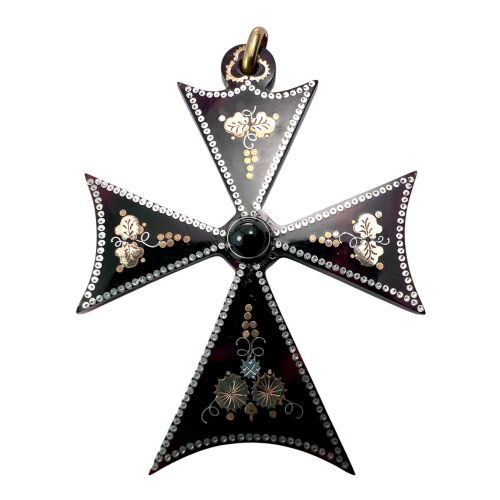
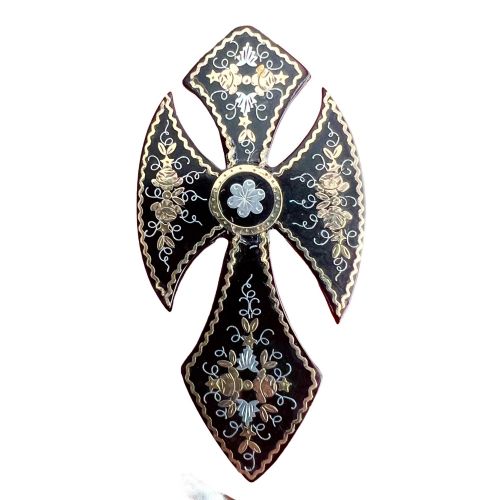
- A method of inlaying contrasting materials such as gold or silver into a non-metallic base like tortoiseshell or horn. This technique creates delicate surface patterns popular in nineteenth-century decorative items.
- Bale
- The ring or loop attached to the top of a pendant that suspends it from a chain. Original bales often feature distinct hallmarking or matching engraving.
- Chased
- A technique where metal is pushed and textured from the front using small hammers and punches to raise decorative motifs. It differs from engraving because no metal is removed during the process.
Antique Gold Cross: Frequently Asked Questions
How do I date an antique gold cross?
Dating relies heavily on official hallmarks, maker stamps, and stylistic cues such as the type of stone setting or engraving style. British pieces often feature assay office marks and date letters that pinpoint the exact year of creation.
Secondary indicators include the construction of the suspension loop and the presence of mourning compartments or specific clasp mechanisms popular in distinct decades like the Victorian or Edwardian eras.
Were all these crosses worn as necklaces?
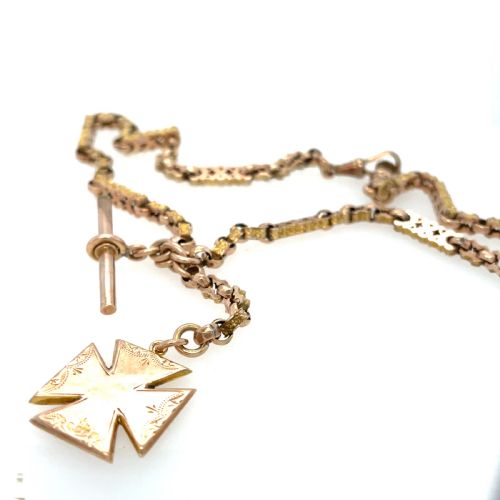
While many examples functioned as pendants suspended from chains or ribbons, a significant number served alternative purposes. Crosses frequently doubled as brooches, lockets, or decorative elements on chatelaines.
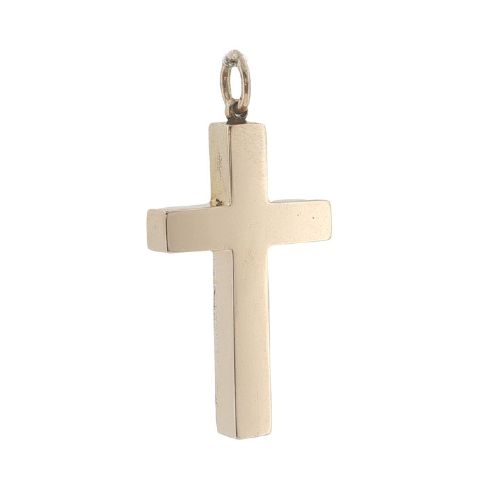
Examining the reverse reveals pin stems, hinges, or hidden photograph compartments that indicate how the piece was originally intended to be worn.
What is the difference between solid gold and filled pieces?
Solid gold items consist of uniform precious metal throughout their entire structure, maintaining their material value and durability across centuries. Rolled gold or gilt items utilise a base metal core bonded with a thin outer layer of gold.
Examining hallmarks and wear patterns around high-friction areas helps determine the underlying composition of the metal.
How should I care for an antique gold cross?
Maintenance requires gentle cleaning using warm water, mild soap, and a soft cloth to protect delicate stones like turquoise, pearls, or paste. Harsh chemical dips should be avoided, particularly on pieces containing foiled gems or enamel.
Proper storage in a lined box prevents abrasion against other items of jewellery, preserving the fine engraving and structural details.