





Antique Gold Belt Buckle
These antique gold belt buckle pieces range from Victorian rings to French steel work, offering enduring fastening designs in precious metals.
Antique Gold Belt Buckle
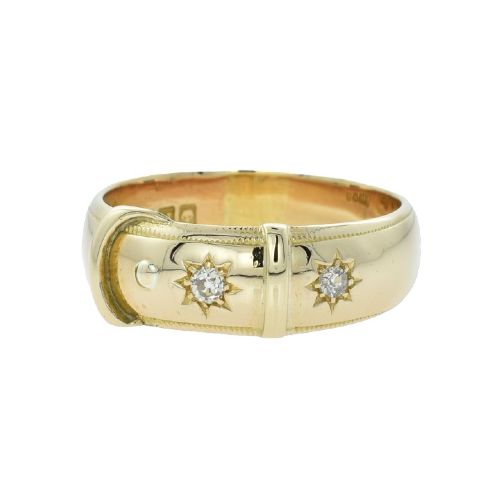
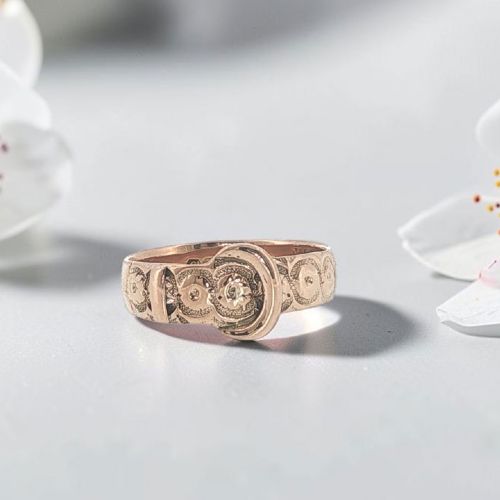
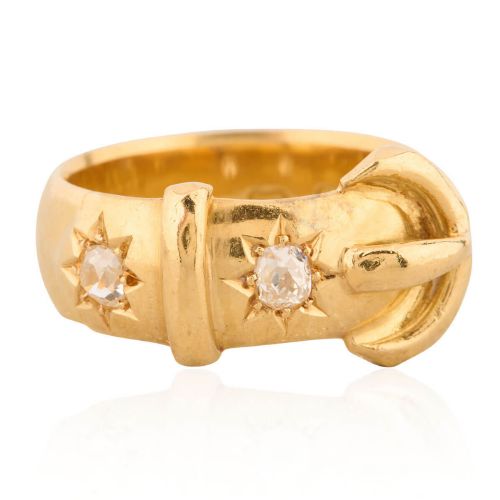
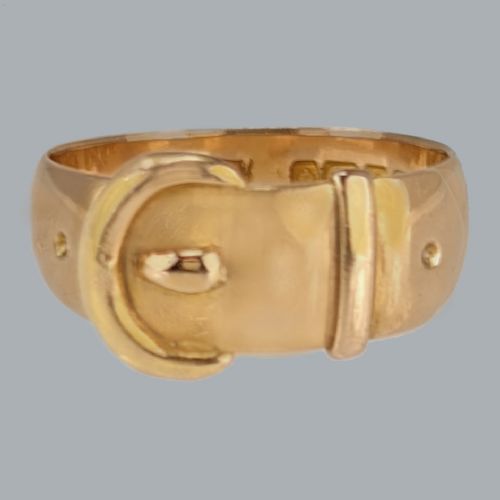
When you search for an antique gold belt buckle, you find both actual waist fastenings and finger rings formed in the shape of a buckle. The pieces on this page span the Victorian, Edwardian, and later periods, capturing a fascination with clasps and belts that symbolised loyalty and attachment.
The most frequent form on this page is the buckle ring, cast in yellow or rose gold and often set with diamonds or garnets. Alongside these rings sit larger waist fastenings, including Straits Chinese gilt silver examples and French damascene steel designs.
Origins stretch from English assay offices in Birmingham and Chester to French workshops and Straits Chinese craft centres. This geographic spread brings distinct regional touches, from British hallmarked gold to continental enamel and steel work.
Materials and construction
Makers shaped these pieces predominantly from nine-carat and eighteen-carat gold, alongside silver and damascene steel. Metals were cast, engraved, and occasionally gilded to achieve the desired weight and lustre.
Gemstones such as diamonds and garnets were flush or star set into the gold bands of buckle rings. Specialist techniques like damascene work combined contrasting metals to create patterned surfaces on larger belt fastenings.
Antique Gold Belt Buckle Retail Price Guide 2026
Typical asking prices for gold belt buckle among the pieces listed under this phrase on Sellingantiques today, from the lower quarter to the upper quarter. They describe what is for sale here now, not the wider market.
A beetle-shaped scarab buckle proves that even Victorian insects occasionally needed a smart belt.
Judging workmanship and condition
Quality rests in the crispness of the chased or engraved strap details and the security of stone settings. Finer examples retain sharp definition along the buckle tongue and loop, showing minimal softening from wear.
Hallmarks stamped into the metal provide clear provenance and indicate the standard of the gold or silver used. The weight of the metal and the quality of the cut diamonds further distinguish standard production from superior pieces.
William Griffiths and Son·Piel Freres·Tissot
The Antique Gold Belt Buckle Glossary
- Buckle ring
- A finger ring modelled to resemble a buckled belt, popular during the Victorian and Edwardian eras. These pieces often carry full British hallmarks inside the band.
- Damascene steel
- A composite metal decorated with intricate inlaid patterns of gold or other metals. French makers utilised this technique for decorative belt fittings.
- Peranakan
- Pertaining to the Straits Chinese culture known for distinctive gilt silver and ornamented metalwork. Pieces from this tradition display heavy chased decoration.
- Hallmark
- An official stamp indicating the metal purity and origin of an item. British pieces frequently display assay office marks for Birmingham or Chester.
Antique Gold Belt Buckle: Frequently Asked Questions
Why were buckle rings so popular?
Victorian and Edwardian jewellers favoured the buckle motif because it carried romantic associations of binding love and fidelity. The design allowed rings to be worn as sentimental tokens or mourning jewellery.
These pieces were produced in substantial quantities across British workshops, often marked with assay details that help modern collectors date them accurately.
How do I wear a antique buckle ring?
Buckle rings suit daily wear on the hand, though stone-set versions require the same care as other antique rings. Their low profile makes them practical for regular use.
Matching the gold colour of the ring to other jewellery helps create a cohesive look when styling antique pieces today.
What is the difference between a ring and a waist buckle?
While both share the characteristic strap and clasp design, waist buckles are larger fasteners intended for fabric belts. Ring versions are scaled down to fit a finger.
Both categories appear in gold, silver, and steel across the Victorian and Edwardian periods.
How can I tell if my piece is Victorian?
Victorian and Edwardian pieces often feature distinct hallmarks, specific gem-cutting styles like old-cut diamonds, and characteristic rose or yellow gold tones. British items frequently carry town marks and date letters.
Comparing the weight and construction methods against documented pieces from the same decade clarifies the timeline of manufacture.