
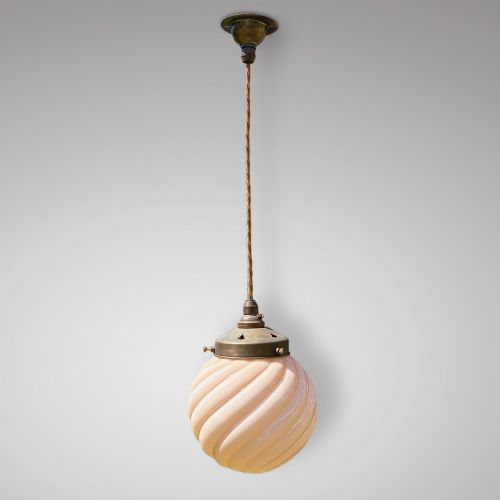


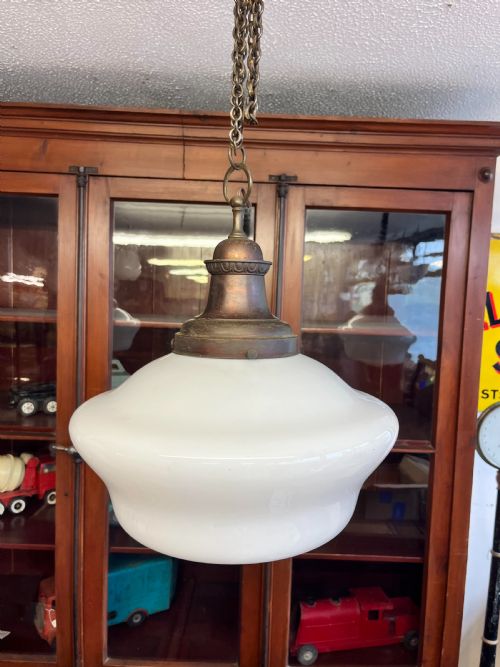


Antique Globe Pendant
An antique globe pendant brings a spherical form and diffused light to a room, offering both illumination and architectural presence.
Antique Globe Pendant
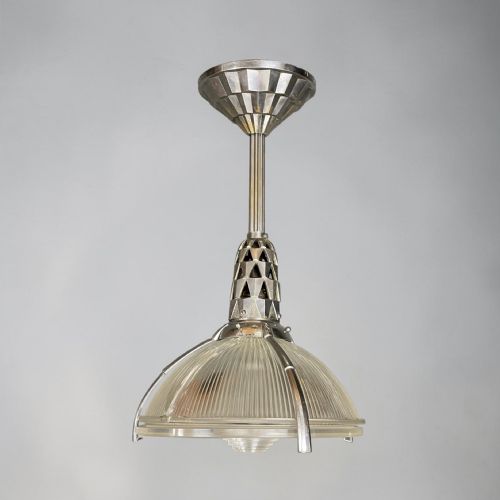
When you search for an antique globe pendant, you are looking for spherical lighting fixtures suspended from ceilings, spanning periods from the Victorian era through the Art Deco epoch and into the mid-twentieth century. The selection includes French Art Deco designs, English pharmacy lights, and industrial ceiling fixtures that utilise spherical shades.
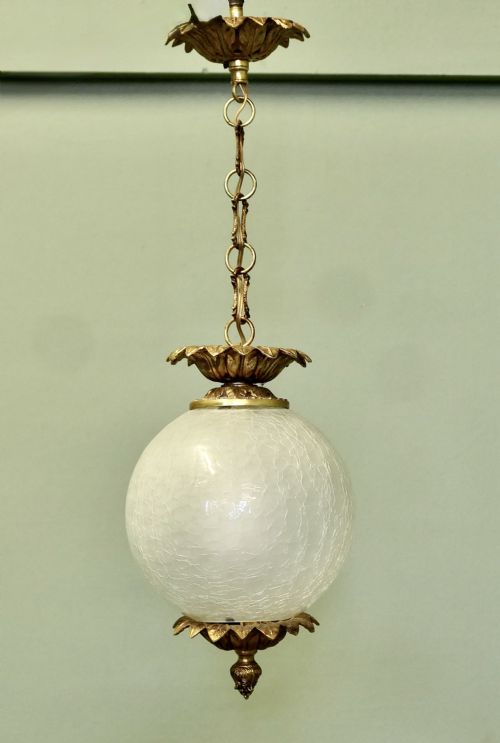
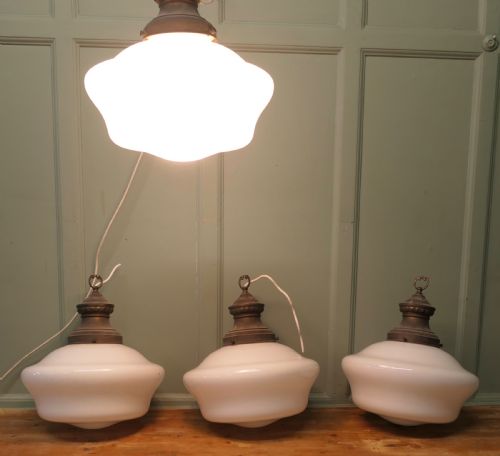
The most common versions met on this page date from the early twentieth century and the nineteen-thirtys, often featuring opaline or frosted glass globes held by brass, nickel-plated metal, or copper mounts. While the majority of listings comprise ceiling lighting and pendant lights, the category also accommodates related spherical forms such as drop earrings.
Origin and stylistic influence vary widely across the inventory, ranging from Gothic Revival brass chandeliers to French etches and Murano glass cages. Buyers encounter both restrained Edwardian hallway lanterns and substantial industrial pieces designed for commercial spaces.
Materials and construction methods
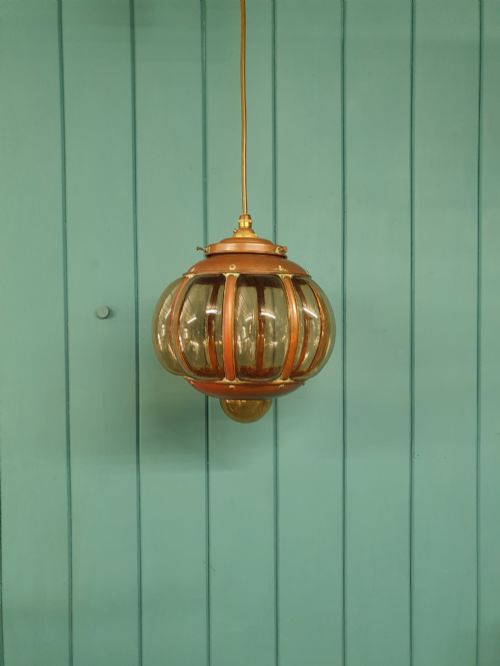
Makers constructed these fixtures using moulded, opaline, moonstone, and frosted glass for the globular shades, paired with metal galleries and suspension hardware. Brass, copper, gilt bronze, and nickel-plated metal provide the structural support and decorative fittings that secure the glass elements.
Techniques combine glassblowing and mould-pressing with metal casting and plating. Workshops utilised specialised galleries to grip the spherical glass securely while housing electrical or candle-burning components within.
Materials recur across brass, nickel-plated metal, and various forms of opaline, frosted, and moulded glass.
Differentiating quality in spherical lighting
Quality separates through the weight and clarity of the glass, the crispness of metal casting in the galleries, and the integrity of period fixings. Heavier opaline or prismatic glass demonstrates superior substance compared to standard pressed alternatives.
The sophistication of the metalwork, whether gilt bronze or patinated brass, marks the distinction between standard commercial lighting and high-design pieces. Original matching components and signed maker mounts elevate the standing of a pendant significantly.
Émile-Jacques Ruhlmann·Perry & Co
The Antique Globe Pendant Glossary
- Opaline glass
- A milky, semi-translucent glass developed to soften glare and diffuse light evenly across a room. It appears frequently in nineteenth and early twentieth-century lighting.
- Prismatic glass
- Glass moulded with intricate geometric ribs or prisms designed to refract and scatter light efficiently. Holophane production is particularly known for this technique.
- Gilt bronze
- Bronze metal treated with a fine layer of gold or gold-coloured alloy to give a rich metallic sheen. It appears on high-end period light mounts.
- Pendant light
- A solitary lighting fixture suspended from the ceiling by a cord, chain, or metal rod. These units hang downwards to illuminate specific zones.
Antique Globe Pendant: Frequently Asked Questions
How do I hang a heavy globe pendant?
Suspension requires secure ceiling joists or a proper mounting block to bear the combined weight of the glass globe and metal gallery. Professional electrical installation ensures the weight is supported safely by the chain or rod rather than the electrical flex.
Heavier industrial and institutional fixtures need appropriate ceiling hooks and fixings rated for their specific mass.
What is the difference between opaline and frosted glass?
Opaline glass is an opaque or semi-translucent milky white material created by adding chemical agents during the melt, resulting in a smooth, glowing surface when lit. Frosted glass achieves its matte appearance through mechanical or acid etching of clear glass.
Opaline diffuses light with a softer, warmer quality while obscuring internal bulbs entirely.
Can I use modern bulbs in these lights?
Most antique pendants can accommodate modern LED bulbs provided the wattage and physical dimensions fit within the enclosed glass globe. Care must be taken with heat dissipation inside smaller antique shades.
Consulting a qualified electrician ensures the internal wiring and lamp holders are safe for contemporary use.
How do I clean an antique glass globe?
Cleaning requires removing the glass shade from its metal gallery and washing it gently in warm, soapy water using a soft cloth. Abrasive cleaners must be avoided to protect the original surface finish.
Metal galleries should be dusted dry or wiped with appropriate non-chemical cloths to preserve their historic patina.