
Antique Glass Scent
These antique glass scent bottles bring tactile beauty and historical charm to a dressing table.
Antique Glass Scent
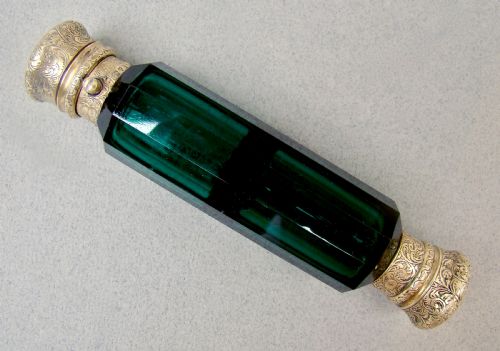
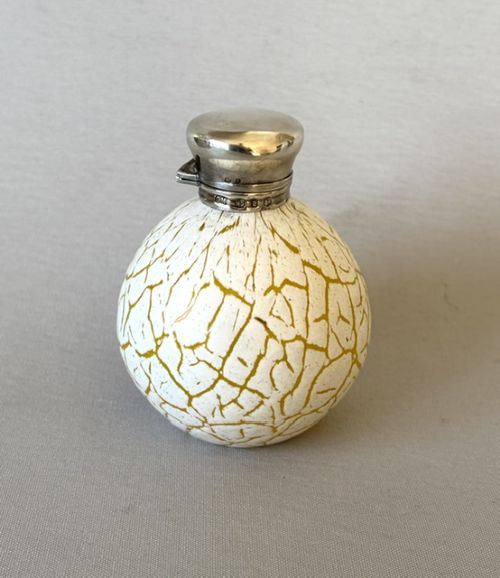
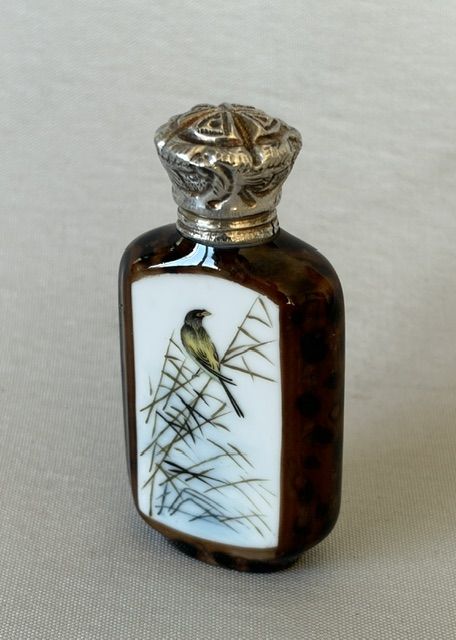
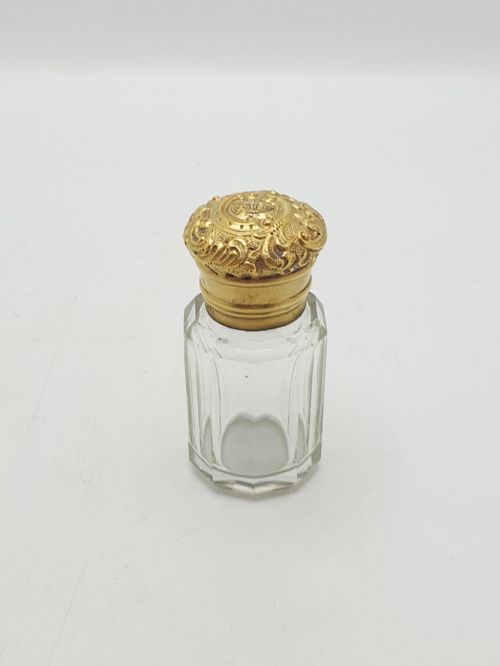
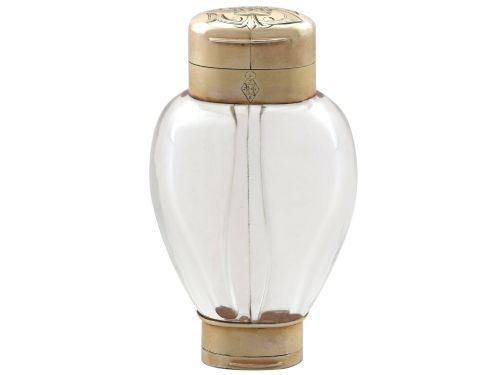
An antique glass scent bottle serves as a portable or stationary vessel designed to hold perfume, cologne, or volatile salts. The items on this page span several decades, reaching back to the Georgian era and moving through the Victorian, Edwardian, and Art Deco periods.
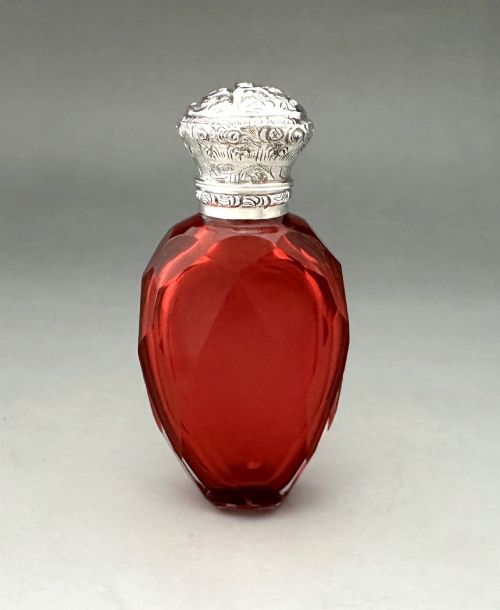
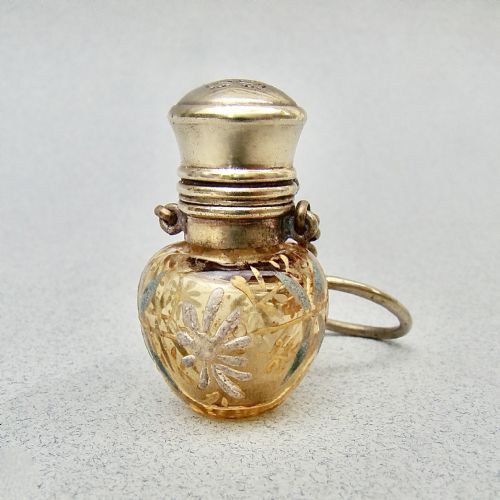
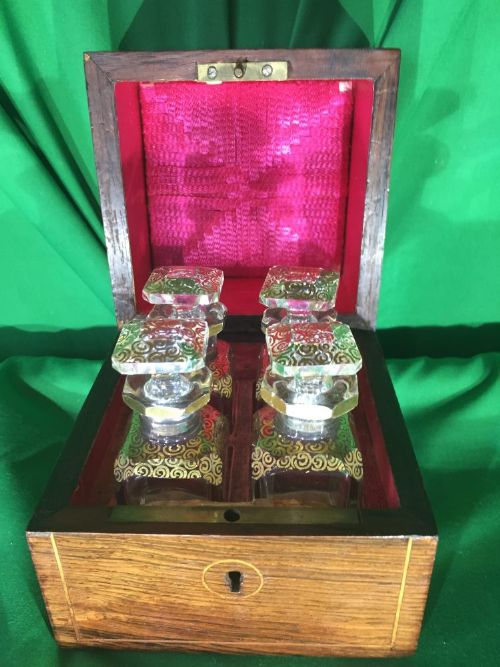
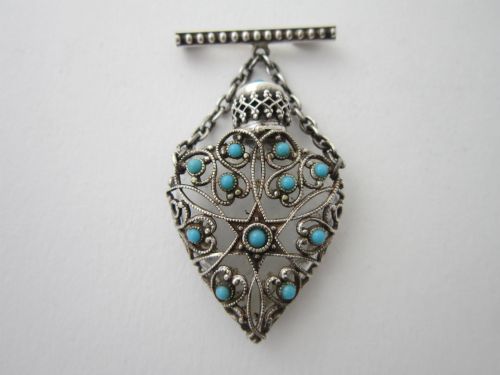
Buyers will encounter various forms, including pocket chatelaine flasks, vanity box sets, and simple dresser bottles. Many feature mounts in sterling silver, silver gilt, or ormolu, combining glass bodies with metal collars and hinged caps.
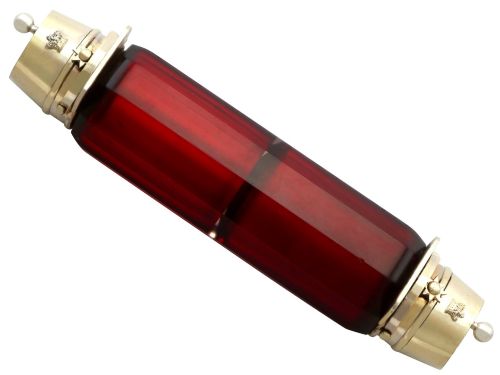
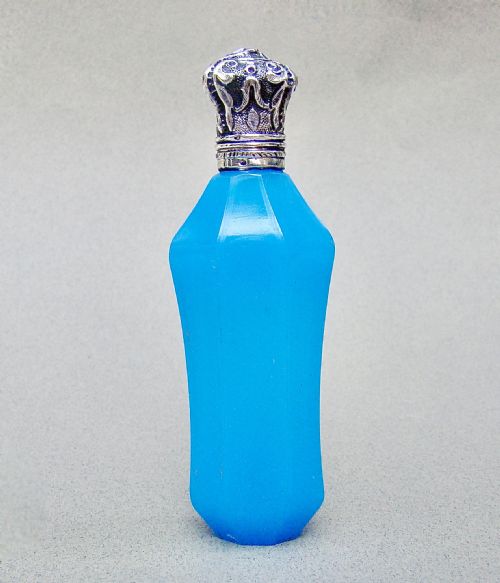
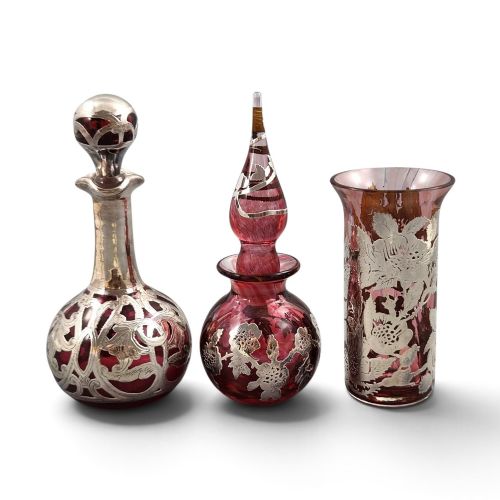
Origins stretch across England, France, Bohemia, and central Europe, utilising glass types such as cranberry, ruby, opaline, and cut crystal.
How they were made
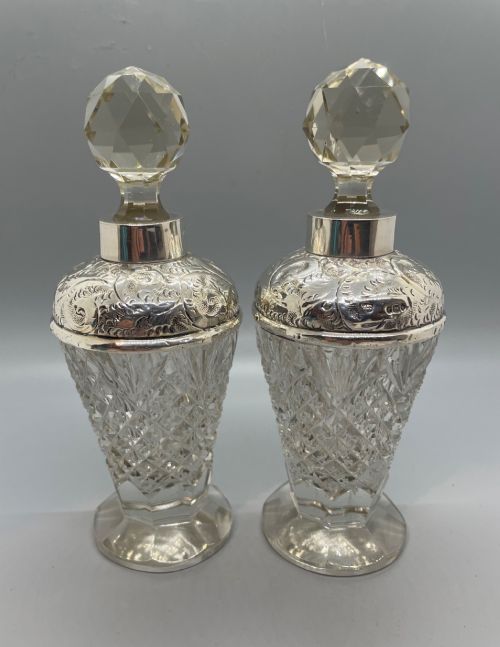
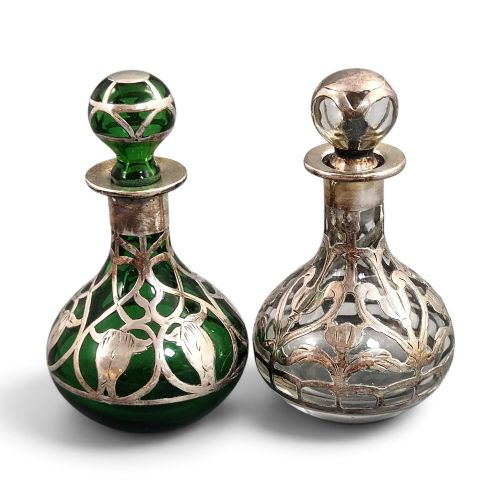
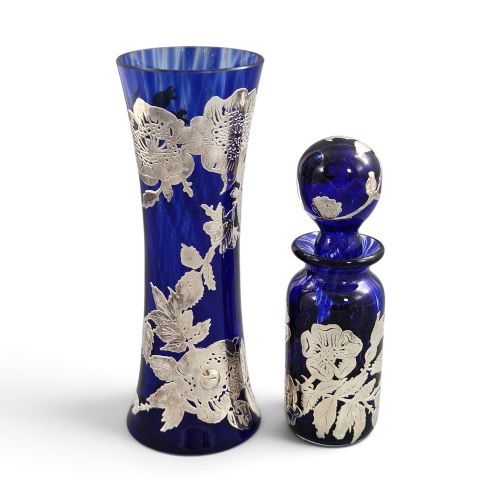
Makers shaped the vessels using free-blowing, mould-blowing, or precision cutting techniques to create facets and geometric patterns on the glass body. Overlay methods, such as sterling silver applied directly to the exterior, required precise metalwork fitted tightly to the contours of the flask.
Coloured glass relied on metallic oxides added during the melting process, yielding shades of deep ruby, emerald green, turquoise opaline, and milky white. Metal mounts often bear hallmarks indicating assay offices in cities like London and Birmingham alongside silversmith stamps.
Napoleon's portrait peers out from a crystal flask, watching modern vanity tables from 1830.
What varies in quality
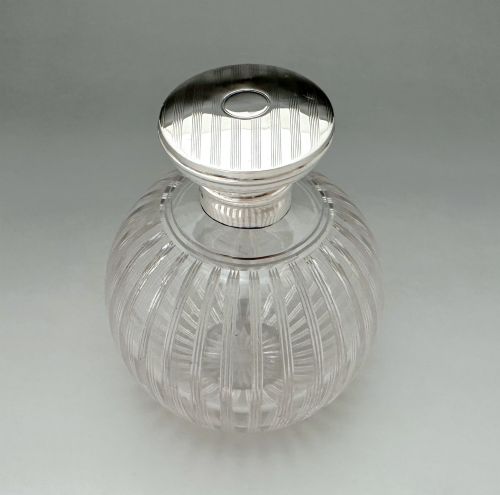
The distinction between ordinary and superior pieces rests upon the crispness of the glass cutting, the weight of the metal mounts, and the integration of decorative elements like enamel or sulphide portraits. Fine vessels display sharp facet edges and heavy sterling silver collars that retain tight hinges on their stoppers or caps.
Provenance and specific maker attribution elevate certain examples, particularly where documented European glasshouses or noted silversmiths are involved. The preservation of original stoppers and fitted leather or rosewood travel cases also influences the standing of a piece within its period.
Harold Bushell & Co·Karl Palda·Henry Perkins·Gorham·Moser·Franchini & Bigaglia
The Antique Glass Scent Glossary
- Vinaigrette
- A small container holding a perforated grill beneath a lid, originally used to soak a sponge in vinegar or aromatic ingredients. These often accompany scent bottles in shared metal mounts.
- Chatelaine
- A decorative belt hook suspended with chains holding household items like scent flasks, keys, or sewing tools. Victorian ladies wore them at the waist for daily utility.
- Opaline glass
- An opaque or translucent art glass developed in 19th-century France, known for its pale pastel tones and soft, milky appearance. It provides a smooth surface for enamel painting.
- Ormolu
- Gilded bronze or brass mounts applied to decorative objects and glassware. French makers frequently utilised this technique for 19th-century perfume flasks.
- Sulphide
- A small cameo made of white porcelain-like ceramic embedded within clear or coloured crystal. These appear as detailed opaque portraits or motifs inside the glass body.
Antique Glass Scent: Frequently Asked Questions
How do I clean an antique glass scent bottle safely?
Warm water and a soft bottle brush suffice for removing interior residue without damaging old glass surfaces. Avoid harsh chemical cleaners that might strip gilding or harm vintage metal mounts.
Keep moisture away from any paper labels or delicate fabric linings inside original presentation boxes. Dry the interior thoroughly before replacing the stopper.
Were these bottles meant for travel or display?
Many examples served both purposes depending on their size and casing. Smaller chatelaine flasks and boxed travelling sets allowed owners to carry fragrance securely away from home.
Larger dresser bottles stayed on vanity tables as decorative objects. Their heavy stoppers kept volatile scents from evaporating too quickly during daily use.
How can I tell Victorian pieces from Art Deco examples?
Victorian bottles typically feature ornate sterling silver mounts, cranberry or ruby glass, and botanical or scroll engravings. They lean towards romanticism and heavy ornamentation.
Art Deco items showcase geometric cutting, streamlined silhouettes, and minimalist Czech or European designs from the 1930s. Enamel work and stark colour contrasts frequently define this later era.
What is the purpose of the inner stopper?
The glass or crystal stopper creates a tight seal inside the neck to prevent perfume evaporation and leakage. Many antique bottles retain their matching numbered stoppers, which matters for authenticity.
Metal caps screw or snap over these inner stoppers to provide secondary security during handling or transport. Missing stoppers are common given the fragile nature of blown glass.