
Antique Glass Perfume
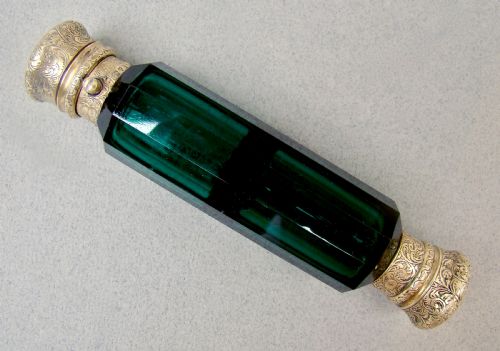
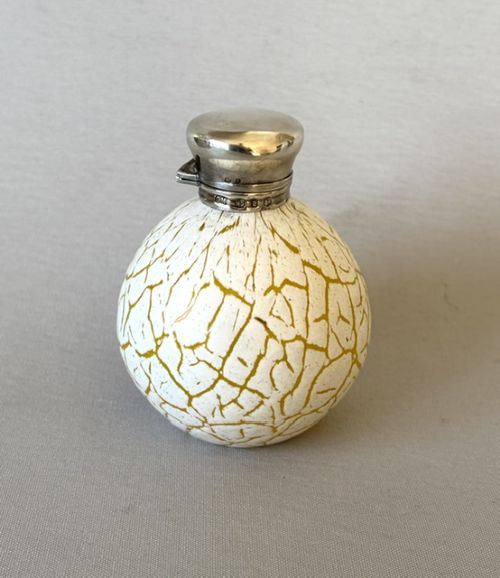
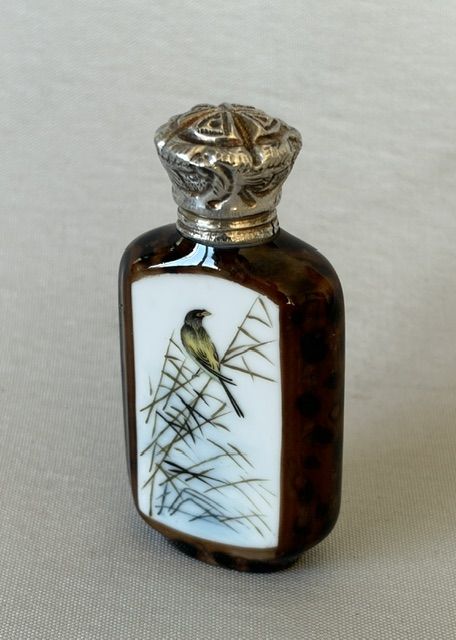
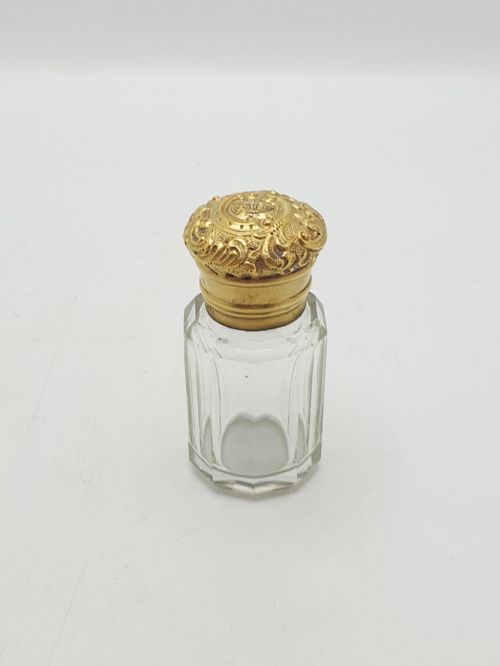
These antique glass perfume bottles combine coloured or clear vessels with precious metal mounts, offering both decorative charm and a tangible link to personal grooming history.
Antique Glass Perfume
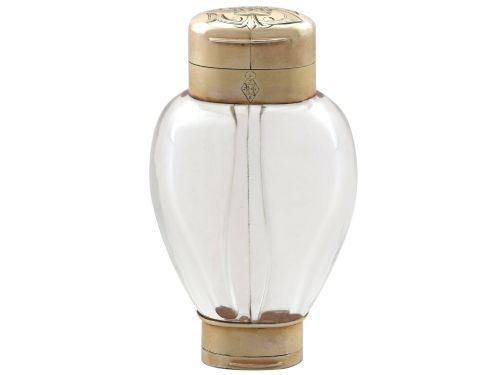
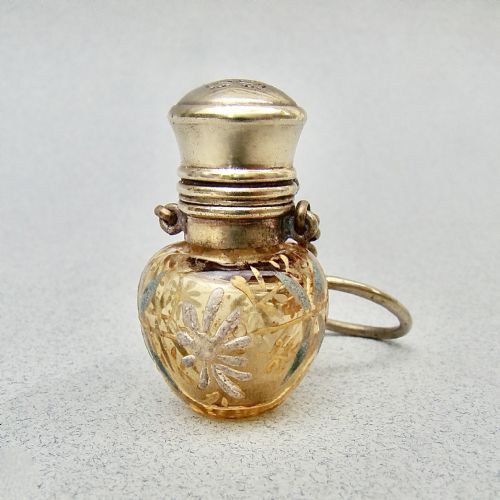
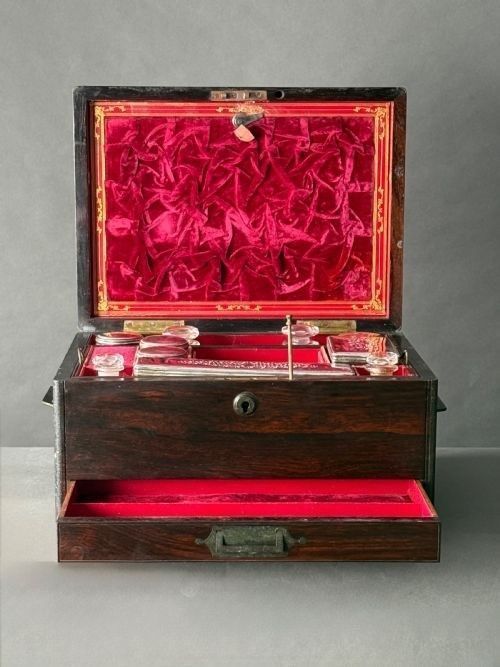
When you search for antique glass perfume, you encounter small vessels designed to hold scents, often fitted with metal stoppers or hinged caps. These items appear primarily as individual scent bottles, alongside vanity boxes and chatelaine holders.
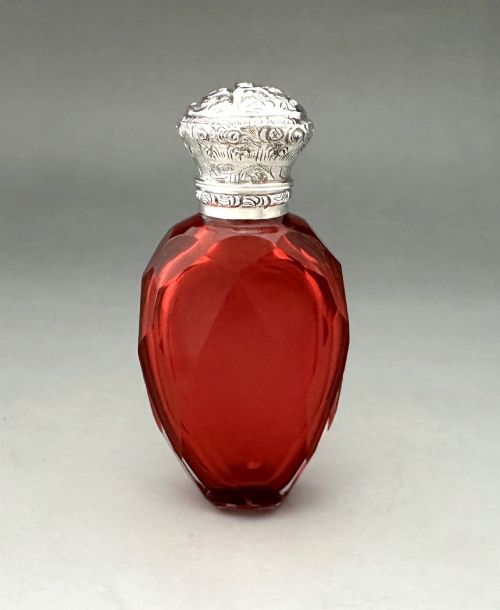
The selections span from the Georgian and Victorian eras into the Edwardian period and the 1930s Art Deco movement. Victorian examples frequently utilise coloured glass paired with sterling silver mounts.
Makers from Bohemia, France, and England produced these pieces, incorporating techniques ranging from geometric cutting to enamel painting. Buyers find everything from simple pocket flasks to elaborate table decanters.
How they were made
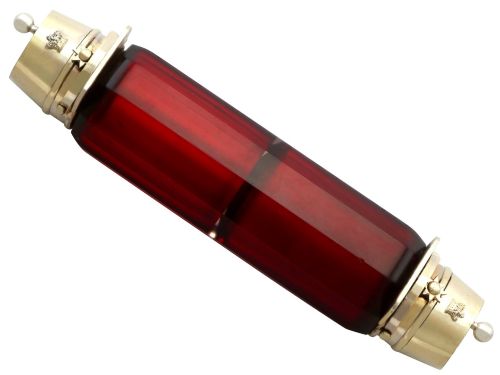
Glassmakers utilised various methods to create coloured bodies, including cranberry, ruby, opaline, green, and crackle glass, sometimes casing one colour over another. Molten material was blown into moulds or shaped by hand before cooling.
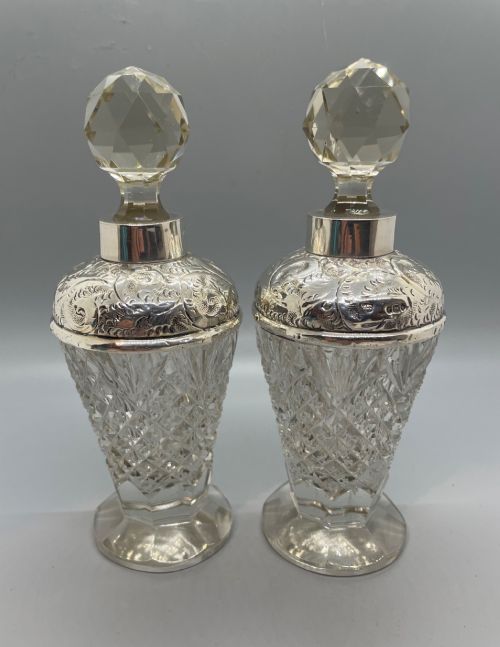
Silversmiths and metalworkers added mounts, collars, and hinged caps in sterling silver, silver gilt, or ormolu. These metal components were frequently hallmarked and engraved with floral or geometric motifs.
Surface decoration often involved enamel painting, silver overlay, or cut glass facets. Certain pieces incorporated specialised elements like sulphide portraits or murrine glass canes.
Napoleon Bonaparte occasionally peers out from within a Victorian crystal scent bottle, frozen permanently in white sulphide.
What varies in quality
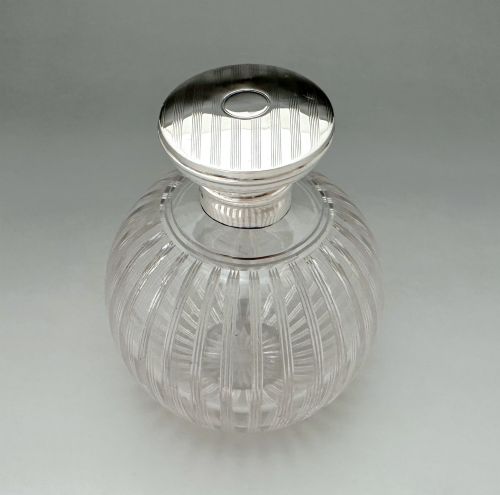
The weight and clarity of the glass vessel set a baseline for craftsmanship, with heavier cut crystal and finely layered opaline glass sitting above standard moulded wares. The precision of the wheel-cut facets dictates the crispness of the light reflection.
Metalwork execution distinguishes standard production from finer outputs. Hallmarked sterling silver mounts, intricate silver overlay, and hand-painted enamel details demonstrate superior workshop standards compared to plain brass or unmarked collars.
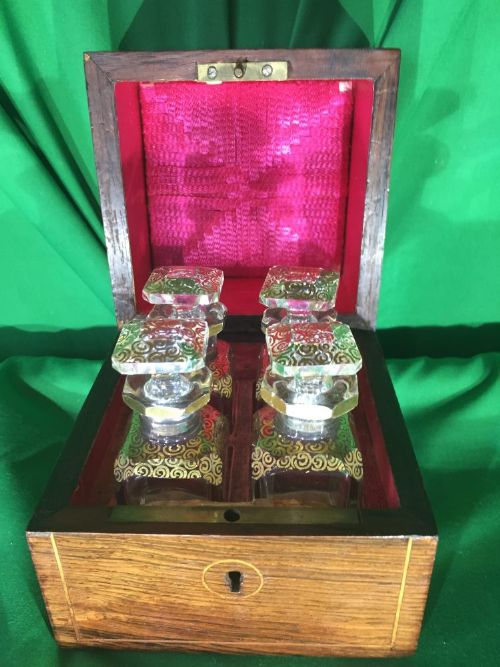
The integrity of the closure impacts overall execution, where a tightly sealing stopper or a properly sprung hinged cap indicates careful initial assembly. Complete sets, such as multiple bottles housed within original rosewood boxes, command greater interest.
Moser Glass·Gorham·Karl Palda·Henry Perkins·Harold Bushell and Co·Franchini and Bigaglia
The Antique Glass Perfume Glossary
- Opaline glass
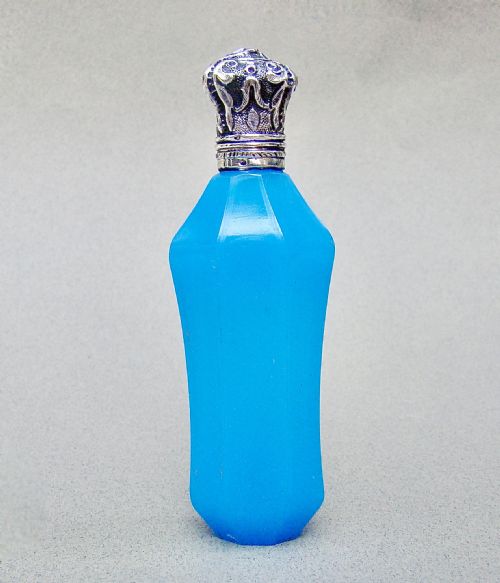
- An opaque or translucent glass developed in France during the 19th century, frequently coloured in shades of turquoise, blue, or pink. It provides a smooth, porcelain-like surface texture.
- Chatelaine
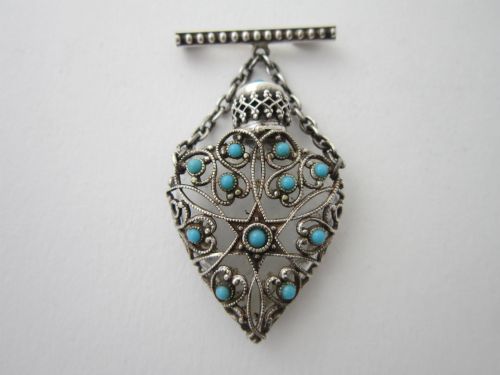
- A decorative belt hook worn with suspended utilitarian items, including scent bottles and vinaigrettes. This accessory allowed women to carry personal grooming tools conveniently.
- Vinaigrette
- A small ornamental box or bottle featuring a perforated inner grille, designed to hold a sponge soaked in aromatic vinegar. These items were used to combat unpleasant odours in public spaces.
- Sulphide
- A small cameo made of white ceramic material embedded within clear crystal glass. This technique gained popularity in France and England during the 19th century.
- Silver overlay
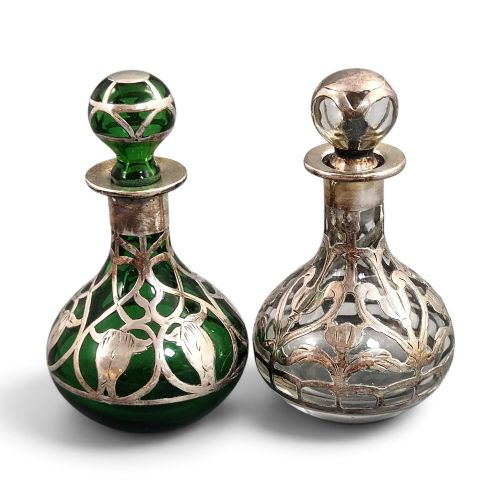
- A decorative technique where molten silver is applied directly onto the surface of a glass vessel in intricate patterns. The metal is then typically engraved and polished.
Antique Glass Perfume: Frequently Asked Questions
How do I date an antique scent bottle?
Dating relies heavily on metal hallmarks, style periods, and manufacturing techniques. Silver mounts often feature city assay marks and date letters that pinpoint the exact year of production.
stylistic shifts also offer guidance, moving from Georgian restraint through Victorian ornamentation to 1930s Art Deco geometry.
What is the difference between opaline and cranberry glass?
Opaline glass is an opaque or semi-translucent material that often mimics porcelain in pale pastel shades like turquoise or white. It creates a solid, milky appearance on vanity items.
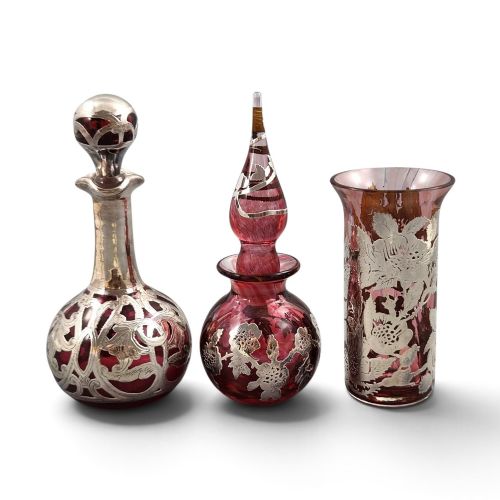
Cranberry glass is a transparent, rich pink-red material created by adding gold chloride to the molten batch during production.
How were scent bottles used historically?
These vessels held personal perfumes or aromatic vinegars for daily grooming and health purposes. Owners carried them in pocket cases, travel sets, or suspended from chatelaine hooks.
Larger versions remained stationary on dressing tables inside fitted rosewood boxes or vanity chests.
Are stoppers usually original to the bottle?
Many surviving pieces retain their matching original glass or metal stoppers, which fit the specific neck grind of the individual vessel. Because stoppers are delicate, replacements occur frequently among older items.
Examining the wear marks inside the neck helps determine if the components grew old together.