




Antique Glass Measures
Antique glass measures are precise laboratory, bar and medical vessels, and every serious collector wants one for their utility and historic charm.
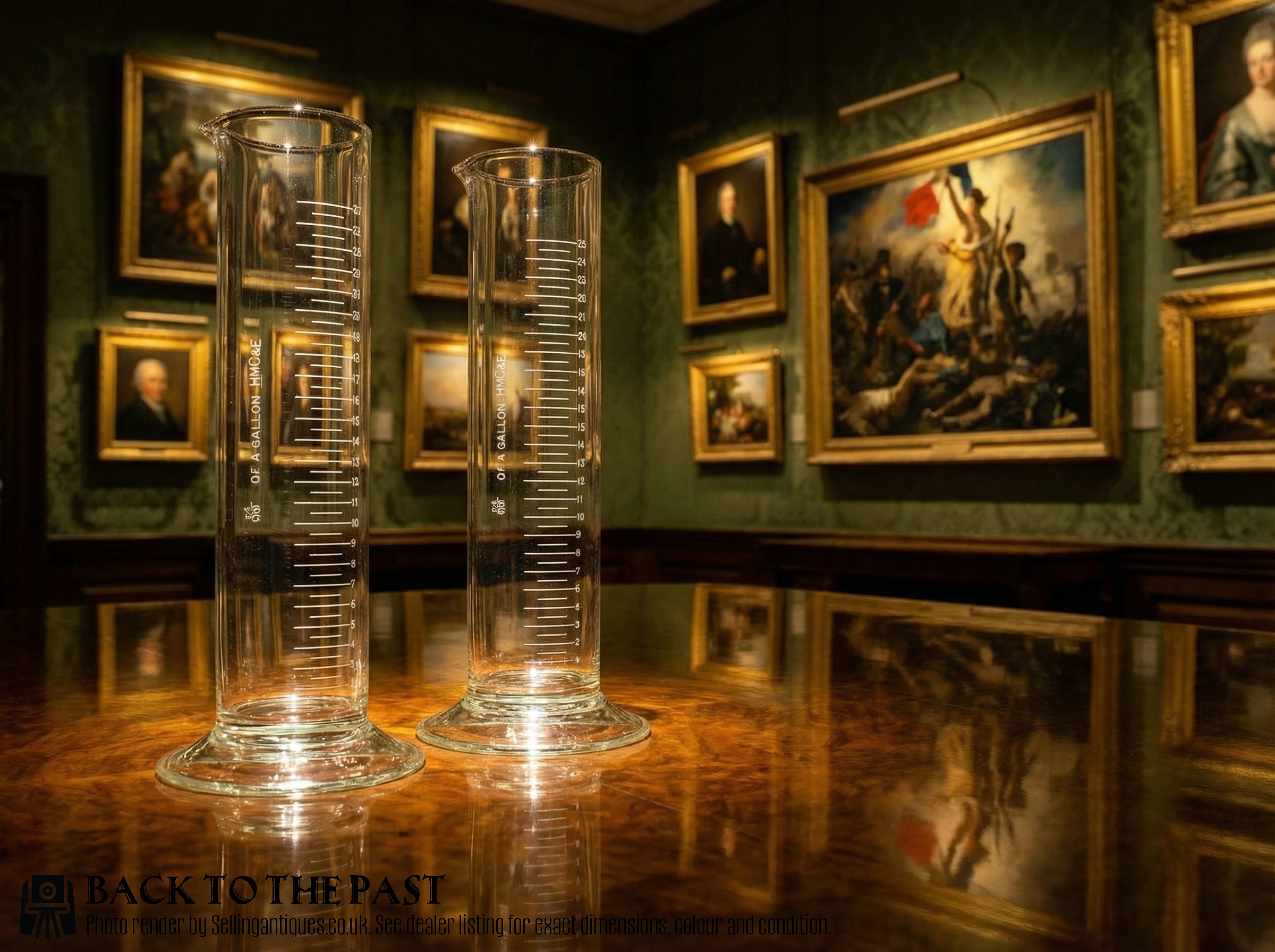
Antique Glass Measures
When you search for antique glass measures, you are looking at practical vessels spanning the Georgian, Victorian, and Edwardian eras, through to the Art Deco period. These items encompass medicine glasses, dram measures, and custom beakers designed for accurate liquid capacity.
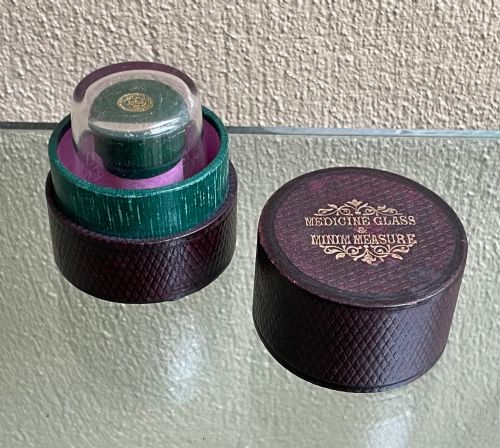
The versions most commonly met on this page include nineteenth-century medicine glasses, often complete with protective leather cases, alongside etched customs and excise beakers from the early twentieth century. Georgian double-ended dram measures also appear, showing the diverse domestic and official uses for calibrated glassware.
Makers utilised these glass pieces across scientific, apothecary, and barware contexts. The forms range from simple tapered dispensing glasses to marked spirits vessels and cocktail shakers incorporating glass and metal elements.
How they were made
Makers utilised clear glass for these vessels, applying etched graduations and markings directly onto the surface to ensure accurate volume measurement. Some examples incorporate brass, sterling silver, or silver-plated mounts and collars to reinforce the rims or add pouring spouts.
Protective elements frequently accompany the glassware, including fitted leather cases lined with paper, as well as boxwood or carved oak housings designed to keep fragile measuring instruments safe during transport or storage.
Listings feature clear glass, sterling silver, silver plate, brass, and leather across nineteenth-century and Art Deco periods.
What varies in quality
The fineness of the glasswork dictates the upper tier of quality, seen in crisp, deeply etched measurement scales and clear, bubble-free metal-free or mounted vessels. Superior examples often retain their original fitted cases, such as stamped leather or boxwood containers, which preserve the delicate glass.
Workmanship on the accompanying metal elements, whether sterling silver rims, silver-plated shakers, or brass fittings, separates standard utilitarian pieces from finer luxury or novelty items produced for well-to-do households and official customs use.
The Antique Glass Measures Glossary
- Dram measure
- A small drinking or dispensing vessel intended for measuring a single dram of spirits. These double-ended examples allow for precise portion control.
- Medicine glass
- A calibrated glass container used by apothecaries and patients to measure exact liquid doses of medicine. They often feature specific dosing lines etched onto the clear glass.
- Customs and excise beaker
- An official glass measure utilised by government officers to gauge alcohol volumes and duties. Etched markings indicate exact imperial capacities.
- Whisky noggin
- A small vessel used for serving spirits, typically comprising a glass body with a silver mount and handle. They frequently accompany a matching decanter.
- Cocktail shaker
- A barware container utilised for mixing drinks by shaking, often combining glass bodies with silver-plated or metal tops. Art Deco models show particularly stylised geometric designs.
Antique Glass Measures: Frequently Asked Questions
What are antique glass measures?
Antique glass measures are historic vessels made to hold precise volumes of liquids for medicine, spirits, or official duties. They date from the Georgian era through to the Art Deco period.
Collectors find them in forms such as medicine glasses, dram measures, and etched beakers, often accompanied by leather cases or silver mounts.
How were glass measures used?
People used these glass items in pharmacies, homes, and government offices to dispense exact quantities of liquids. Medical practitioners relied on them for patient doses, while excise officers tested alcohol.
In domestic settings, smaller dram measures and cocktail shakers helped serve spirits accurately during social gatherings.
How do I date an antique glass measure?
Dating relies on the style of the glass cutting, the form of the vessel, and any accompanying hallmarks on silver mounts. Victorian examples often feature specific dosing increments and fitted leather cases.
Early twentieth-century pieces, including Art Deco designs and Interwar barware, display cleaner geometric lines and different etching techniques compared to Georgian double-ended drams.
Do glass measures come with cases?
Many portable nineteenth-century medicine glasses survive with their original protective cases made from leather, boxwood, or paper linings. These housings kept fragile glass safe during travel.
Finding a piece with its original fitted case adds considerable interest for collectors of scientific and medical antiques.