



Antique Glass Flask Case
These antique glass flask cases combine stout leather or silver shells with fragile glass vessels, made to travel across Georgian, Victorian, and Edwardian roads.
Antique Glass Flask Case
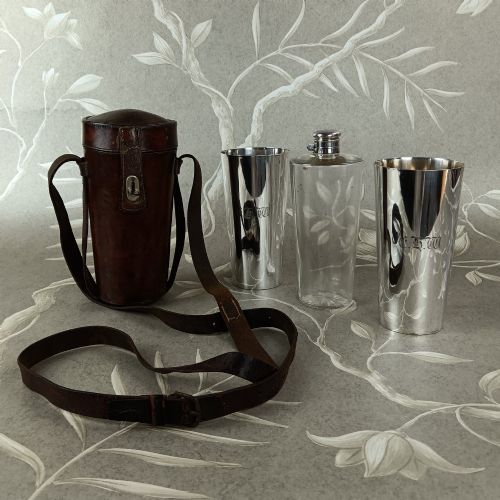
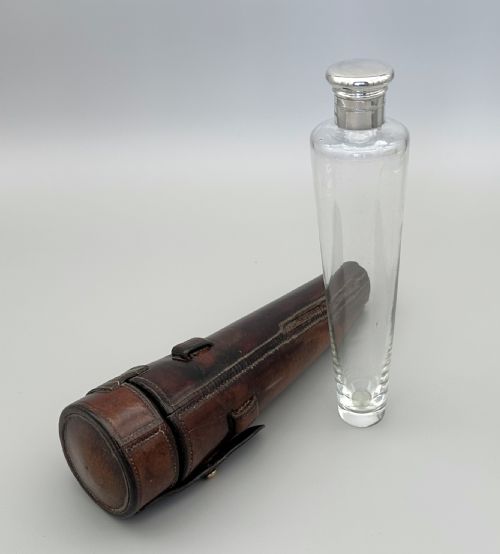
An antique glass flask case is a portable protective housing containing glass bottles, decanters, or scent flasks intended for travel or field use. When you search for an antique glass flask case, you encounter functional objects ranging from campaign spirit sets and saddle flasks to tortoiseshell perfume holders.
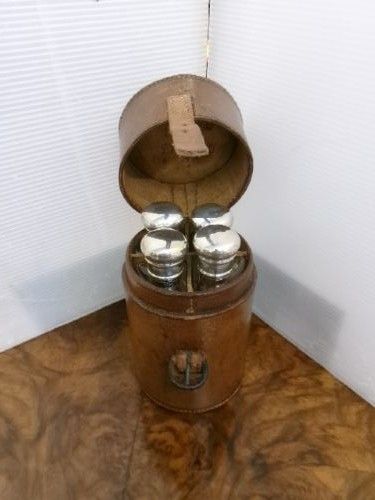
The pieces on this page span the Georgian, Victorian, and Edwardian periods, alongside George V examples. Formats vary from round leather cases holding four silver-topped flasks to ecclesiastical bronze-cased bottles and elaborate necessaires containing scent bottles and tool sets.
Most examples combine utilitarian function with refined materials, serving travellers, hunters, and society figures alike. The survival of both the delicate glass vessel and its protective outer case remains the defining characteristic of these items.
Materials and construction
Maker's workshops built these protective housings using leather, bronze, and tortoiseshell, fitted to enclose glass, opaline glass, or silver-gilt bottles. Leather cases were often moulded specifically to match the contours of the glass or metal vessels they contained.
Internal fittings frequently incorporated velvet linings to cushion the glass, while metal components utilised sterling silver or silver plate for caps, mounts, and drinking beakers. Fastenings and hinged lids required precision metalwork to secure the bottles during movement on horseback or in carriages.
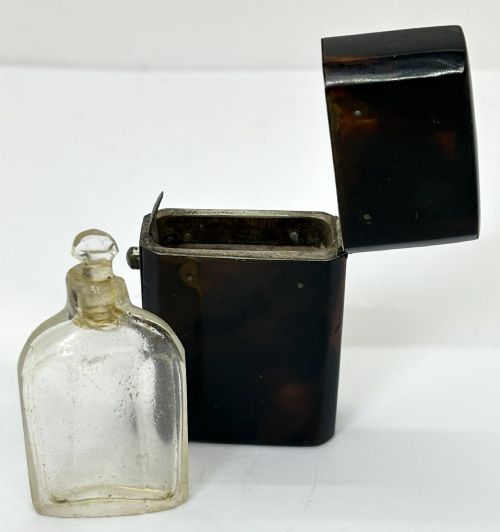
Some travel sets squeezed tweezers, bodkins, and perfume into tortoiseshell boxes small enough to slip into a waistcoat pocket.
Distinctions in quality
Quality rests on the integrity of the pairing between the outer case and the internal glass vessel. Complete sets retaining their original fitted leather, velvet lining, and matching silver tops command greater interest than assembled combinations.
The sophistication of the exterior housing elevates certain pieces, such as those featuring tortoiseshell panels, bronze ecclesiastical casting, or integrated tool sets with bodkins and tweezers. Finer items display crisply hallmarked sterling silver mounts and robust leather stitching that withstands repeated extraction of the bottle.
James Dixon And Sons
The Antique Glass Flask Case Glossary
- Campaign set
- A portable collection of flasks and beakers designed for military or field travel. These sets were built for durability on active service.
- Saddle flask
- A bottle shaped specifically to fit into a leather holster on a horse saddle. They typically feature a captive cap to prevent loss during hunting.
- Necessaire
- A small fitted case containing toilet articles, perfume bottles, or sewing tools. Georgian and Victorian examples often house tortoiseshell and silver implements.
- Opaline glass
- An opaque or translucent glass popular in the nineteenth century. It frequently appears in pastel shades for decorative scent bottles.
- Etui
- A small ornamental case for holding needles, tweezers, or cosmetic instruments. They appear alongside perfume bottles in luxury travel sets.
Antique Glass Flask Case: Frequently Asked Questions
What were antique glass flask cases used for?
These housings protected fragile glass bottles containing spirits, perfumes, or smelling salts during travel. Owners carried them on horseback, in carriages, or on military campaigns.
The fitted cases prevented the glass from shattering against hard surfaces while moving. Many double as drinking sets with integrated beakers or cups.
How do I care for leather and glass cases?
Keep leather housings away from direct heat and damp environments to prevent the material from cracking or warping. Feed dry leather with appropriate conservation balms.
Handle internal glass bottles carefully when removing them from tight leather or metal sleeves. Clean glass gently with warm water, avoiding harsh abrasives on silver mounts.
How can I tell a Georgian case from a Victorian one?
Georgian cases often feature refined materials like tortoiseshell and subtle silver mounts designed for pocket or dressing table use. They tend to have simpler, elegant proportions.
Victorian and Edwardian examples frequently reflect the rise of field sports and campaign travel, resulting in robust leather saddle flasks and fitted spirit sets with multiple beakers.
Are the glass bottles usually original to the cases?
Many surviving examples retain their original matching glass bottles and fitted velvet interiors. Examining the wear inside the case often reveals if a bottle has belonged there long-term.
Replacements do occur over decades of use, so matching hallmarks on silver tops with the era of the leather case helps confirm authenticity.