


Antique Glass Container
An antique glass container brings domestic elegance to a room, holding biscuits, powder or sugar behind silver mounts and cut crystal.
Antique Glass Container
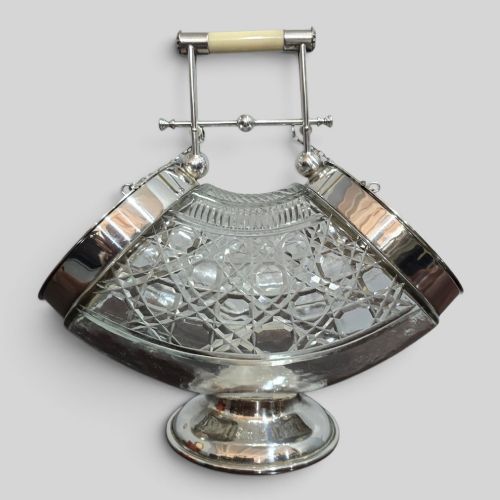
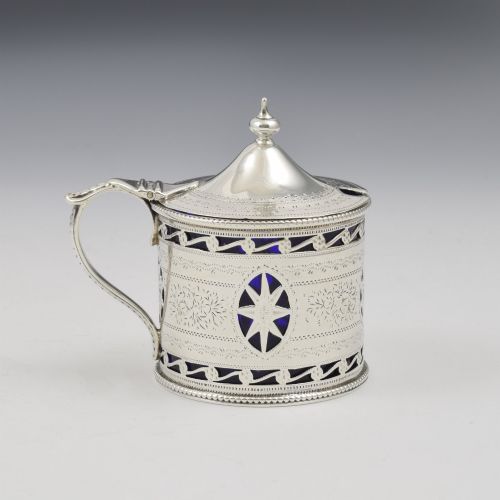
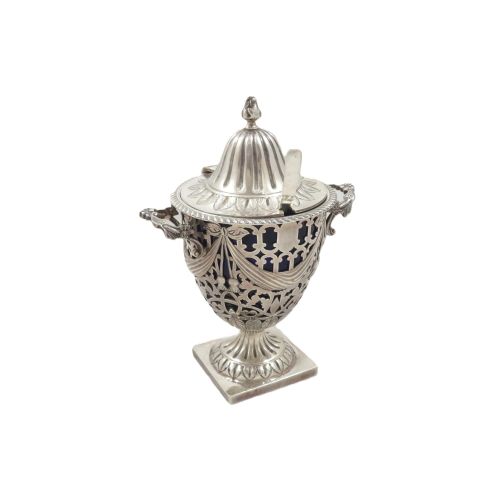
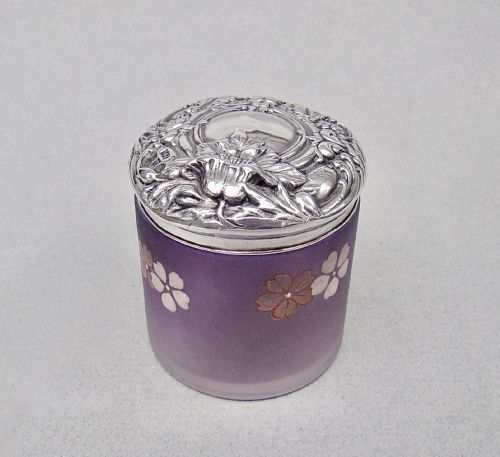
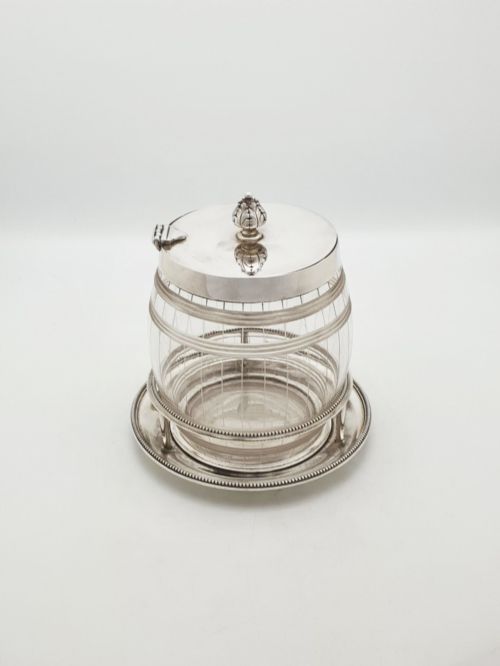
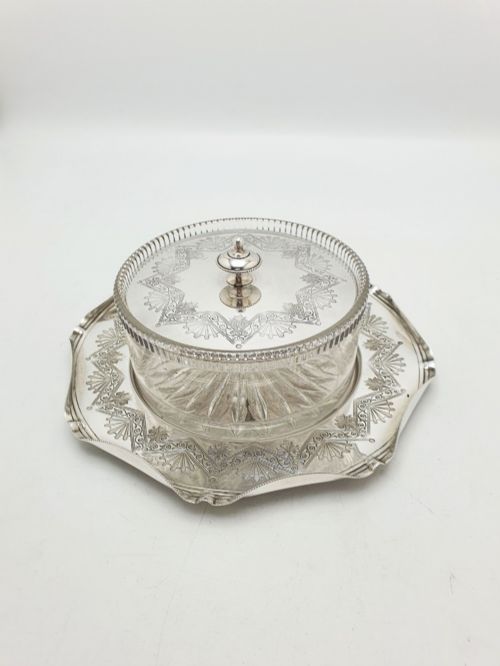
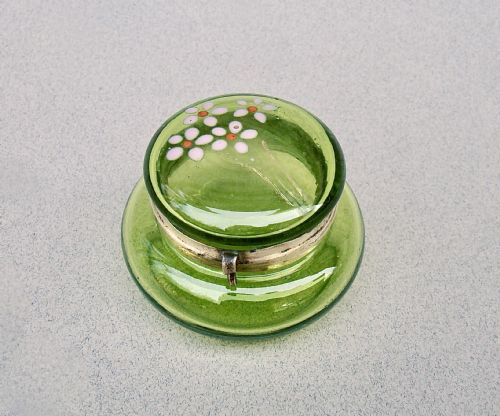
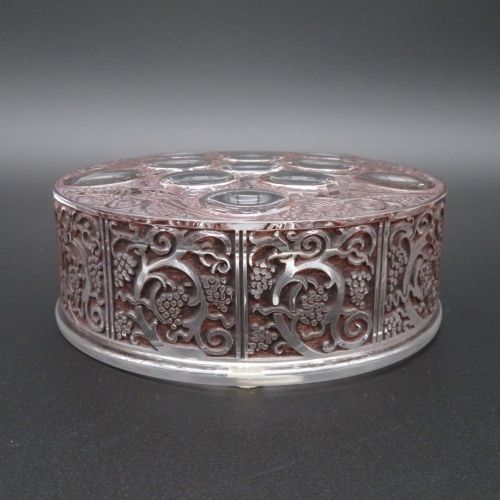
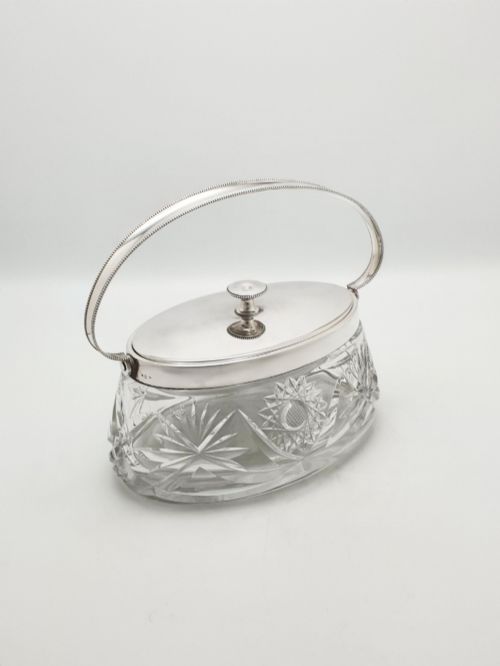
Makers housed these vessels in sterling silver, silver plate, gilt bronze and tortoiseshell mounts. Forms range from heavy cut crystal sugar basins and hobnail biscuit barrels to enamelled green glass and frosted dressing table jars.
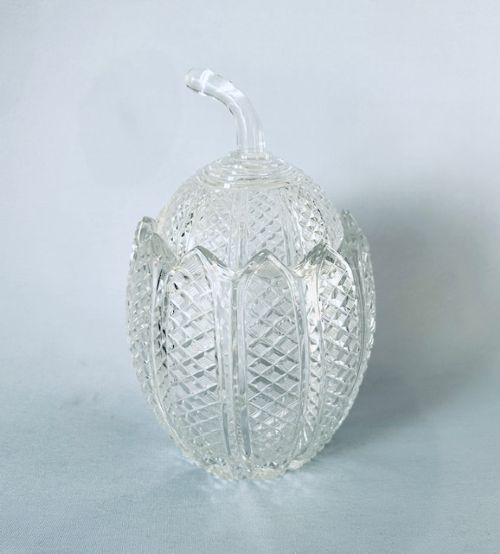
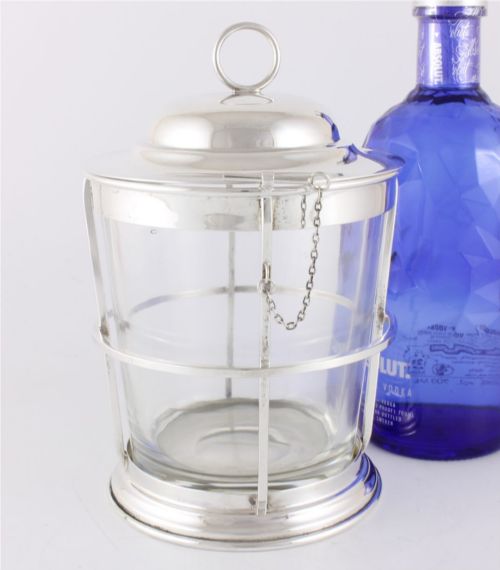
The practical function of each vessel dictated its shape, whether built to preserve dry biscuits on a sideboard or to store small trinkets upon a dressing table. Buyers encounter both utilitarian containers and decorative novelty pieces fashioned as apples, melons or ships' lanterns.
How they were made
Glassmakers utilised techniques such as mould-blowing, wheel-cutting and hobnail faceting to shape the body, producing heavy crystal and coloured glass in cobalt, cranberry and amethyst. Metalworkers then formed mounts, lids and handles from sterling silver, silver plate and gilt bronze, often securing them with bespoke hinges.
Surface ornamentation involved acid-etching, hand-painting, enamel decoration and silver overlay applied directly to the glass. Certain pieces incorporated precious metals like gold or tortoiseshell alongside structural glass liners.
Some nineteenth-century makers turned humble biscuit storage into theatre by shaping containers as heraldic dragons, apples and melons.
What varies in quality
The weight and depth of the glass cutting dictate much of the distinction, where crisply defined facets catch light differently than soft, moulded contours. Engraved silver mounts and heavier gauges of metal provide structural integrity that lighter stamped mountings lack.
The integration between the glass body and its metal collar demonstrates the maker's precision. Closely matched lids, original silver-plated tongs and intact enamel work elevate a piece above standard domestic utilitarian ware.
Nathan and Hayes·Elkington·Mappin and Webb·Hukin and Heath·Lalique·WMF·Hasset and Harper·Levi and Salaman
The Antique Glass Container Glossary
- Biscuit barrel
- A covered vessel designed to hold biscuits on the dining table or sideboard. These containers frequently pair cut glass bodies with silver-plated or sterling silver mounts and swing handles.
- Hobnail cut
- A faceted glass pattern resembling the hobnails used in boot soles. This decorative technique creates sharp, pyramidal points across the surface of the vessel.
- Trinket box
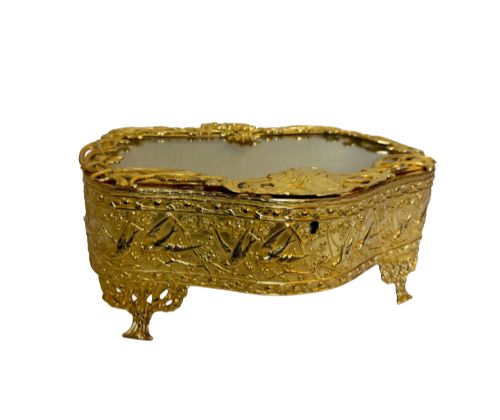
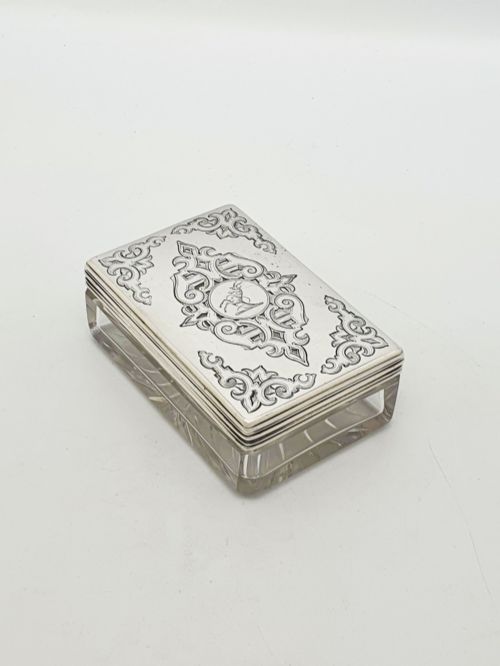
- A small lidded container used for storing jewellery and small valuables on a dressing table. They often combine glass bases with hinged metal frames and velvet or silk linings.
- Silver plate
- A layer of silver fused to a base metal such as copper or Britannia metal. Manufacturers utilised this method to achieve the appearance of solid silver at a lower production cost.
- Enamel
- A decorative glassy substance fused to metal through firing. It provides smooth, colourful decoration on small boxes, pot lids and mounts.
Antique Glass Container: Frequently Asked Questions
What were antique glass containers used for?
These vessels served specific domestic and personal functions around the home, from storing dry biscuits and mustard at the dining table to holding cosmetics and jewellery on bedroom dressing tables.
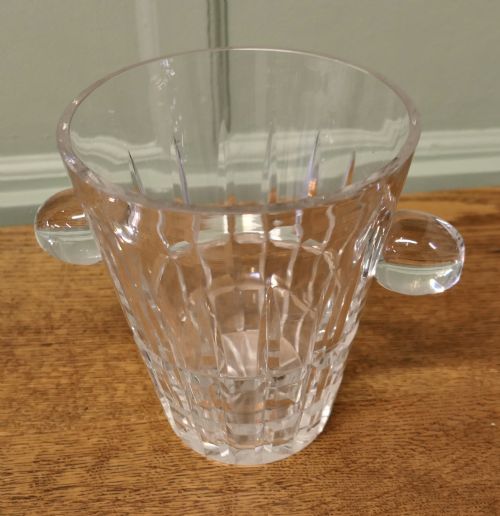
Heavier lidded jars functioned as ice buckets or apothecary stores, while smaller boxes kept postage stamps and trinkets secure in studies and drawing rooms.
How do I clean an antique glass container?
Wash the glass gently in warm, soapy water using a soft cloth, avoiding abrasive pads that might scratch the surface. Keep silver and metal mounts dry to protect patination and prevent moisture damage to bonded joints.
Remove fitted metal collars if possible during cleaning to prevent water trapping between the glass and the metal lining.
How do I date an antique glass container?
Examine the metal mounts for British silver hallmarks, which indicate the exact assay office and year of manufacture. Stylistic indicators like heavy cut crystal point to the Victorian era, while geometric motifs and frosted finishes suggest later Art Deco production.
Where should I display these pieces?
Place them on sideboards, mantelpieces or dressing tables where natural light can pass through the cut crystal and coloured glass. Ensure they sit away from direct heat sources that might stress historic glass or old adhesives.