



Antique Glass Barware Tumblers
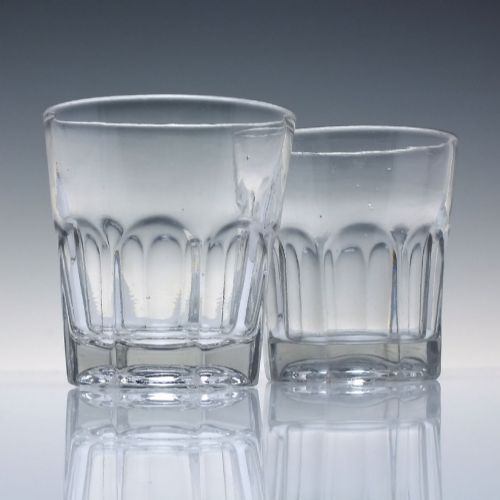
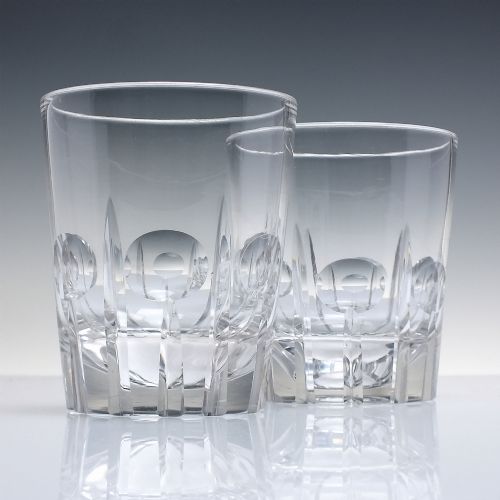
These antique glass barware tumblers are heavier in the hand and sharper on the rim than modern glass.
Antique Glass Barware Tumblers
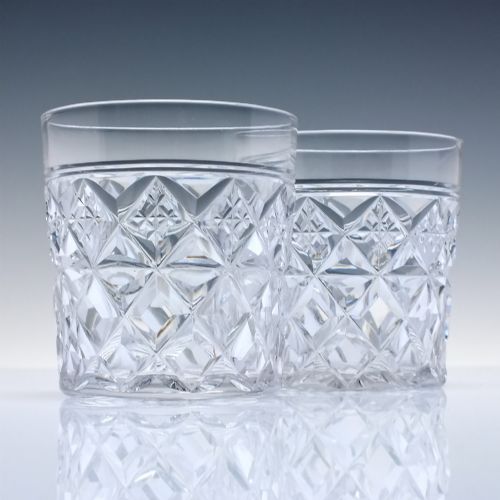
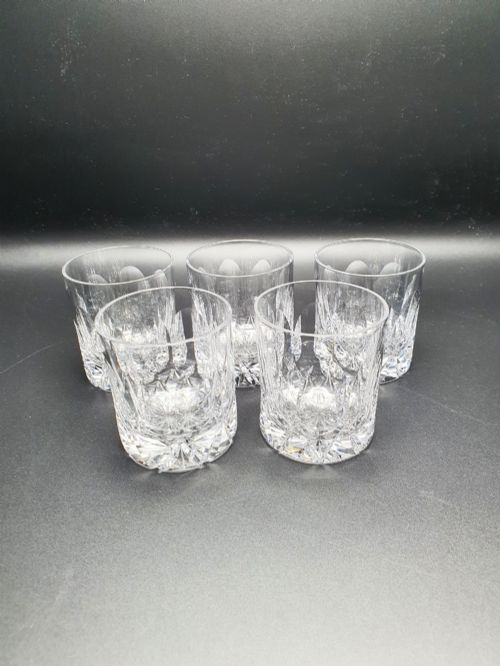
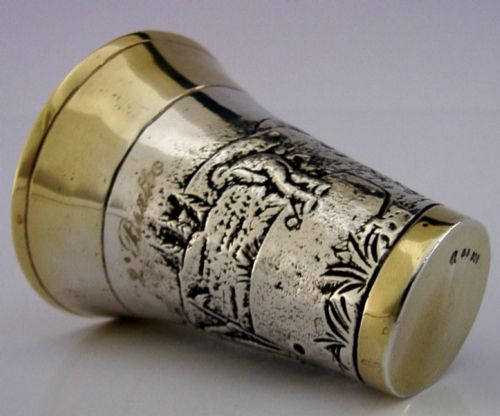
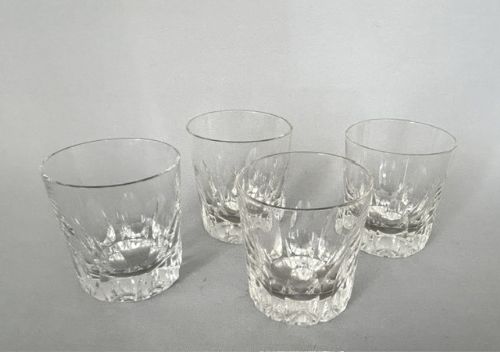
Antique glass barware tumblers encompass drinking vessels shaped for spirits, cordials, and drams, spanning periods from the Georgian era through to Art Deco. Collectors encounter small whisky tumblers, ruby cased dram glasses, and cut crystal beakers alongside novelty silver pieces and cordial sets.
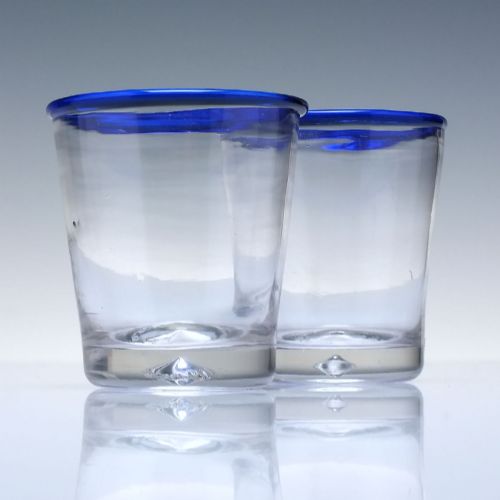
The selection ranges from eighteenth century blue rimmed specimens to twentieth century lead crystal from makers such as Stuart Crystal and Karl Palda. Pieces arrive in matched sets or as individual examples intended for traditional home bars and dining rooms.
How they were made
Glassmakers utilised hand-blown glass and heavy lead crystal, shaping vessels through free-blowing and moulding before applying deep wheel cuts or hand enamelling. Coloured effects were achieved using ruby glass and cobalt glass, layering hues onto clear bases.
Makers finished rims and bases by hand, leaving polished pontil marks on earlier Georgian and Victorian examples. Twentieth century pieces demonstrate precise geometric cutting and acid etching, particularly within Art Deco decanter sets.
Antique Glass Barware Tumblers Retail Price Guide 2026
Typical asking prices for glass barware tumblers among the pieces listed under this phrase on Sellingantiques today, from the lower quarter to the upper quarter. They describe what is for sale here now, not the wider market.
Listings feature lead crystal, cobalt glass, and ruby glass across Victorian, Georgian, and Art Deco styles.
What varies in quality
Quality rests on the depth and crispness of the glass cutting, the clarity of the metal, and the balance of the vessel in the hand. Superior examples maintain sharp facets and unblemished surfaces, whereas simpler items show softer edges from worn moulds.
The integrity of applied decoration, such as hand enamelling or silver mounts, dictates distinction across sets and individual dram glasses. Consistency within a matched set separates ordinary utility glassware from fine cabinet pieces.
Stuart Crystal·Rene Lalique·Karl Palda
The Antique Glass Barware Tumblers Glossary
- Lead crystal
- Glass containing a proportion of lead oxide, which increases weight, brilliance, and the sonorous ring of the vessel when struck.
- Pontil mark
- The rough scar left on the base of a hand-blown glass object where the pontil rod was snapped off after shaping.
- Ruby cased
- Glass formed of a clear body encased in a thin outer layer of red glass, often cut through to reveal the clear metal beneath.
- Cordial glass
- A small stemmed or tumbler-style vessel designed specifically for drinking sweet liqueurs after a meal.
Antique Glass Barware Tumblers: Frequently Asked Questions
How do I clean antique glass tumblers?
Wash them gently by hand in warm water using a mild detergent, avoiding abrasive sponges that might scratch the old surface.
Dry them immediately with a lint-free linen cloth to prevent water spots from forming on the lead crystal.
Can I use these tumblers for drinks today?
Many sturdy Victorian and Edwardian tumblers remain entirely suitable for serving spirits and cordials during an evening gathering.
Fragile eighteenth century dram glasses or delicate enamelled pieces are better reserved for display and careful handling.
Why do some tumblers have curved bases?
Early glassblowers pushed the base inward during formation to ensure the vessel sat stably despite the rough pontil scar underneath.
This technique also thickened the bottom of the glass, adding satisfying weight to small dram and whisky cups.
How can I tell Georgian glass from Victorian?
Georgian glass often exhibits lighter weight, blue tinted rims, and pronounced pontil marks from hand production methods.
Victorian pieces frequently feature heavier cut crystal designs, deeper ruby casings, and more uniform dimensions across matched sets.