





Antique Girl Bust
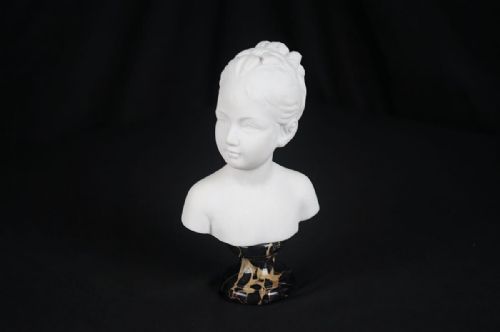
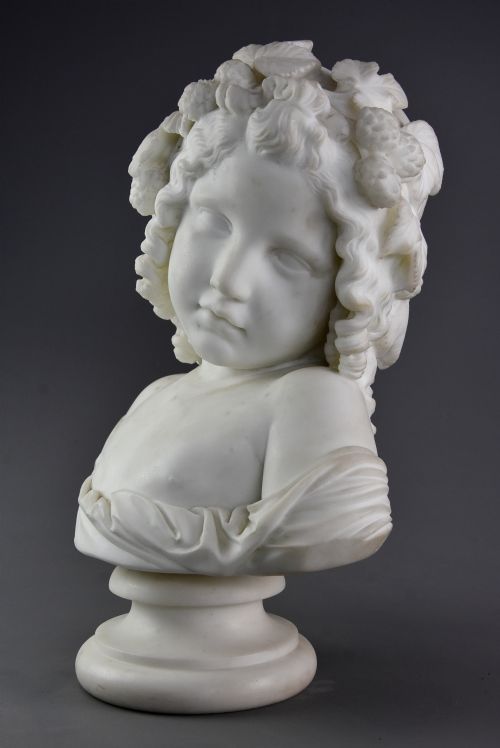
An antique girl bust captures youthful innocence in marble, bronze, or alabaster, offering timeless sculptural presence for a mantelpiece or hall.
Antique Girl Bust
The materials span traditional carved stone and cast metal, reflecting the shifting tastes of the nineteenth and early twentieth centuries. Marble and alabaster predominate, often paired with bronze or ormolu to provide contrast and structural support.
Makers drew on classical traditions as well as contemporary Art Nouveau and Art Deco sensibilities. This stylistic breadth means a buyer might encounter a stern neoclassical depiction alongside a softly flowing Edwardian or French early twentieth century interpretation.
Materials and methods
Carved stone pieces rely on the direct reduction of blocks of Carrara marble or translucent alabaster. Artisans used chisels and rasps to define the fall of hair and the drape of garments, sometimes finishing the surface to a smooth matte polish.
Metal sculptures utilised casting methods such as the lost-wax technique to shape bronze or bronzed metal. Foundry workers then applied patination liquids to achieve dark brown, green, or metallic tones across the surface of the cast.
Mixed media works combined carved stone heads with cast ormolu mounts, or integrated wooden plinths. Watercolour portrait paintings on paper offered a two-dimensional alternative utilising pigments and washes.
Antique Girl Bust Retail Price Guide 2026
Typical asking prices for girl bust among the pieces listed under this phrase on Sellingantiques today, from the lower quarter to the upper quarter. They describe what is for sale here now, not the wider market.
One young girl bust is accompanied by a hummingbird, adding a fleeting touch of avian life to the permanent stone.
Assessing quality and execution
Metal casts vary in the sharpness of detail retained from the original model and the evenness of the applied patina. Clean chasing removes casting seams and enhances the tactile realism of the skin and drapery.
Signatures and attribution to named sculptors or established foundries distinguish works of distinction from anonymous production pieces. The integration of high-grade mounting materials, such as fire-gilded ormolu, elevates the overall execution.
Houdon·Gilbert Privat·J Camus·G.V. Vaerenbergh·Greuze
The Antique Girl Bust Glossary
- Carrara marble
- A type of white or blue-grey marble from the city of Carrara in Italy. It was favored by sculptors for its fine, uniform grain.
- Alabaster
- A fine-grained, translucent stone that is softer than marble. It allows light to penetrate slightly beneath the surface.
- Ormolu
- Finely ground high-carat gold applied to a bronze object using a mercury-gilding process. It provides a bright golden decorative accent.
- Patina
- The surface coloration and sheen acquired by bronze or metal through age and chemical treatment. It protects the metal and adds visual depth.
- Neoclassical
- A style inspired by the art of classical antiquity. It emphasises restrained emotion, smooth surfaces, and classical drapery.
Antique Girl Bust: Frequently Asked Questions
What materials are used for an antique girl bust?
These sculptures are primarily carved from Carrara marble or alabaster, or cast in bronze and bronzed metal. Some examples incorporate wooden bases, watercolours on paper, or ormolu mounts.
Marble and alabaster pieces offer a classic carved texture, while metal casts capture fine lines in hair and expression with sharp foundry detail.
How do I date an antique girl bust?
Dating relies on stylistic clues, costume details, and materials associated with periods like the Georgian era, Victorian period, Art Nouveau, or Art Deco. Signatures or foundry marks can also pinpoint the active years of the maker.
Neoclassical and early nineteenth century pieces typically show restrained classical drapery, whereas twentieth century examples adopt more fluid lines or modernist forms.
How do I clean an antique girl bust?
Dust marble and alabaster gently with a dry, soft brush or microfiber cloth to prevent dirt accumulation in carved recesses. Avoid water and chemical cleaners on porous stone.
Bronze pieces benefit from occasional light dusting and should be kept away from damp environments to preserve the integrity of the metal patina.