



Antique Gilt Work Table
An antique gilt work table brings together refined French and English craftsmanship, offering functional elegance alongside decorative gilded surfaces.
Antique Gilt Work Table
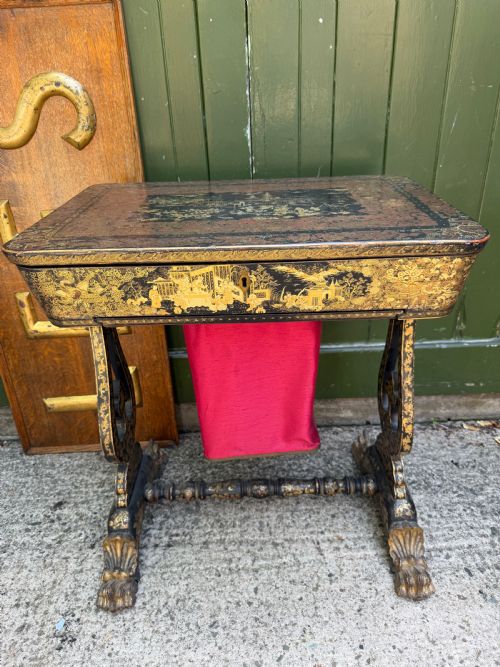
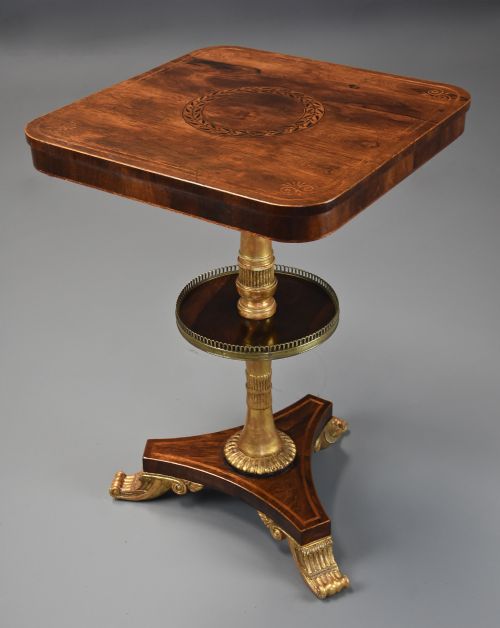
An antique gilt work table combines a functional surface with interior compartments designed for sewing, needlework, and writing tasks. These pieces frequently appear in nineteenth-century forms influenced by French revival styles and Regency aesthetics.
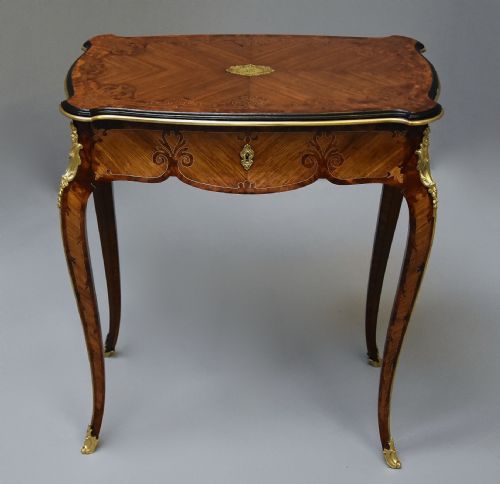
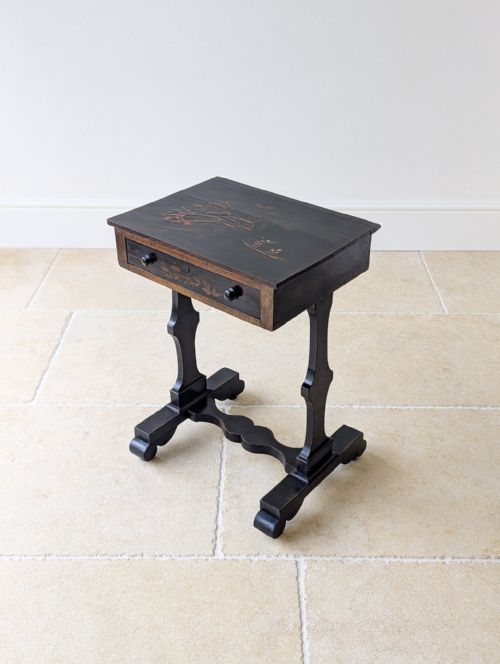
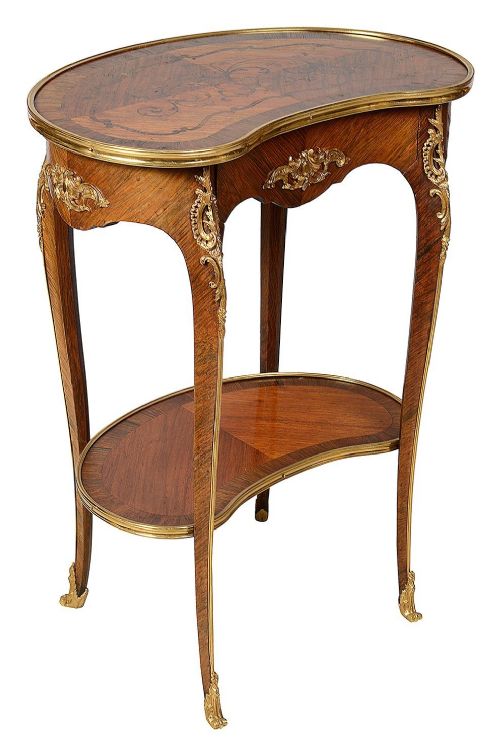
The buyer encounters various configurations, including sewing tables equipped with drawers and fitted compartments, alongside freestanding occasional and centre tables featuring gilded mounts. Many examples incorporate marquetry, parquetry, or lacquered finishes.
Originating largely from French and English workshops, these tables demonstrate the period's preference for decorative utility in domestic interiors. The selection ranges from compact sewing boxes on stands to larger exhibition-quality centre pieces.
How they were made
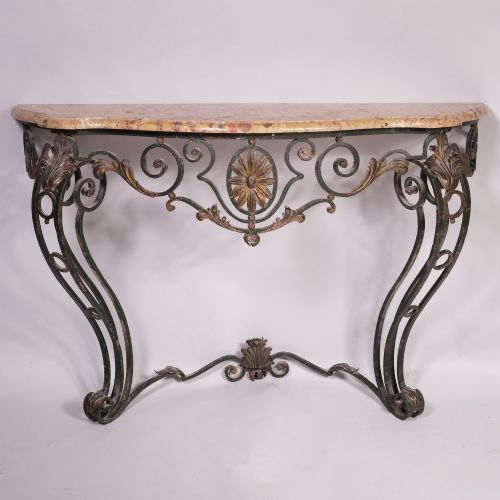
Cabinetmakers constructed these tables using a hardwood carcase of kingwood, rosewood, walnut, or ebonised wood, often enhanced with intricate marquetry and parquetry veneers. Frameworks frequently incorporated structural elements of brass and wrought iron.
Gilt bronze, ormolu, and gilt-metal mounts were cast and applied to accentuate corners, legs, and aprons, while surfaces received hand-applied gilded decoration or lacquer work. Mechanics inside utilised sophisticated wooden and brass components for drawers and folding leaves.
Antique Gilt Work Table Retail Price Guide 2026
Typical asking prices for gilt work table among the pieces listed under this phrase on Sellingantiques today, from the lower quarter to the upper quarter. They describe what is for sale here now, not the wider market.
Some nineteenth-century tables conceal clever mechanisms inside, designed to hold spools of thread safely away from curious paws.
What varies in quality
The standard of an antique gilt work table rests on the precision of its marquetry inlay and the crispness of the cast ormolu mounts. Finer examples display meticulous attention to detail in the execution of both wood veneers and metal embellishments.
Internal complexity also separates standard items from exceptional pieces, particularly where sophisticated mechanisms operate drawers, compartments, or writing surfaces. The integration of maker signatures or labels further distinguishes workshop output.
Maison Millet·Payne London·George Bullock
The Antique Gilt Work Table Glossary
- Ormolu
- Gilded bronze used widely for decorative mounts on nineteenth-century furniture and clocks. The technique involves applying a mercury and gold amalgam to bronze before heating.
- Marquetry
- The art of applying small pieces of veneer to a structure to form decorative patterns and pictorial designs. Cabinetmakers used various exotic woods to achieve tonal contrast.
- Kingwood
- A dense, richly grained timber imported from South America and utilised extensively in French cabinetmaking. Its dark purple-brown hues provide a striking background for gilt mounts.
- Boulle
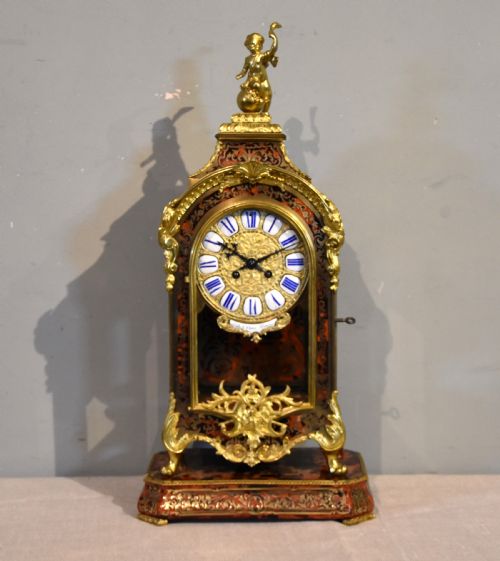
- An elaborate marquetry technique combining tortoiseshell and brass inlay, named after the French cabinetmaker Pierre Boulle. This style adorns numerous tables and mantel clocks.
- Parquetry
- Geometric wood inlay forming repetitive patterns such as cubes, chequers, or herringbone. It differs from marquetry through its strict geometric adherence.
Antique Gilt Work Table: Frequently Asked Questions
What is an antique gilt work table used for?
These tables served primarily as multi-functional pieces for ladies to store sewing, embroidery, and correspondence materials close at hand.
They functioned as decorative items in reception rooms, providing a stable surface for lamps or ornaments while keeping small domestic tasks organised.
How do I identify a French work table?
French examples often exhibit extensive ormolu mounts, kingwood veneers, and styles drawing upon Louis XV, Louis XVI, or Napoleon III revivals.
Cabinetmakers frequently integrated serpentine outlines and elaborate marquetry depicting floral or geometric motifs across the top and sides.
What materials are typical for these tables?
Construction relies heavily on timbers such as rosewood, kingwood, walnut, and ebonised wood, chosen for their rich grain and colour.
Surface enrichment comes from cast ormolu, gilt bronze, brass inlays, and occasionally Chinese export lacquer or hand-applied gilding.
How do I care for an antique gilt surface?
Maintenance requires keeping gilded woodwork and ormolu mounts away from direct sunlight and excessive moisture to prevent tarnishing and wood movement.
Dusting gently with a dry, soft cloth preserves the finish without wearing away the delicate gold leaf or metal patination.