
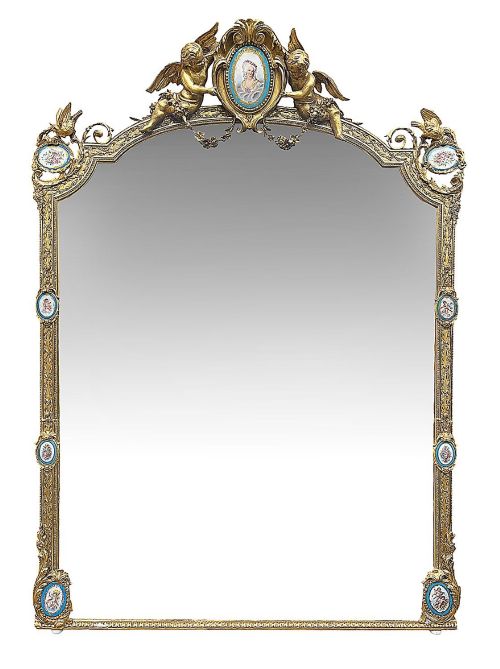


Antique Gilt Cherub Mirror
An antique gilt cherub mirror brings spirited nineteenth-century sculpture and reflective light into a room, combining carved putti with gilded surfaces.
Antique Gilt Cherub Mirror
An antique gilt cherub mirror combines carved wooden frames with sculptural figures of winged putti, spanning wall mirrors, overmantels, and bracket mirrors. These pieces emerge predominantly from nineteenth-century French and English traditions, drawing upon Rococo Revival, Louis XVI, and French Empire styles.
The varieties on this page range from large overmantel mirrors with decorative pediments and cresting panels to smaller wall-hanging and bracket variants. Alongside traditional carved wood and gesso, the evidence includes porcelain easel mirrors, bronze ormolu pieces, and table dressing mirrors.
Makers and workshops of the period utilised classical motifs alongside winged cherubs, incorporating lions' heads and relief panels depicting figures such as Bacchus. Collectors encounter both grand architectural overmantels designed for nineteenth-century mantelpieces and more intimate boudoir mirrors.
Materials and construction
Artisans built the structural frames of these mirrors using carved wood, applying layers of gesso to create smooth surfaces for detail work. This composite base allowed craftsmen to model intricate scrollwork, pediments, and sculptural cherubs by hand before gilding.
Gilding was achieved using gold leaf or applied gilt treatments, sometimes complemented by painted finishes and original distressed silvering. Bronze, ormolu, marble, and Continental porcelain also appear in specific nineteenth-century table and easel variants.
Cherubs occasionally share frame space with lions' heads and Bacchus.
Assessing quality
Quality rests upon the depth and vigour of the carving, distinguishing crisp hand-modelled cherubs and floral reliefs from softer, less detailed moulding. The finesse of the gesso work and the preservation of the original gold leaf or painted surface dictate visual presence.
Structural integrity of the wooden frame and the retention of original mirror glass contribute significantly to a piece's standing. Finer examples display harmonious proportions between the architectural plate and the sculptural cresting, whether in a large overmantel or a bracket mirror.
Sir William Trotter
The Antique Gilt Cherub Mirror Glossary
- Gesso
- A plaster-like mixture applied to carved wooden frames to provide a smooth base for gilding and fine detail work. It allows craftsmen to build up crisp relief ornament.
- Giltwood
- Timber that has been coated with gold leaf or metallic paint to give a golden appearance. This finish reflects candlelight and daylight within period interiors.
- Putto
- A plump, winged child figure frequently depicted in classical and Renaissance art. In nineteenth-century mirrors, these figures perch upon pediments or support brackets.
- Overmantel mirror
- A large mirror designed to hang specifically above a fireplace mantelpiece. They often feature extended horizontal proportions and architectural pediments.
- Ormolu
- Finely chased and gilt bronze used for decorative mounts and frames during the eighteenth and nineteenth centuries. The technique creates a rich, heavy metallic lustre.
- Rococo Revival
- A nineteenth-century design movement reviving the asymmetry, scrollwork, and naturalistic motifs of the French Rococo period. Mirrors in this style display exuberant organic framing.
Antique Gilt Cherub Mirror: Frequently Asked Questions
Where should an antique gilt cherub mirror hang?
These mirrors suit principal reception rooms, hallways, or above bedroom mantelpieces where their reflective glass and sculptural cresting can catch natural light. Large overmantels anchor a fireplace grouping, while smaller bracket mirrors fit narrower wall spaces.
Position them at eye level to appreciate the detail of the carved putti and gesso work. Pairing them with period sconces enhances the reflective quality of the gilt surfaces.
How do I identify a nineteenth-century French mirror?
Nineteenth-century French pieces often display carved wood and gesso frames in Louis XVI, Rococo Revival, or Empire styles. Look for characteristic traits such as arched tops, original distressed silvering, and sculptural relief panels.
Makers frequently incorporated naturalistic foliage, floral garlands, and winged putto cresting. The construction methods of the period, including pegged wooden joints and hand-applied gold leaf, help confirm the era.
What is the difference between an overmantel and a wall mirror?
An overmantel mirror is specifically proportioned to sit horizontally above a fireplace mantelpiece, often featuring an architectural pediment or decorative cresting. They were designed to fill the wide wall space above a hearth.
Standard wall mirrors take various vertical, oval, or square formats suited to general room placement. Both types may incorporate cherub motifs, but their scale and proportions reflect their intended architectural placement.
How should I clean an antique giltwood frame?
Dust the carved gesso and giltwood gently with a dry, soft brush or a clean feather duster. Avoid using commercial cleaning sprays, water, or abrasive cloths, which can damage fragile gold leaf and historical finishes.
Preserving the original surface requires minimal intervention. If deeper cleaning is needed, consult a specialist conservator experienced in nineteenth-century gilded antiques.