


Antique German Table Lamp
An antique german table lamp brings weight and character to a room, shifting instantly from a utilitarian light source to a focal point.
Antique German Table Lamp
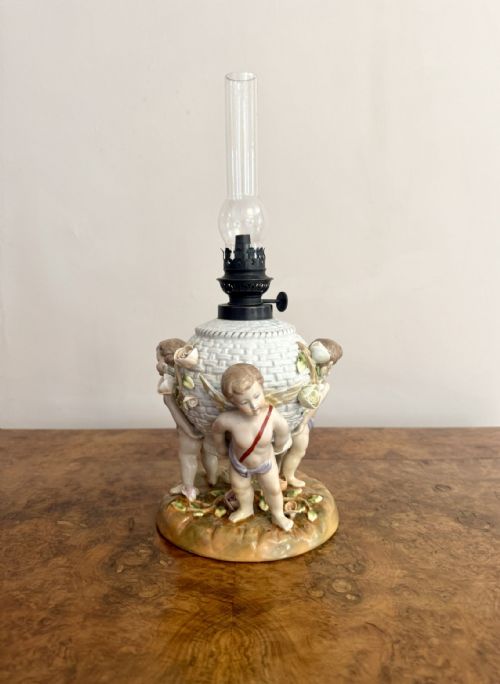
An antique german table lamp encompasses a broad range of domestic lighting from the nineteenth and early twentieth centuries, including converted oil lamps and electric table lights. When searching for an antique german table lamp, buyers encounter everything from sculptural porcelain figures to carved wood and metalwork.
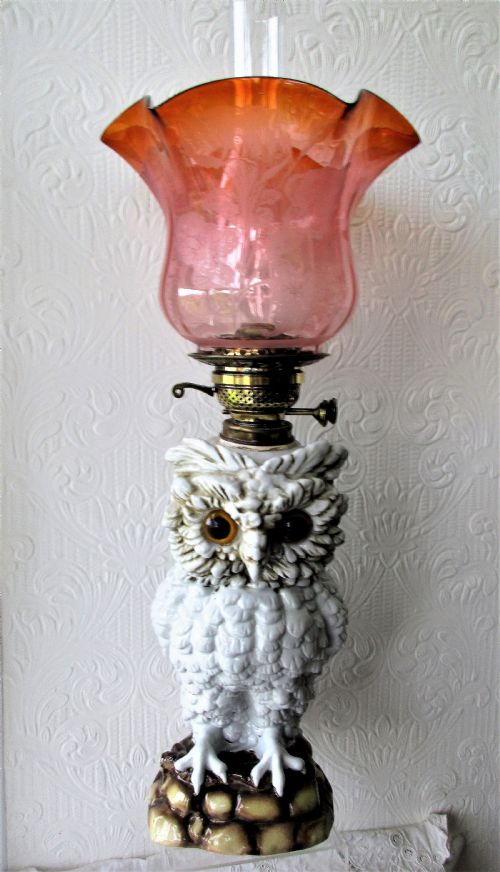
The pieces on this page span several distinct aesthetic movements, ranging from nineteenth-century Victorian and Rococo Revival to Art Nouveau and Art Deco. Figural porcelain lamps from factories such as Sitzendorf and Meissen sit alongside carved Black Forest linden wood and metal designs.
Many examples began life as oil lamps before later conversion to electricity, retaining burners or reservoirs that mark their original function. Forms vary from simple wooden standards and metal columns to elaborate groupings of owls, dogs, and human figures.
How they were made
Porcelain lamps rely on hand-moulded clay, intricate glazing, and detailed hand-painting, often featuring applied floral elements or figurative modeling. Artisans shaped hard-paste porcelain at factories like Sitzendorf, Meissen, and Karl Ens, then meticulously hand-painted the surfaces before firing.
Wood-carved examples utilise native timbers such as oak and linden wood, shaped by hand to create deep relief carvings and sculptural forms. Black Forest carvers made extensive use of Linden wood for domestic objects and lamps, employing sharp gouges to achieve realistic textures.
Metal and bronze pieces involve casting techniques, sometimes paired with silver plating or combined with marble bases and glass reservoirs. Burners and structural components often incorporate specialised brass fittings stamped by makers like Wild and Wessel.
Materials documented across the inventory include porcelain, brass, glass, bronze, marble, and carved linden wood.
What varies in quality
The integrity of the original components, such as stamped burner mechanisms and undamaged hand-painted glazes, influences the standing of a piece. Finer lamps retain their original patination and suffer minimal restoration to fragile ceramic petals or carved details.
Sitzendorf·Meissen·Karl Ens·Anton Buschelberger·Jan Eisenlöffel·WMF·Ernst Bohne & Sohn·Gaggenau
The Antique German Table Lamp Glossary
- Hard-paste porcelain
- A dense, durable ceramic material fired at high temperatures, widely used by German factories for sculptural lamp bodies and vases. It provides a smooth white base ideal for detailed hand-painting.
- Black Forest carving
- A style of wood carving originating in the forested mountain region of central Europe, known for realistic depictions of animals and foliage. Pieces are typically carved from linden wood.
- Wild and Wessel
- A prominent Berlin-based manufacturer of oil lamps and burners known for mechanical innovation and quality metalwork. Their stamped components frequently appear on late nineteenth-century lighting.
- Rococo Revival
- A nineteenth-century design movement drawing inspiration from the asymmetrical curves and ornate scrollwork of the eighteenth-century French Rococo style. It manifests in elaborate, scroll-footed porcelain lamp bases.
- Spitz
- A type of northern European dog breed frequently captured in nineteenth-century ceramic figures. German porcelain works often modelled these dogs into domestic table lamp designs.
Antique German Table Lamp: Frequently Asked Questions
How do I wire an antique oil lamp?
Converting an antique oil lamp generally involves running a cord through the original central draught tube or burner collar without drilling new holes into the body. This preserves the structural integrity of the ceramic or metal reservoir.
Working with a professional restorer ensures that modern wiring meets safety standards while protecting fragile nineteenth-century materials from heat and pressure.
Are these lamps originally electric?
Almost none of these pieces started life with electric fittings, as the majority date from the nineteenth and early twentieth centuries when oil was the standard fuel. Many retain their original burners and reservoirs even after conversion.
Collectors often appreciate the retention of these original mechanical parts, which provide clues to the exact age and manufacturing origin of the piece.
How do I identify Sitzendorf porcelain?
Sitzendorf porcelain is typically identified by its fine figural modelling, delicate hand-painted pastel palette, and often the inclusion of applied porcelain flowers. Many pieces feature factory marks on the base, though earlier examples can sometimes rely purely on stylistic attribution.
The factory, established in Thuringia, specialised in ornamental figures and lighting, distinguishing its output through meticulous attention to small decorative details.
What maintenance do carved wood lamps need?
Carved wood lamps, particularly those from the Black Forest tradition, require stable indoor humidity levels to prevent the linden wood or oak from drying out or splitting. Dusting should be done gently with a soft brush rather than harsh chemical polishes.
Applying a light, microcrystalline wax occasionally helps protect the original patinated surface of the wood without building up heavy residues.