


Antique Gents Jewellery
Antique gents jewellery brings together practical accessories and personal adornment, offering solid craftsmanship from past decades that suits daily wear.
Antique Gents Jewellery
When searching for antique gents jewellery, buyers encounter a focused selection of accessories spanning the late Victorian, Edwardian, and Art Deco periods. The items available centre primarily on cufflinks, signet rings, wristwatches, and tie pins, alongside fitted cases designed to hold them.
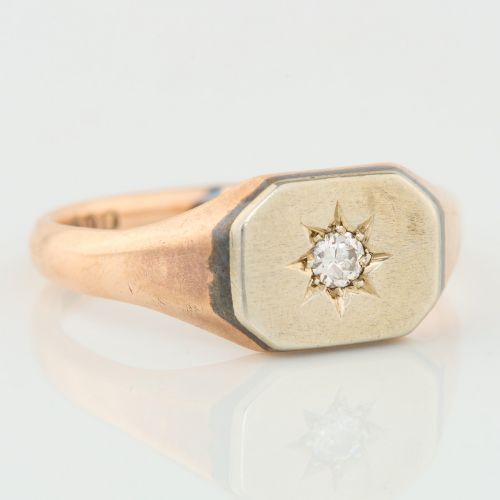
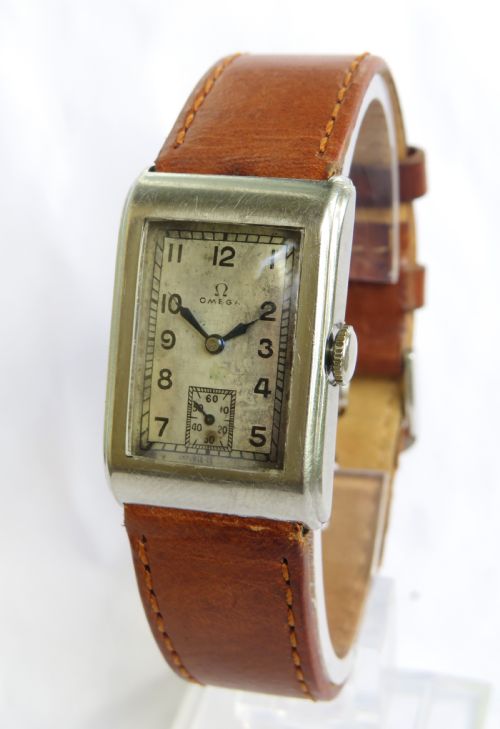
Cufflinks dominate the selection, particularly modernist enamel pairs from the nineteen-thirties alongside earlier gold and gemstone examples. Alongside these, gold signet rings and tank wristwatches represent the core personal items worn by men during the late nineteenth and early twentieth centuries.
Materials and construction
Metals used in these pieces range from nine-carat yellow gold and silver to brass, chrome, and silver plate. Gold and silver form the foundation for rings and finer cufflinks, while base metals appear alongside chrome in later geometric designs.
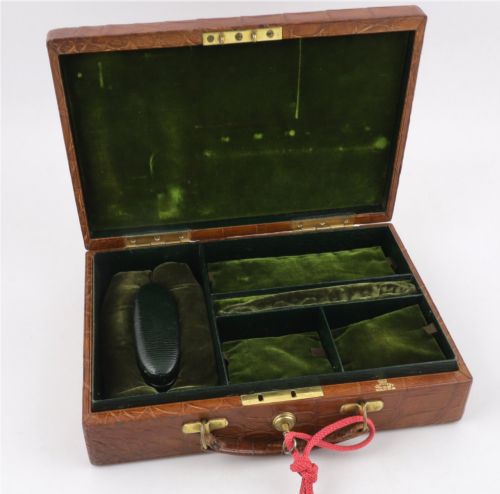
Enamel provides the primary colour in geometric Art Deco accessories, applied in contrasting shades to metal surfaces. Leather and velvet line the fitted boxes, paired with crocodile leather on exterior surfaces to protect the contents.
Materials documented across the inventory include nine-carat gold, silver, brass, enamel, crocodile leather, and banded agate.
Judging quality in gents pieces
The standard of execution in enamel work distinguishes simpler output from finer items, particularly in the precision of the geometric lines on Art Deco pieces. Clean joints on cufflinks and crisp hallmarks inside gold signet rings indicate careful workshop production.
Materials also separate the tiers, where solid nine-carat gold and natural gemstones like banded agate sit above plated brass and chrome alternatives. The preservation of original leather linings and fitted cases adds tangible merit to the surviving accessories.
J C Vickery
The Antique Gents Jewellery Glossary
- Cufflink
- A fastening device used to secure the cuffs of a shirt, typically consisting of two decorative heads connected by a short post or chain. They evolved significantly during the Victorian era and reached geometric complexity in the nineteen-thirties.
- Signet ring
- A finger ring bearing a crest, monogram, or flat surface historically used for sealing documents. Nine-carat gold versions often feature hallmarks indicating the specific year of assay.
- Cabochon
- A gemstone shaped and polished with a smooth, convex domed top rather than faceted edges. Banded agate cut in this fashion appears frequently in older gold cufflinks.
- Enamel
- A glassy substance fused to the surface of metal through firing to provide durable colour. It forms the distinctive patterned faces of modernist accessories.
- Tank watch
- A rectangular wristwatch with vertical case sides that extend into the lugs, named for its resemblance to military tanks seen from above. Examples from the nineteen-thirties often house mechanical movements.
Antique Gents Jewellery: Frequently Asked Questions
How do I wear antique cufflinks?
Antique cufflinks require double-cuff shirts, often called French cuffs, which fold back to present four layers of fabric. Slide the toggle or second face through the buttonholes to secure the cuff.
Ensure the decorative face remains visible on the outer side of the wrist. Sturdier metal pairs suit regular use, while enamel designs benefit from careful handling.
What periods do these pieces cover?
The available items span from the late nineteenth century through the Edwardian era and into the nineteen-thirties. Victorian and Edwardian examples lean towards gold and gemstones.
Art Deco pieces from the nineteen-thirties introduce modernist enamel patterns and chrome elements. Each era carries distinct stylistic traits that help identify its origin.
Are these rings suitable for daily wear?
Gold signet rings from the early twentieth century are generally robust enough for everyday use. Their solid construction handles regular contact.
Check the band thickness and gemstone settings before continuous wear. Older rings may require minor adjustments by a specialist to ensure a secure fit.
How do I care for enamel accessories?
Enamel requires gentle cleaning with a soft cloth and mild soapy water to preserve the coloured glass surface. Avoid harsh chemical dips and ultrasonic cleaners.
Store cufflinks and tie pins in dedicated boxes lined with velvet or leather to prevent scratching. Keeping pieces separate protects the enamel from impact.