



Antique Gentleman Chest
An antique gentleman chest brings purposeful storage and gentlemanly organisation into a room, offering compartments tailored for dressing and daily grooming.
Antique Gentleman Chest
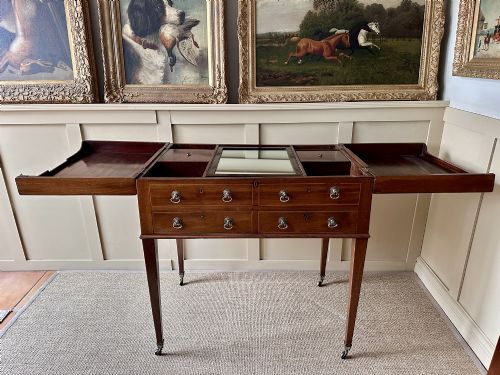
An antique gentleman chest functions as a hybrid piece, combining standard drawer storage with specialised spaces for dressing, writing, or grooming. When you search for this phrase, you encounter forms that range from tall cabinets and tallboys to compact campaign chests and dressing tables.
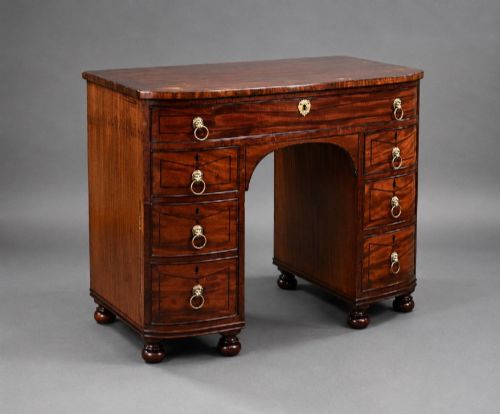
The pieces appearing on this page span Georgian, Regency, Victorian, and later periods, with mahogany standing as the dominant timber alongside walnut, oak, and elm. Many examples incorporate fitted interiors with mirrors, small drawers, and compartments designed for specific gentlemanly requisites.
Forms vary from grand serpentine-fronted cabinets to travelling chests fitted with brass mounts and diminutive library cabinets. This diversity reflects changing domestic requirements across the eighteenth and nineteenth centuries, while retaining the core utility of organised personal storage.
Judging quality and execution
Superior examples demonstrate precision in timber selection, utilising finely figured grain matched across drawer fronts and primary surfaces. The integration of fitted interior components, such as concealed writing slides, pivoting mirrors, and segmented compartments, reveals the original maker's ambition.
Construction methods dictate the integrity of surviving pieces, evident in tight dovetail joints on drawers and the smooth operation of locking mechanisms. Pieces retaining their original brass mounts, polished finishes, and unblemished veneers command greater appreciation among collectors.
Antique Gentleman Chest Retail Price Guide 2026
Typical asking prices for gentleman chest among the pieces listed under this phrase on Sellingantiques today, from the lower quarter to the upper quarter. They describe what is for sale here now, not the wider market.
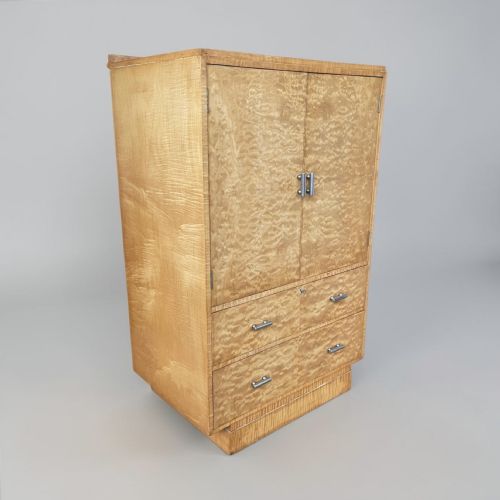
Listings feature mahogany, burr walnut, and oak pieces spanning the Georgian, Regency, and Victorian periods, alongside 1930s designs.
Maple and Co·Heal's·Whytock and Reid
The Antique Gentleman Chest Glossary
- Tallboy
- A tall chest of drawers stacked one above another, often comprising a double-carcase design with a lower chest base and an upper section. These pieces maximise vertical storage while occupying a modest floor footprint.
- Campaign chest
- A portable chest of drawers made in two or more sections for easy transport by military officers on campaign. They typically feature recessed brass handles, corner brackets, and flush sides.
- Secretaire
- A cabinet or chest incorporating a fitted writing drawer with a drop-front panel. Inside, smaller drawers and pigeonholes provide organised space for correspondence.
- Serpentine
- A furniture front characterised by a wavy contour, curving outward in the centre and inward at the sides. This shape requires advanced woodworking skill to execute properly.
- Escutcheon
- A flat plate of brass or other metal surrounding a keyhole. It protects the surrounding wood from wear and often adds a decorative element to the drawer front.
Antique Gentleman Chest: Frequently Asked Questions
How were gentleman chests used?
These pieces served as private stations for daily grooming, dressing, and correspondence. Interiors often housed specific provisions for linen, cravats, shaving equipment, and personal documents.
Travelling versions accompanied officers on military campaigns, while larger variants remained stationary in bedrooms, dressing rooms, and libraries. Their fitted compartments ensured that all personal accessories had an exact place.
How do I identify a Georgian piece?
Georgian pieces generally exhibit clean architectural proportions, solid mahogany or walnut construction, and hand-cut dovetails on the drawer interiors. Brass handles tend to be cast in traditional batwing or drop-loop styles appropriate to the period.
Examination of the secondary woods, such as oak or pine used in drawer linings, also helps confirm the age. The absence of mass-produced hardware points toward eighteenth-century craftsmanship.
Where should I place one?
A gentleman chest fits naturally in a bedroom or dressing room, where its original purpose of storing clothing and accessories remains useful. Compact variants also function effectively as bedside chests or hallway storage.
Pieces with writing slides or mirrors work well in studies or dressing areas. Their varied internal layouts make them practical for organising modern items like watches, cufflinks, and documents.