
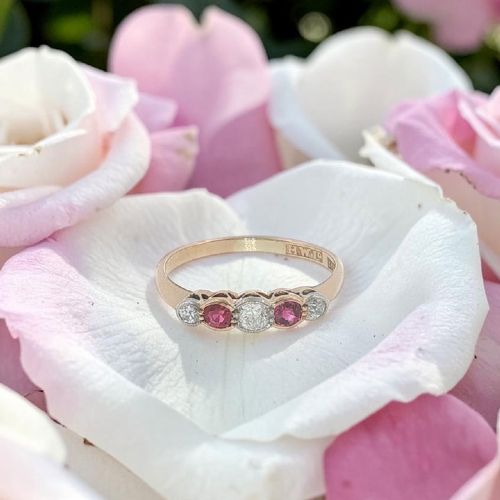
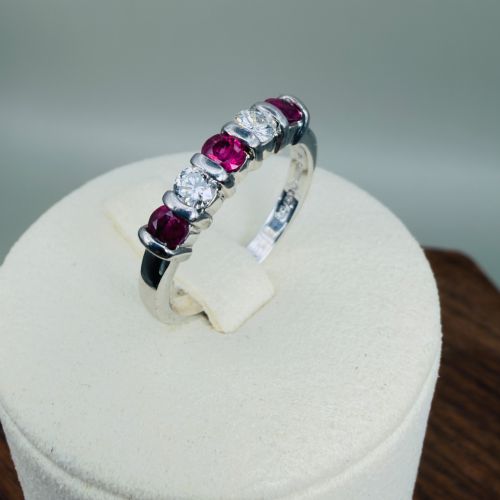
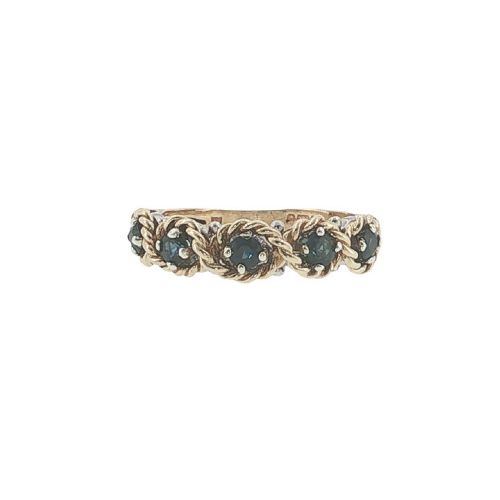
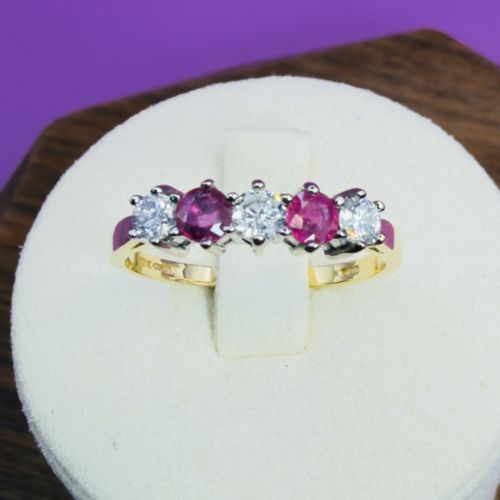




Antique Gemstone Eternity Ring
An antique gemstone eternity ring is a continuous circle of precious stones set in gold, offering a tangible link to Victorian and Edwardian romance.
Antique Gemstone Eternity Ring
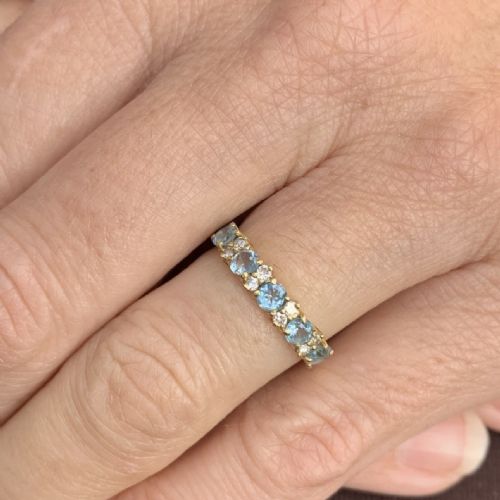
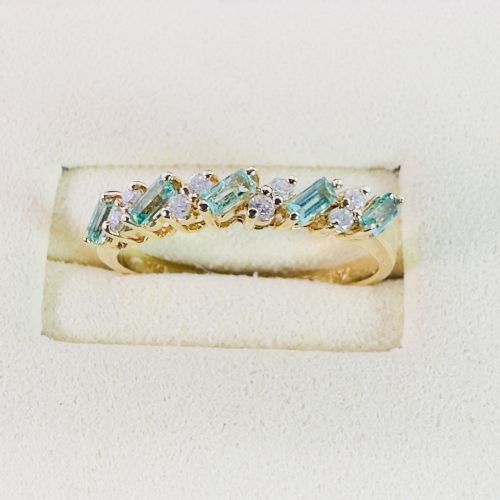
When you search for an antique gemstone eternity ring, you encounter continuous bands and multi-stone settings spanning the Victorian, Edwardian, Art Deco, and mid-century periods. These finger ornaments combine durable gold mountings with alternating or clustered precious gems designed to wrap the hand in colour and light.
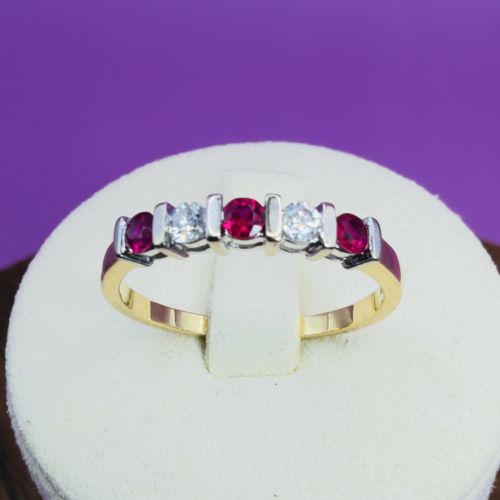
The most common examples on this page are 18ct gold band rings and half-eternity styles featuring diamonds paired with rubies, sapphires, or emeralds. Pieces range from traditional Edwardian sapphire and diamond arrangements to striking 1930s Art Deco platinum or white gold configurations.
How they were made
The construction of these rings relies predominantly on 18ct yellow gold, 14ct yellow gold, 15ct yellow gold, 12ct gold, and platinum frameworks. Metals are cast or hammered into solid bands to securely hold inset stones, channel settings, or claw mounts.
Gemstones such as diamonds, rubies, sapphires, emeralds, turquoise, pearls, and blue spinel are shaped with old cut or standard facets. These stones are meticulously set side-by-side or interspersed to create an unbroken perimeter of glittering material.
Listings feature yellow gold, white gold, and platinum settings spanning the Victorian, Edwardian, Art Deco, and mid-century periods.
What varies in quality
Quality in an antique gemstone eternity ring depends heavily on the uniformity and saturation of the coloured stones alongside the cut and brilliance of the diamonds. Heavier gold weights in 18ct or platinum also elevate a piece above lighter or lower carat mountings.
The precision of the stone setting and the preservation of the original claw or channel work dictate the structural integrity of the ring. Finer examples display meticulous gem alignment and minimal wear to the surrounding precious metal.
The Antique Gemstone Eternity Ring Glossary
- Eternity ring
- A finger ring comprising a continuous line of identically cut gemstones symbolising endless love. These bands are designed to sit snugly alongside engagement and wedding bands.
- Half eternity
- A ring style where gemstones encircle only the top half of the band rather than the entire circumference. This design allows for easier resizing and a more comfortable fit on the palm side.
- Old cut
- A diamond facet style hand-cut before the standardisation of modern brilliant cuts, typically featuring smaller tables and larger culets. These stones display a softer, candlelit sparkle.
- Band ring
- A ring of relatively uniform width all the way around the finger, often engraved or set with flush gemstones. They appear frequently in Victorian and Edwardian jewellery.
- Five stone ring
- A traditional mounting featuring a row of five graduated or matching gemstones across the top of the band. This configuration bridges the gap between single-stone rings and full eternity bands.
Antique Gemstone Eternity Ring: Frequently Asked Questions
Can antique eternity rings be resized?
Resizing depends entirely on whether the ring is a full eternity or a half eternity. Full eternity rings are notoriously difficult or impossible to alter without disrupting the continuous stone setting.
Half eternity rings offer much more flexibility because the plain metal shank at the back can be easily cut, stretched, or added to by a skilled jeweller.
How do I wear an antique eternity ring?
These rings are traditionally worn on the ring finger of the left hand, often stacked above a wedding band and engagement ring. Because antique settings can be delicate, consider wearing them alongside rings of a similar metal hardness to prevent excessive friction.
Many collectors also wear them alone as a statement piece on the index or middle finger, letting the arrangement of rubies, sapphires, or diamonds take centre stage.
What is an Art Deco eternity ring?
Art Deco rings date from the 1920s and 1930s, defined by geometric precision, symmetry, and a strong preference for platinum or white gold. They frequently feature calibre-cut stones or sharp chequer patterns that break away from Victorian curves.
These pieces often incorporate bolder contrasts, such as deep red rubies against bright white diamonds, reflecting the modern artistic movements of the interwar period.