

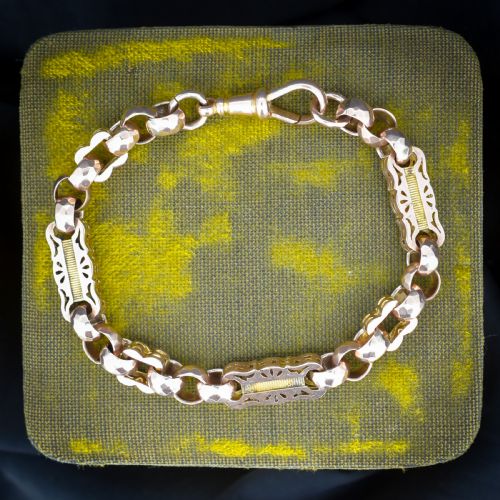


Antique Gate Link Chain
An antique gate link chain is a distinct wrist ornament built for enduring wear, offering the tactile weight and security collectors prize.
Antique Gate Link Chain
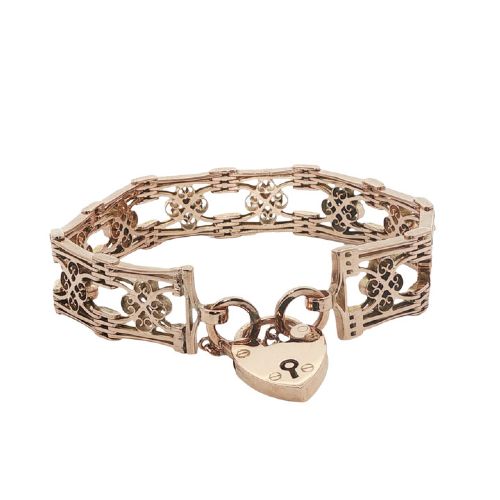
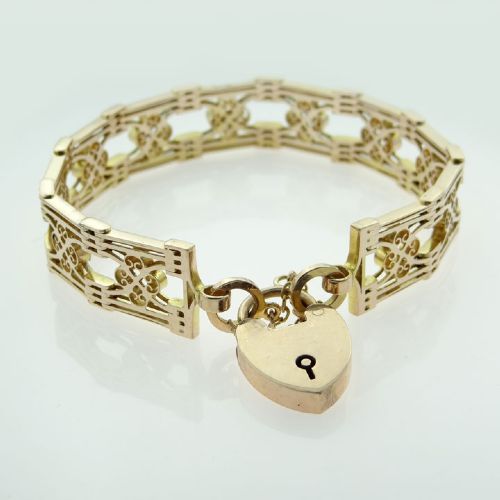
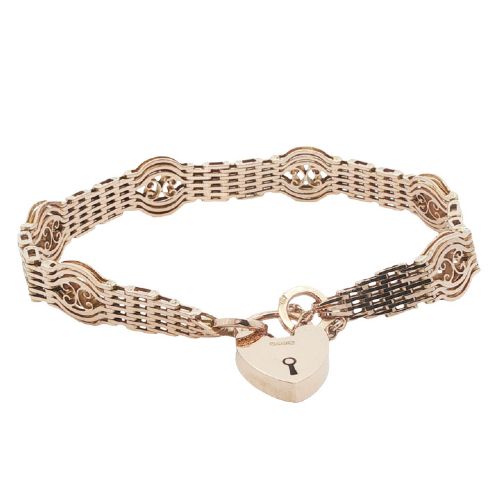
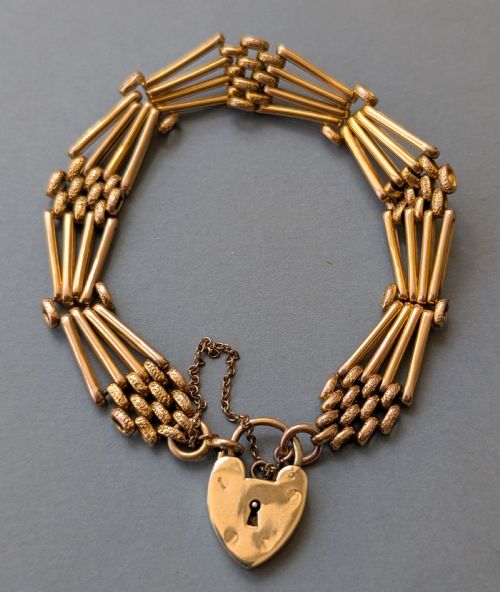
When you search for an antique gate link chain, you are looking at substantial wristwear formed from parallel bars joined by small connecting links, mirroring the construction of traditional gates. These pieces originate predominantly from the Victorian and Edwardian eras, alongside items dated around 1900 and 1910.
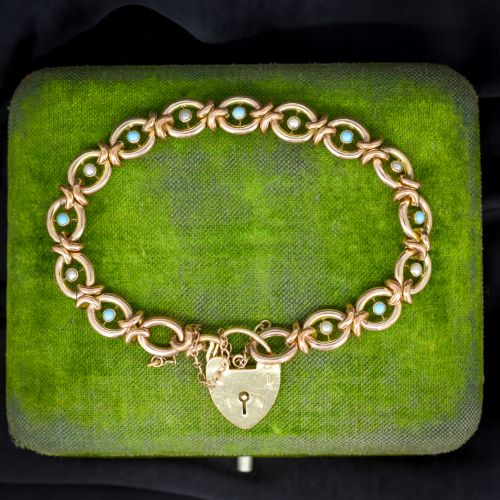
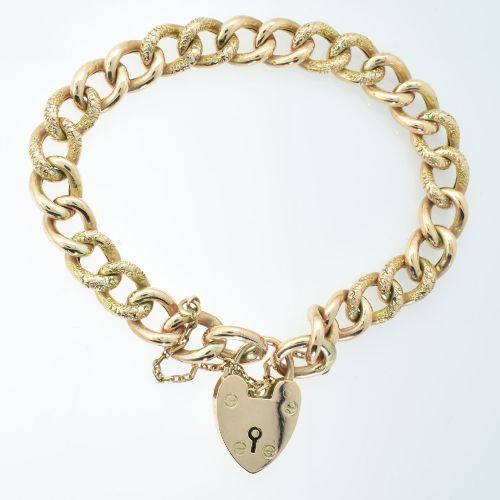
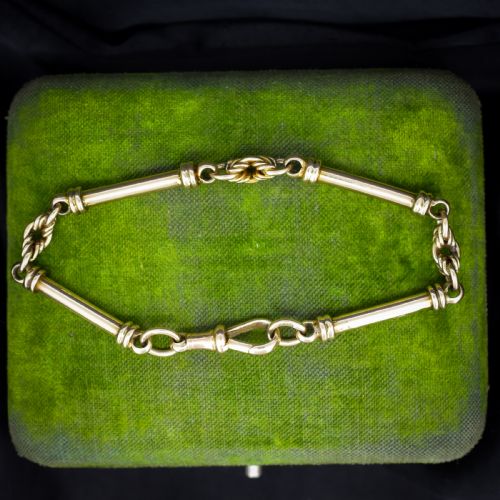
The version you are most likely to meet on this page is a bracelet finished with a secure heart padlock or a dog clip fastening. These bracelets frequently incorporate fancy links, tubular bars, love knots, or curb links alongside the core gate design.
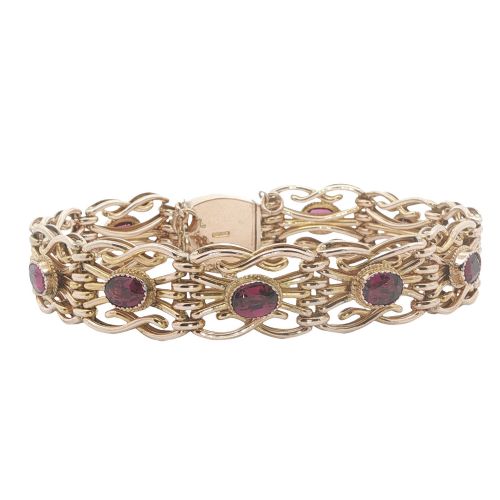
Certain examples incorporate gemstones such as amethyst, almandine garnet, ruby, and pearl set directly into the link structure or decorating the central padlock. They appear in yellow gold, 9ct rose gold, solid 9ct gold, and rolled gold.
How they were made
Craftsmen built these chains using 9ct gold and rolled gold, shaping metal into solid or tubular bars and interlocking curb links. The components required precise soldering and assembly to ensure flexibility and strength across the wrist.
Secure fastenings such as heart padlocks and dog clips were mechanically engineered to operate reliably while complementing the decorative metalwork. Engraving tools added half-engraved surface patterns, stars, and bars to individual links.
Antique Gate Link Chain Retail Price Guide 2026
Typical asking prices for gate link chain among the pieces listed under this phrase on Sellingantiques today, from the lower quarter to the upper quarter. They describe what is for sale here now, not the wider market.
Several chains feature miniature padlocks shaped like plump hearts, designed to keep the metal safely locked around the wrist.
What varies in quality
The calibre of a chain depends on whether the metal is solid 9ct gold or rolled gold, and the precision with which the links and bars are joined. Heavier gauge metal and fully hallmarked components indicate superior construction.
The inclusion of gemstones like almandine garnet, amethyst, ruby, and pearl, as well as hand-engraved surface details on the links, separates standard utility pieces from more decorative examples.
The Antique Gate Link Chain Glossary
- Gate link
- A jewellery link pattern formed of parallel metal bars connected by smaller links, resembling a traditional garden gate.
- Heart padlock
- A heart-shaped clasp commonly utilised as a functional and decorative padlock fastening on Victorian and Edwardian bracelets.
- Dog clip
- A spring-loaded snap hook fastening frequently attached to the end of a chain or bracelet to secure a padlock or ring.
- Rolled gold
- A material made by mechanically bonding a thin layer of gold to a base metal core, offering the appearance of solid gold.
- Almandine garnet
- A deep red variety of garnet frequently utilised in antique jewellery settings during the Victorian period.
Antique Gate Link Chain: Frequently Asked Questions
What is an antique gate link chain?
An antique gate link chain is a historical piece of jewellery featuring interlocking bars that resemble miniature gates.
These bracelets often incorporate heart padlocks, safety chains, and decorative links originating from the Victorian and Edwardian eras.
How do you wear a gate bracelet?
These bracelets secure around the wrist using a heart padlock or dog clip attached directly to the links.
They are worn either alone as a statement piece or paired alongside other historical gold bracelets.
What materials were used?
The pieces utilise 9ct gold, 9ct rose gold, yellow gold, and rolled gold for the structural links and bars.
Selected examples incorporate gemstones such as amethysts, almandine garnets, rubies, and pearls.
How do I date a gate bracelet?
Dating relies on stylistic clues such as the presence of a heart padlock, engraved patterns, and specific link variations.
Pieces connect to the Victorian and Edwardian periods, or specific years recorded around 1900, 1907, and 1910.