
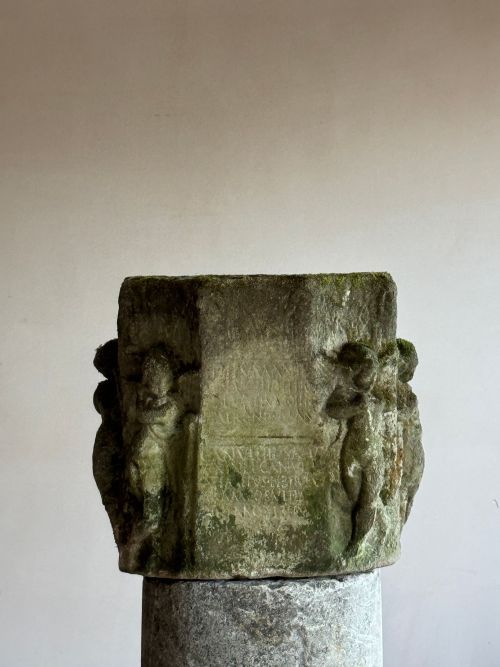
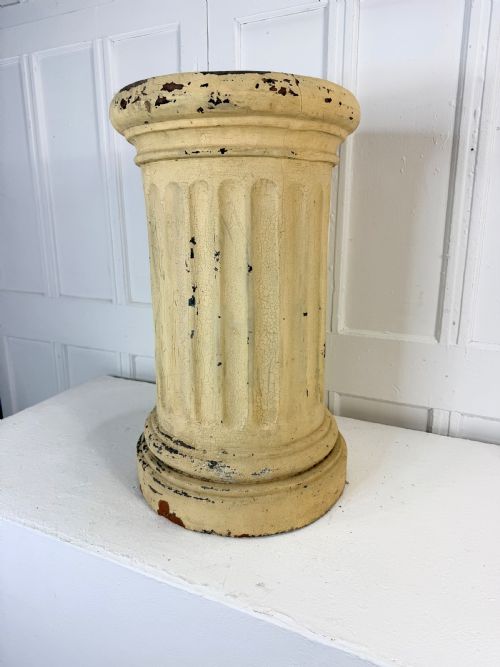
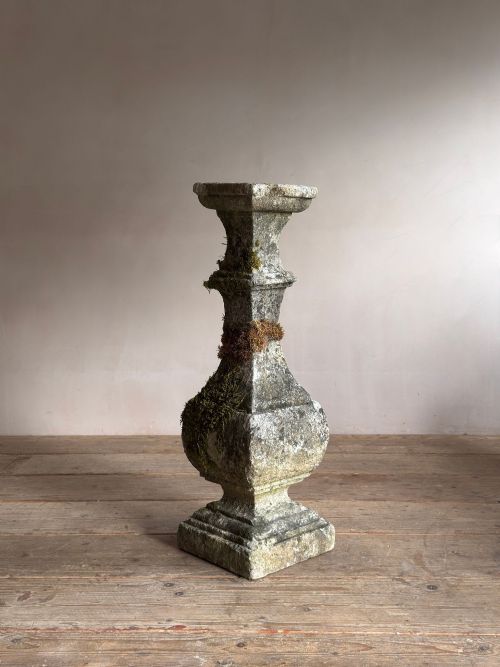


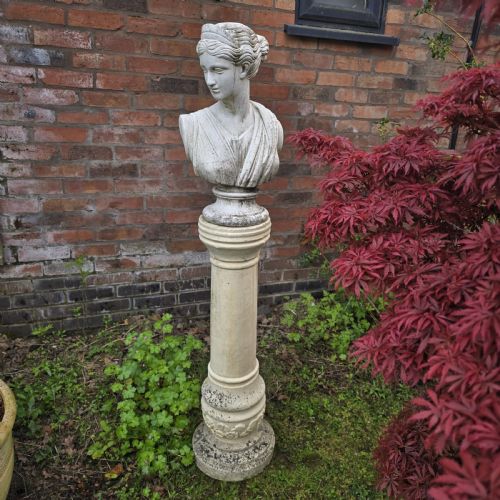

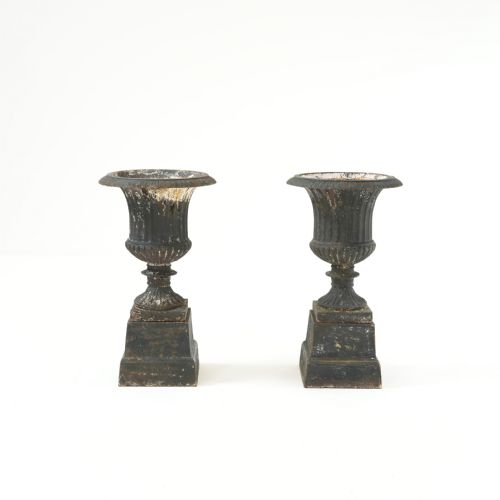
Antique Garden Plinths
Antique garden plinths raise urns, statues and sundials to catch the light and command the lawn.
Antique Garden Plinths
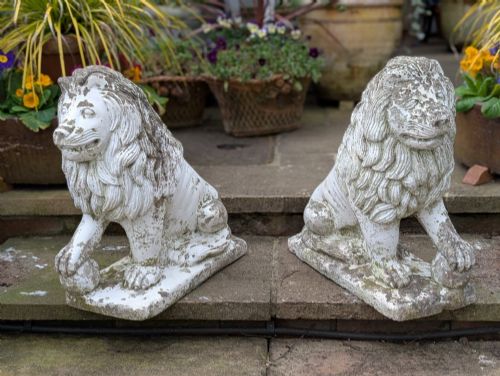
Antique garden plinths provide elevated bases for displaying sculpture, urns, and sundials across outdoor spaces. These architectural supports lift ornaments clear of damp grass and ground level vegetation, bringing focal points into proper sightlines.
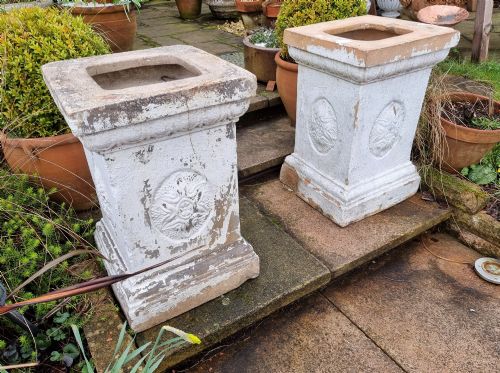
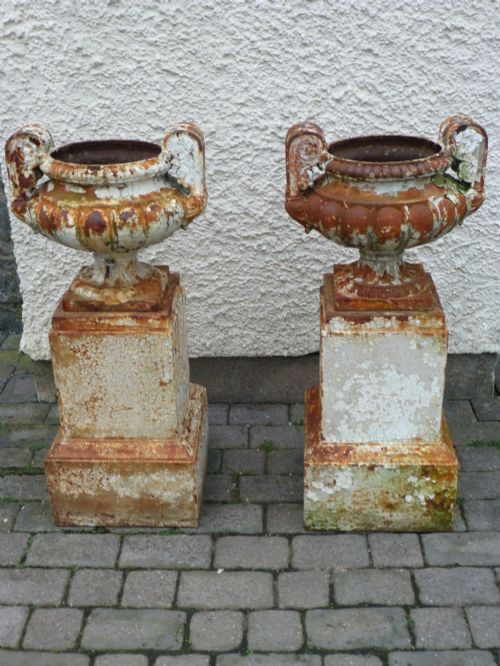
The selections available here range from nineteenth century cast iron columns to composite stone pedestals and terracotta display columns. Buyers frequently encounter nineteenth century examples featuring neoclassical detailing alongside later reconstituted stone and cast stone versions.
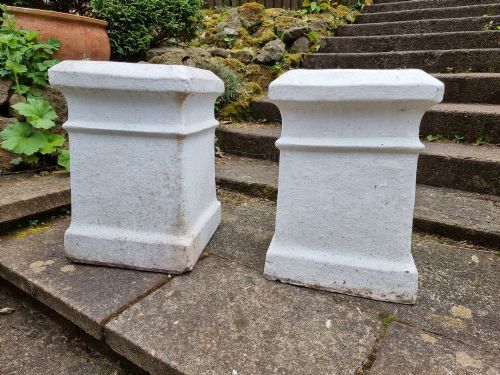
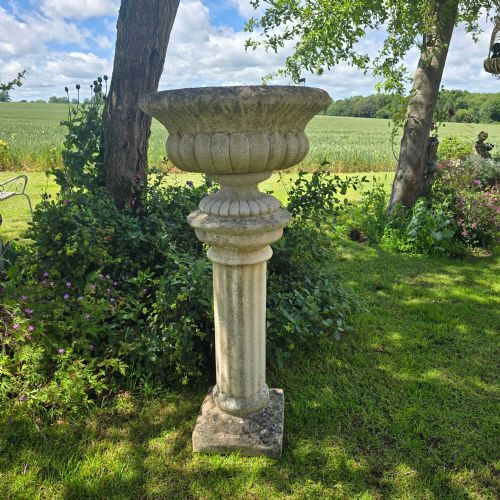
Forms span simple square pedestals and fluted columns to elaborate chimney pot conversions and funerary altars. These pieces originate from diverse periods including the Georgian, Regency, Victorian, and Edwardian eras.
How they were made
Foundries produced metal examples using cast iron and bronze, pouring molten metal into detailed moulds to create crisp acanthus leaves, campana shapes, and structural column bases. Iron pieces often involved specialised manufacturers employing robust casting techniques suited to outdoor conditions.
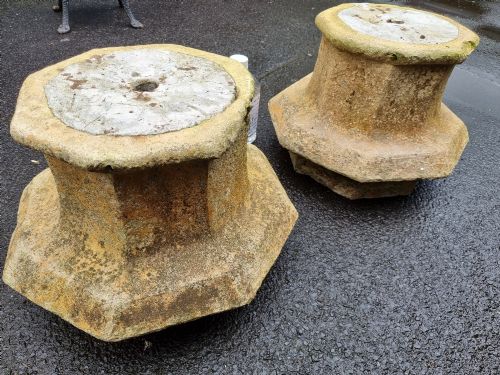
Stone and masonry supports relied on carved limestone, marble, and sandstone, shaped by hand using banker masonry tools. Workshops also utilised reconstituted stone, composite stone, and terracotta mixed with clay, pressing or pouring materials into moulds to achieve classical architectural forms.
Materials span cast iron, reconstituted stone, terracotta, limestone, marble, and bronze across nineteenth and twentieth century periods.
What varies in quality
Quality depends upon the crispness of the casting or the precision of the stone carving. Superior pieces display sharply rendered relief work, clean architectural proportions, and harmonious integration between the plinth and its supporting capital or base.
The durability and integrity of the material dictate long term weathering characteristics. High grade cast iron, dense limestone, and well fired terracotta age gracefully outdoors, retaining structural stability and fine surface detail where lesser composites erode.
Dunfermline Clay Company·Falkirk Carron foundry·Andrew Handyside
The Antique Garden Plinths Glossary
- Campana urn
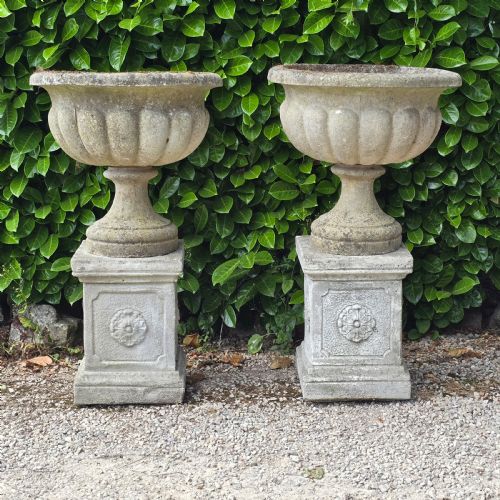
- A bell shaped garden vessel with a flared rim and tapering body. These urns frequently sit atop classical plinths to anchor garden vistas.
- Reconstituted stone
- A manufactured material made from crushed stone or aggregate mixed with a binder. It is cast in moulds to replicate the appearance of natural carved stone.
- Capital
- The uppermost member of a column or pilaster. It provides an ornamental transition between the vertical shaft and the load bearing surface above.
- Armillary sphere
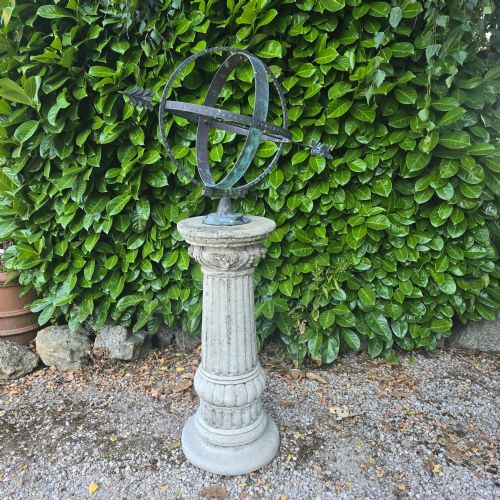
- An astronomical instrument composed of rings representing celestial circles. These are often mounted directly onto stone pedestals or garden plinths.
- Gadrooned
- Ornamented with a series of convex curves or flutes in a parallel pattern. This decorative moulding often encircles the base or rim of urns and plinths.
Antique Garden Plinths: Frequently Asked Questions
What weights do these heavy plinths reach?
Massive stone, cast iron, and reconstituted concrete bases often weigh several hundred kilograms. Their substantial heft ensures they remain stable on lawn surfaces without requiring permanent foundations.
Lifting and positioning these items generally requires mechanical assistance or specialist handling equipment to prevent injury or damage to the piece.
How do I secure a statue to a plinth?
Many period statues and urns rely on gravity and interlocking dowels or locating pins dropped into pre drilled sockets. Traditional installation sometimes involved lime mortar or lead bedding to create a rigid bond between the two elements.
Modern placement often utilises discreet exterior grade adhesives or silicone sealants to prevent accidental displacement during high winds or maintenance.
Can cast iron plinths stay outside in winter?
Durable metal structures withstand freezing temperatures provided they have been coated with appropriate protective finishes to inhibit rust. Regular inspection helps catch early oxidation before moisture compromises structural integrity.
Porous stone and terracotta variants require greater vigilance against frost damage when trapped water expands within hairline cracks during deep freezes.
How do I clean weathered stone plinths?
Gentle washing with warm water and a soft bristle brush removes accumulated organic growth without stripping protective patina. Harsh chemical cleaners or pressure washers should be avoided because they scour away the outer crust and accelerate stone degradation.
Allowing lichens and mosses to remain on durable granite or limestone often enhances the aged appearance valued by collectors.