






Antique Garden Cauldron
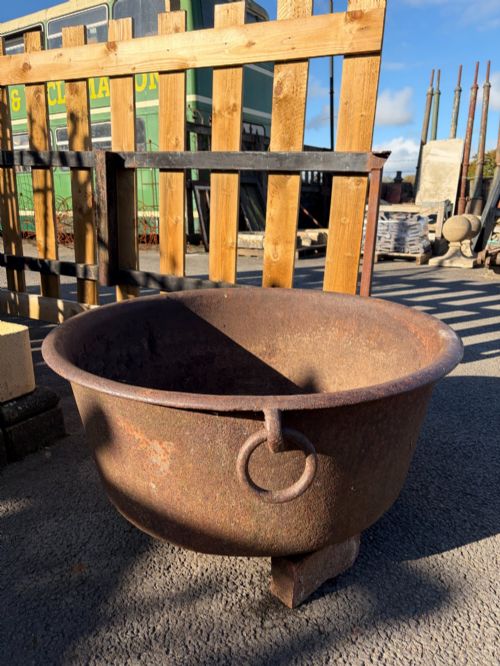
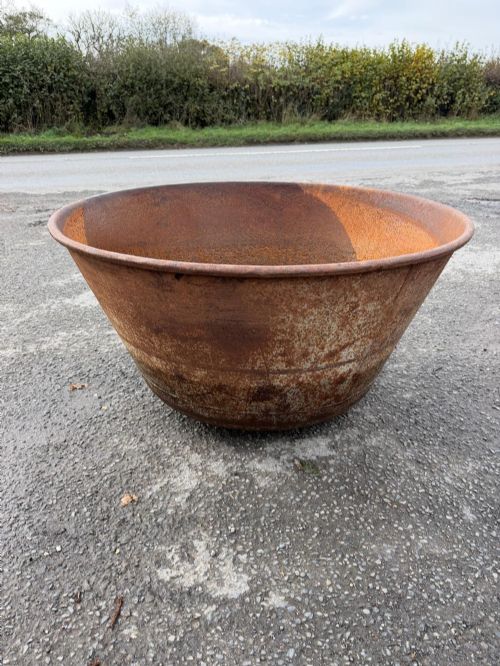
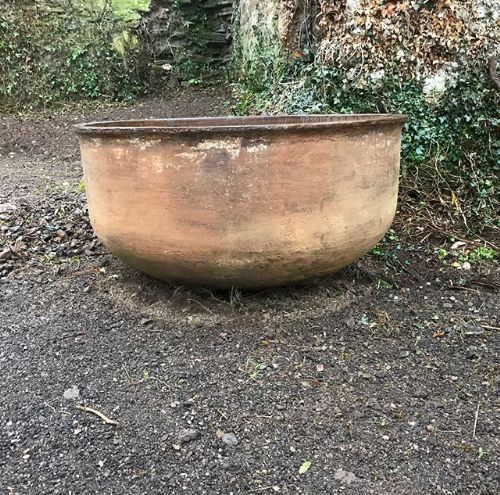
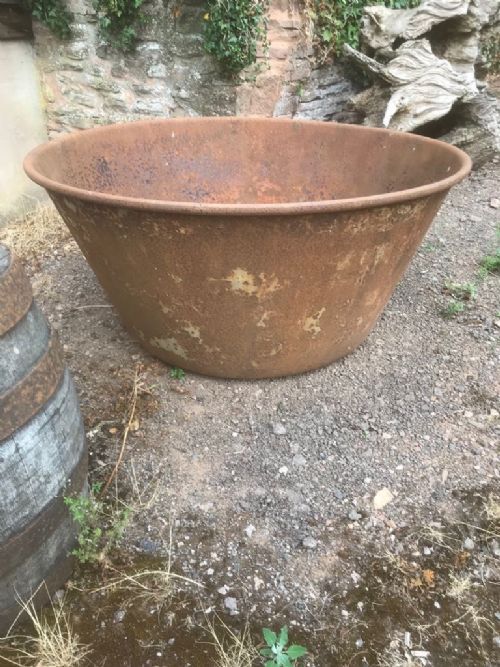
These heavy copper pots and iron vessels make striking antique garden cauldrons when repurposed as planters and log bins for the home and yard.
Antique Garden Cauldron
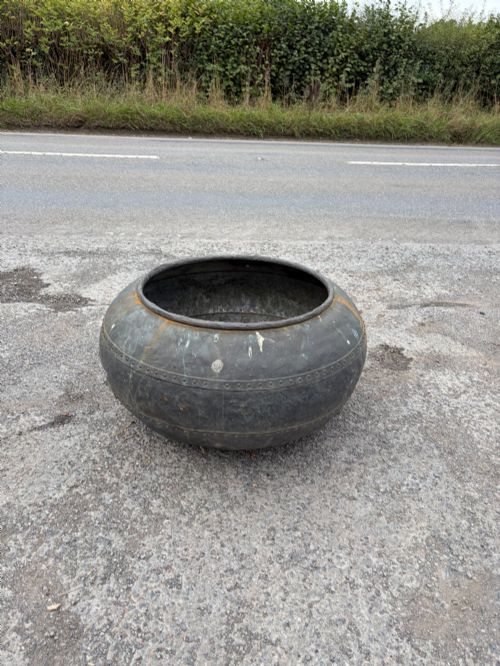
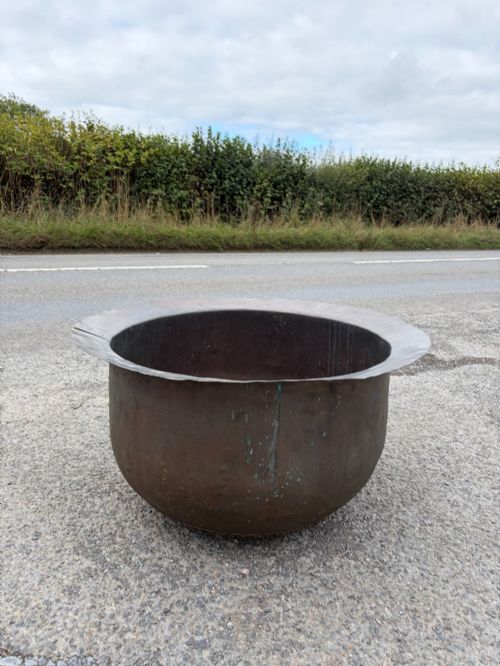
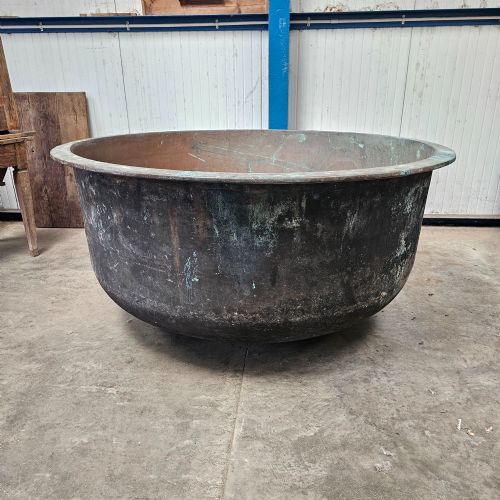
When you search for an antique garden cauldron, you are looking at heavy vessels originally cast, hammered, or riveted for agricultural, dairy, and domestic use during the nineteenth century. These objects include large copper pots, French cheese vats, riveted boilers, and cast iron coppers that now serve practical and decorative purposes in outdoor spaces.
The versions you are most likely to meet on this page span the Victorian period and nineteenth century country styles, often appearing with distinct patinas and wrought iron swing handles. Makers of the era shaped these items from robust metals to withstand heavy daily tasks, which makes them particularly durable for holding large garden plants or storing fireplace logs today.
Many of these pieces double as log bins and garden planters, shifting seamlessly from hearthside service to patio display. Their generous proportions and sturdy construction reflect the utilitarian origins of nineteenth century rural manufacture across French and British provincial workshops.
Materials and construction
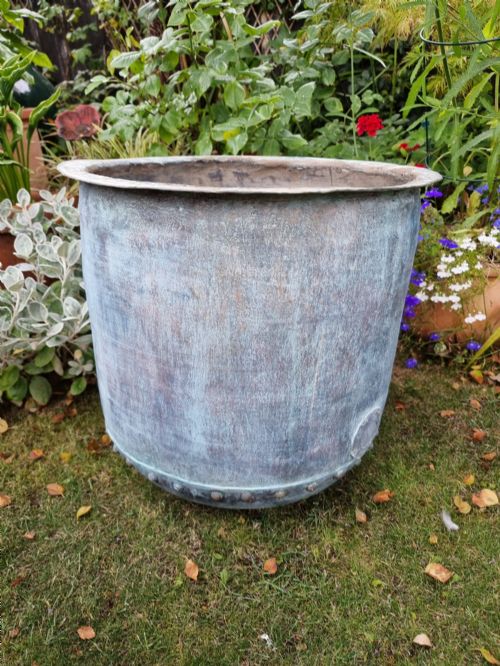
The pieces listed here rely primarily on heavy copper and iron, supplemented by wrought iron and steel elements. Artisans hammered or cast these metals into large circular bodies, frequently joining sheet copper with neat rows of structural rivets.
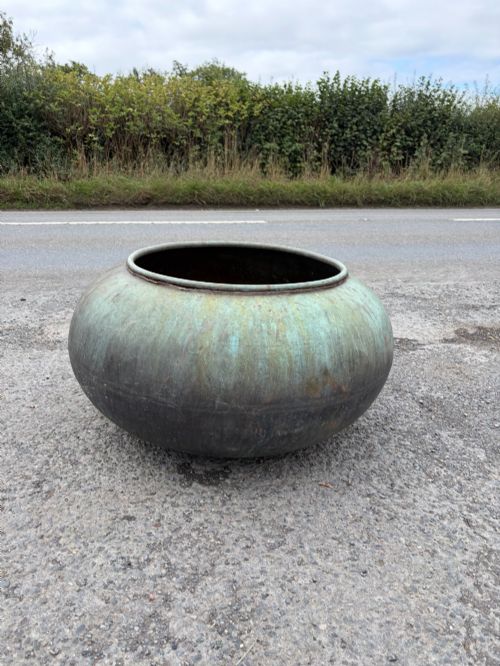
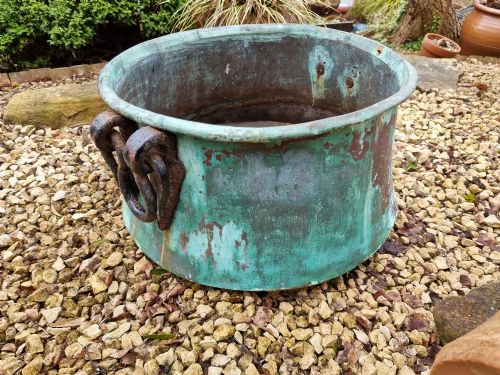
Many items feature hand-forged wrought iron swing handles attached securely to the rim for lifting. Over time, surfaces have developed natural verdigris finishes, paint remnants, and rusted steel patinas resulting from decades of exposure and use.
Antique Garden Cauldron Retail Price Guide 2026
Typical asking prices for garden cauldron among the pieces listed under this phrase on Sellingantiques today, from the lower quarter to the upper quarter. They describe what is for sale here now, not the wider market.
The inventory highlights Victorian utility, rustic farmhouse, and French provincial styles.
Evaluating quality and character
Quality in these vessels rests on the weight of the metal and the integrity of the original construction. Thick gauge copper and solid cast iron bodies indicate superior durability compared to lighter sheet metal variations.
The character of the surface finish also distinguishes individual examples, with authentic verdigris patinas and untouched riveted seams adding considerable visual weight. Well-preserved wrought iron handles and balanced proportions elevate a piece from a simple utilitarian container to a notable display object.
The Antique Garden Cauldron Glossary
- Verdigris
- A green patina formed naturally on copper through atmospheric weathering and oxidation. This chemical change provides a protective layer and a highly sought-after aesthetic for garden display.
- Wrought iron
- Iron that has been heated and hammered into shape by hand, known for its fibrous texture and strength. It is commonly found forming the sturdy swing handles on heavy copper pots.
- Cheese vat
- A large industrial vessel traditionally used in dairy production to heat and curdle milk. Their vast proportions make them ideal for modern garden planters.
- Cast iron copper
- A heavy basin cast from molten iron, originally used for boiling water or laundering clothes. These durable containers easily endure outdoor conditions.
Antique Garden Cauldron: Frequently Asked Questions
What is an antique garden cauldron?
These items are nineteenth century industrial and domestic vessels, such as copper pots, cheese vats, and iron boilers, repurposed for modern gardening.
They bring robust utility and historical character to lawns, patios, and hearths.
Can I leave these metal pots outside?
Most pieces are forged from thick copper, cast iron, or steel designed to endure rigorous everyday use in farmhouses and dairies. Natural weathering often enhances the verdigris and rusted steel finishes over time.
Ensure proper drainage if planting directly inside them to protect the metal base from standing moisture.
How do I use a log bin indoors?
These deep vessels provide generous storage for firewood beside an active fireplace or woodburning stove. Their sturdy wrought iron handles allow you to reposition the container as needed.
The substantial metal walls safely contain loose bark and ash while anchoring the room's rustic decor.
How do I date a nineteenth century copper pot?
Dating relies on observing construction techniques, such as hand-hammered panels, heavy riveted seams, and the presence of wrought iron attachments typical of the Victorian era. The transition from handcrafted workshop production to industrial manufacturing methods helps narrow the period of origin.
Comparing material thickness and specific forms like cheese vats or boilers also clarifies the historical context of the piece.