

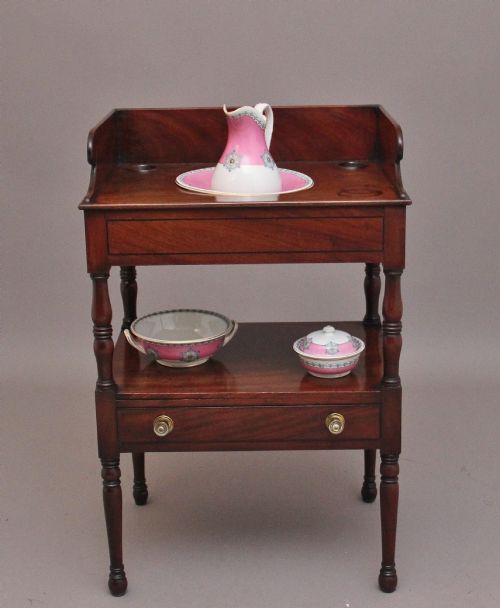


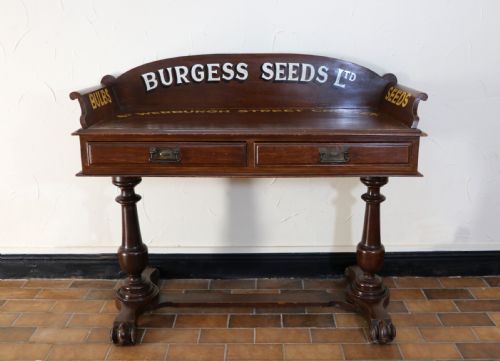


Antique Galleried Table
An antique galleried table brings raised rims and tiered surfaces to domestic rooms, offering practical containment for lamps, books and glassware.
Antique Galleried Table
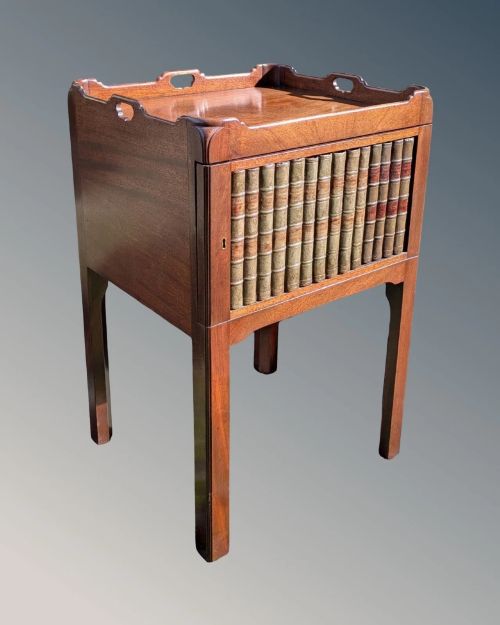
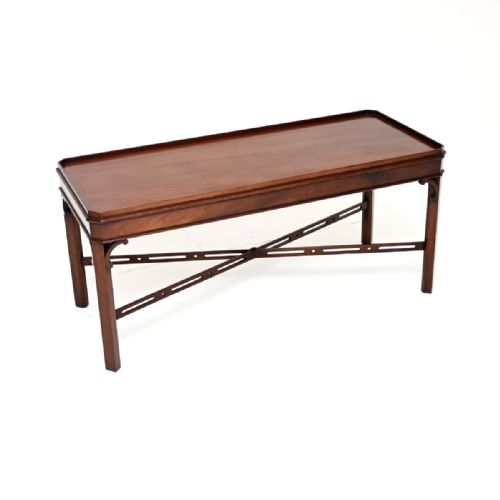
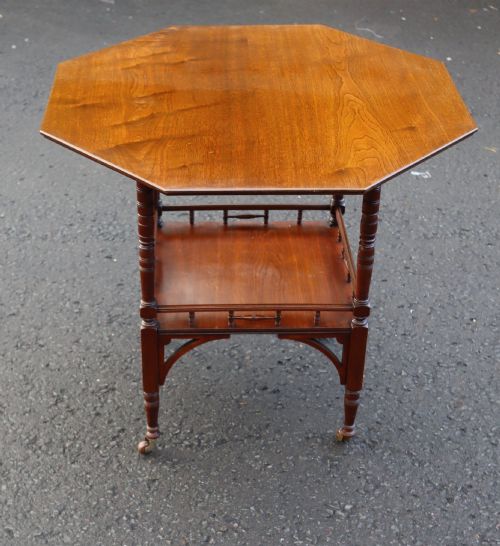
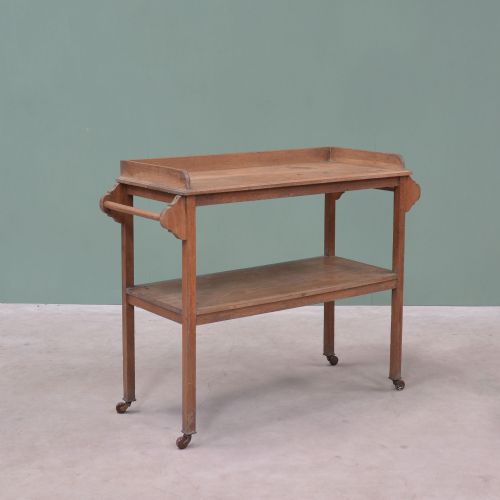
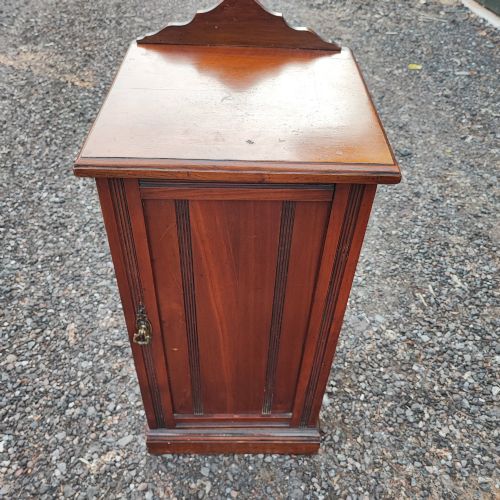
The versions most commonly met on this page date from the Victorian and Edwardian eras, though earlier Georgian and Regency examples also appear. Forms range from simple single-tier side tables to multi-tiered etageres and tray top commodes.
Origins include British workshops working in mahogany, oak and walnut, alongside French designs featuring inlaid brass, satinwood and marble tops. These tables function primarily as movable surface space in sitting rooms and bedrooms.
How they were made
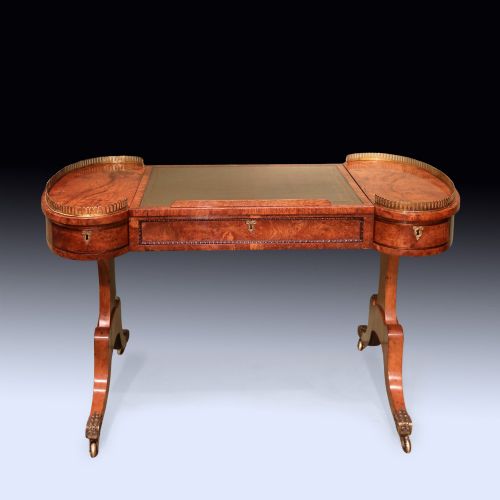
Cabinetmakers utilised dense hardwoods such as mahogany, walnut and oak for the primary structures, employing solid timber and figured veneers to create varied surface grains. Finer examples incorporate contrasting satinwood inlay, brass mounts and marble inserts.
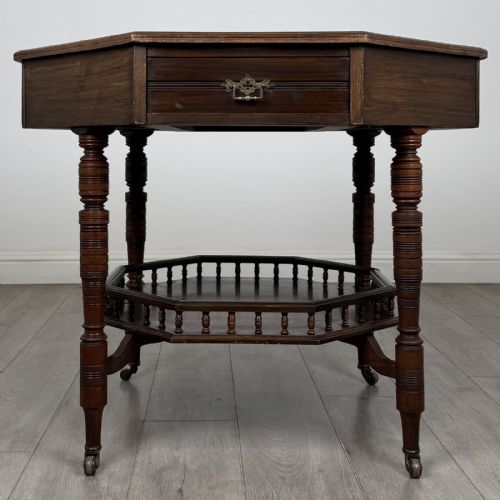
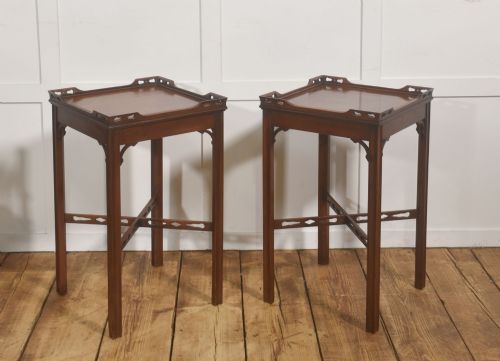
Galleries were constructed using pierced brass galleries screwed to the top edge, or pierced and fretted wooden rims shaped directly from the timber. Turned columns, tapered legs and multi-tiered supports distribute weight across these slender frames.
Antique Galleried Table Retail Price Guide 2026
Typical asking prices for galleried table among the pieces listed under this phrase on Sellingantiques today, from the lower quarter to the upper quarter. They describe what is for sale here now, not the wider market.
The listings span eight distinct decades of production, incorporating mahogany, oak, walnut, satinwood, brass and marble across side tables, desks and etageres.
What varies in quality
The standard of a piece rests on the crispness of the pierced gallery and the depth of figure in the mahogany, burr walnut or satinwood veneers. Heavy brass casting and precise inlay separate finer workshops from standard commercial production.
Structural integrity depends on the joinery connecting the tiered shelves and the rigidity of the raised rim, ensuring the table remains stable under daily use.
Gillows
The Antique Galleried Table Glossary
- Galleries
- A raised edge or miniature balustrade running around the perimeter of a table top, shelf or tray to retain items.
- Etagere
- A piece of furniture consisting of a set of open shelves for displaying small objects, commonly seen in French designs.
- Commode
- A low cabinet or chest of drawers, often fitted with a galleried top in Georgian and Victorian iterations.
- What-Not
- An open tiered shelving unit used for books and ornaments, frequently incorporating a lower drawer or cabinet.
- Silver table
- A specific form of side table with a raised gallery traditionally used for displaying or serving silver.
Antique Galleried Table: Frequently Asked Questions
What is a galleried table used for?
These tables provide raised surfaces that keep delicate items secure on the upper tier while offering additional storage below.
They function well beside seating or beds as lamp tables, small desks or display stands.
How do I date a mahogany galleried table?
Dating relies on leg styles, timber preparation and the method used to attach the gallery to the surface.
Georgian and Regency pieces show hand-cut joinery and dense timber, while Victorian and Edwardian examples often employ machine-sawn elements and distinct revival styling.
Are French galleried tables different from English ones?
French tables frequently incorporate lighter woods, brass mounts, onyx inserts and multi-tiered etagere forms.
English variants tend to focus on mahogany and walnut timbers with simpler wooden galleries or pierced brass railings.
How do I care for a veneered surface?
Keep these tables away from direct sunlight and heat sources to prevent the burr veneers and satinwood inlay from drying out.
Dust with a dry cloth and apply occasional wax polish to maintain the finish without building up heavy residues.