
Antique Furniture Wardrobe
An antique furniture wardrobe provides grand scale storage, uniting centuries of cabinetmaking in mahogany, oak and walnut.
Antique Furniture Wardrobe
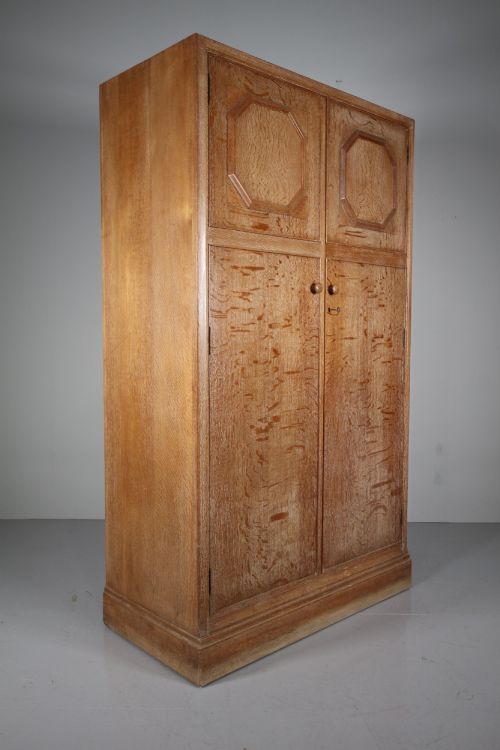
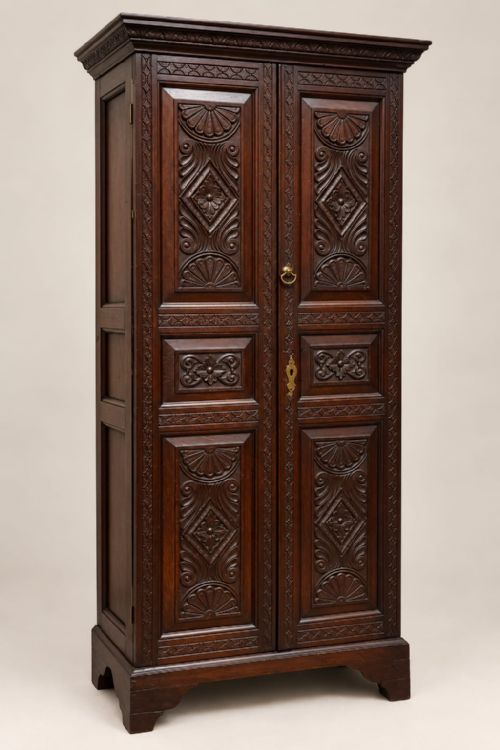
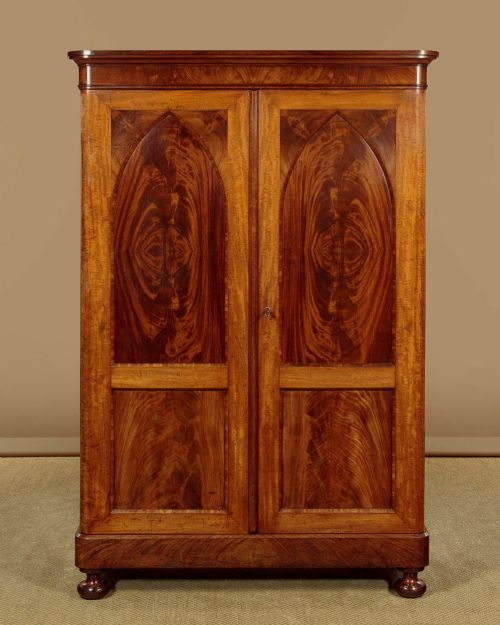
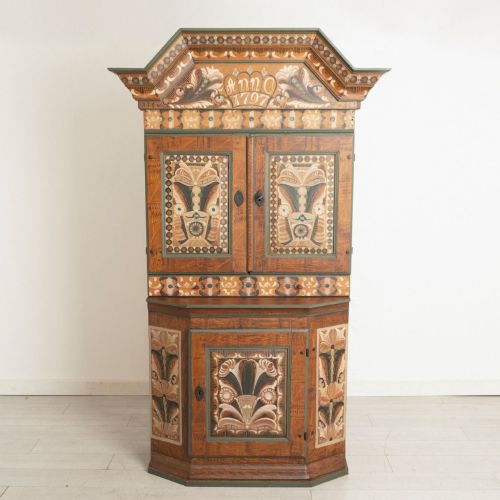
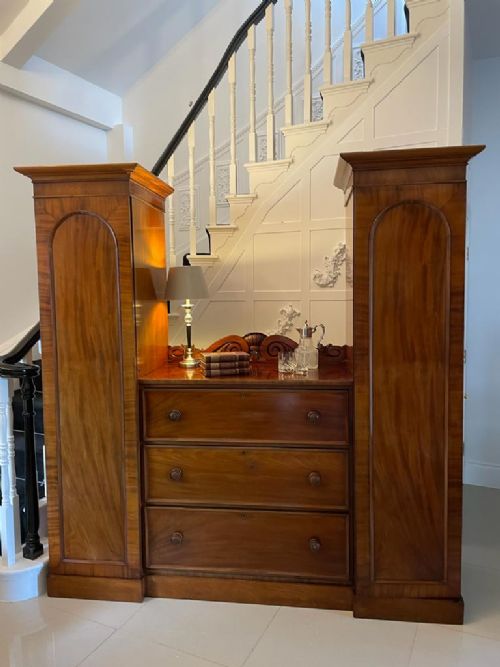
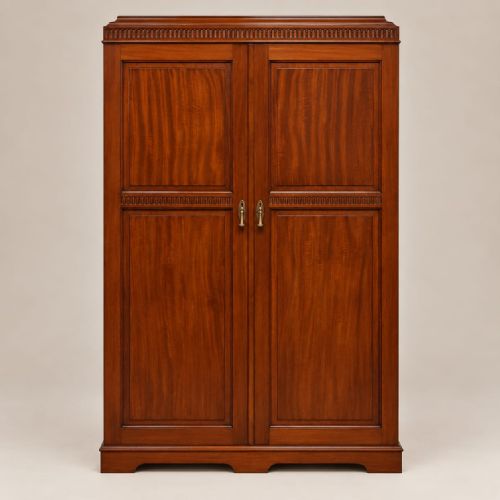
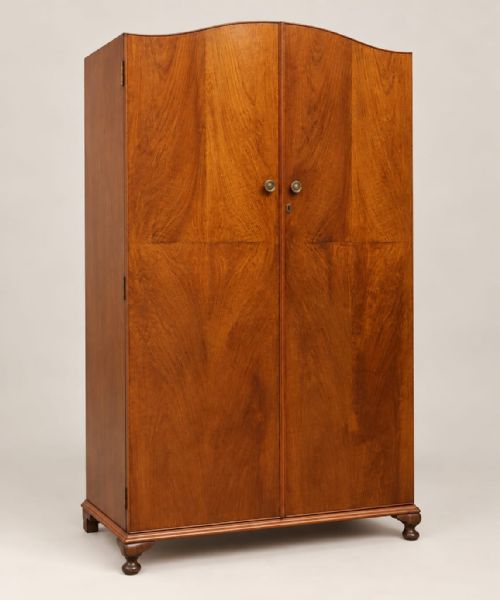
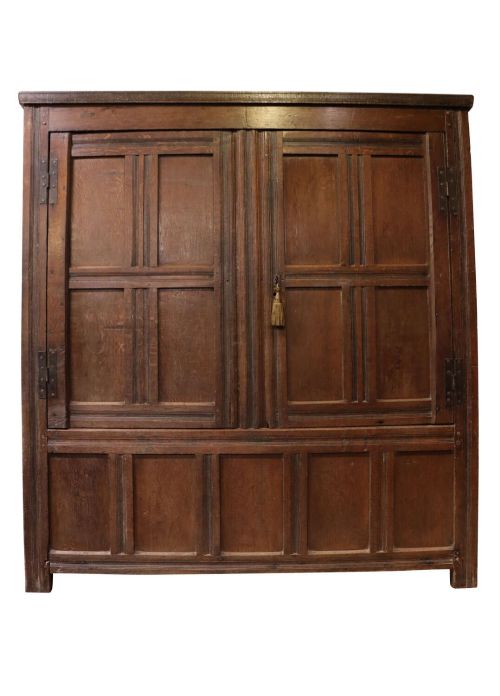
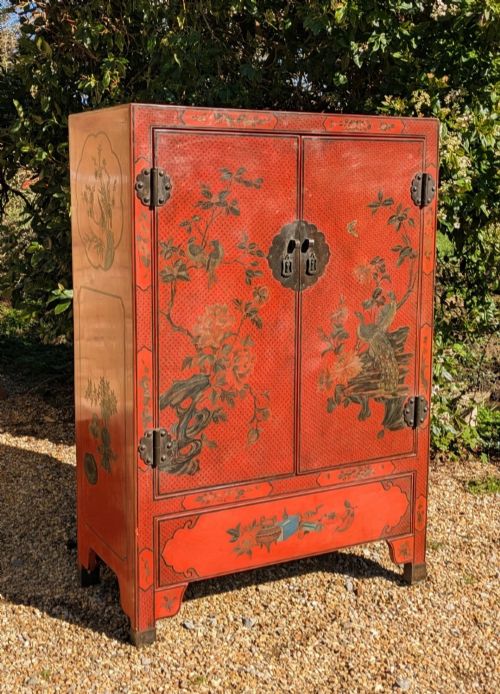
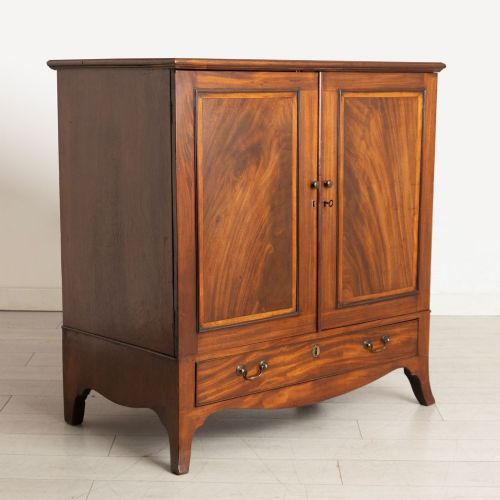
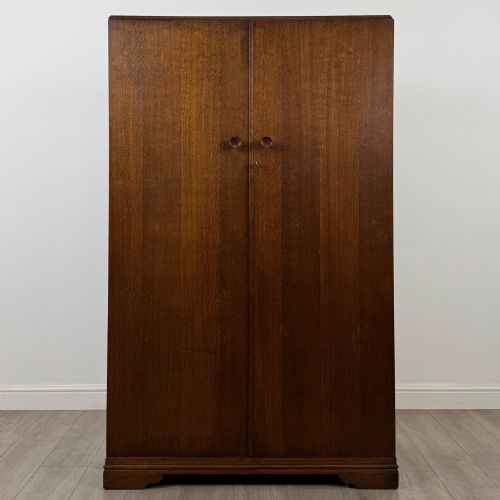
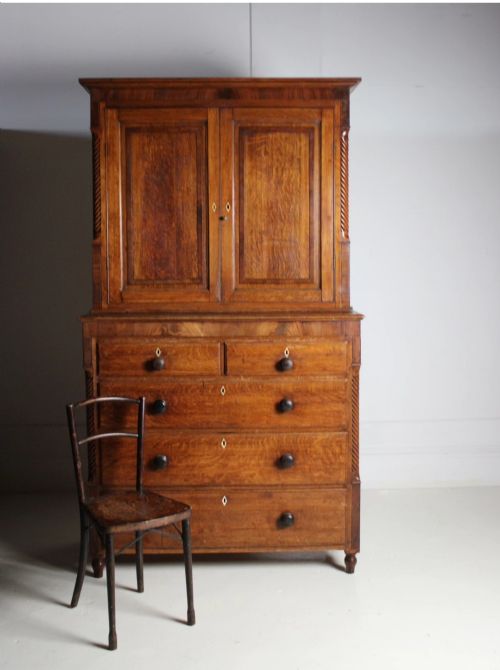
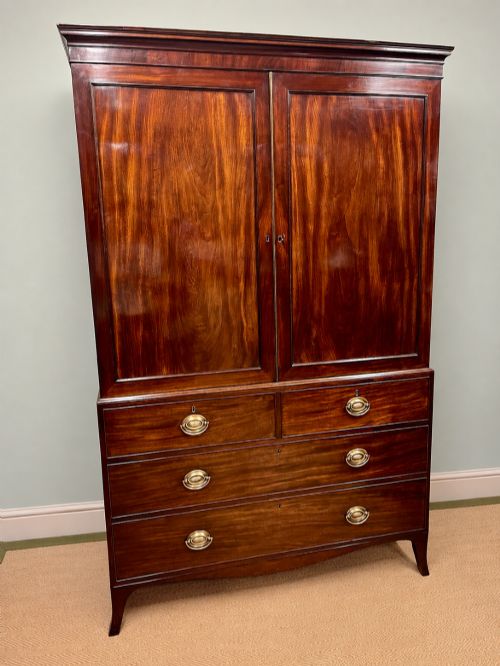
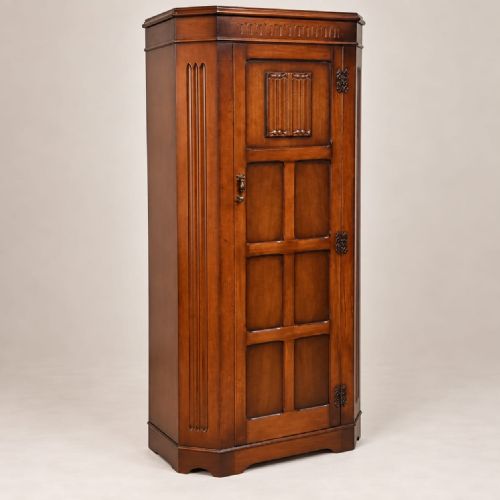
An antique furniture wardrobe spans robust Georgian linen presses, heavily figured Victorian burr walnut compartments and lighter Edwardian satinwood designs. Buyers encounter everything from tall architectural hall cupboards to expansive multi-piece bedroom suites.
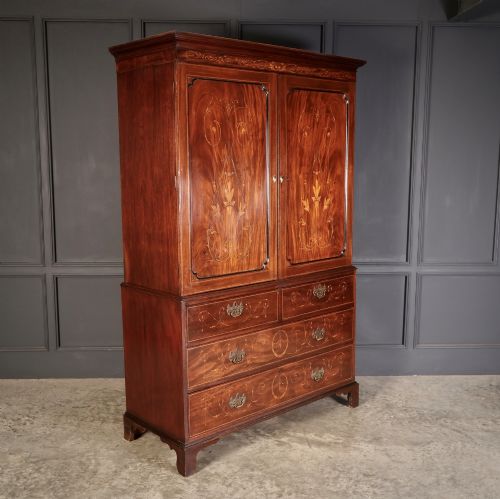
The material palette is anchored in timbers such as mahogany, oak, pine and walnut, occasionally enriched with marquetry, glass panels or brass hardware. Many pieces double as linen presses or armoires, offering deep hanging space alongside sliding linen trays.
Originating across British and continental workshops, these large storage pieces reflect the shifting domestic demands of the eighteenth, nineteenth and early twentieth centuries. They remain practical focal points for contemporary bedrooms and hallways.
Materials and Construction
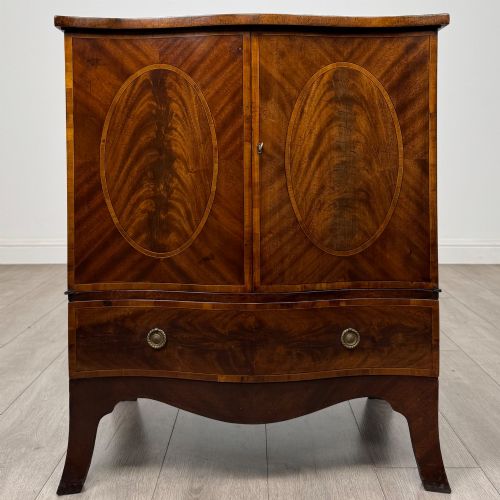
Cabinetmakers utilised solid timbers and figured veneers, applying mahogany, oak and walnut over sturdy secondary woods. Surface enrichment relied on floral marquetry inlay, ebony stringing, or painted satinwood details.
Internal construction involved panelled doors, dovetailed drawer boxes and sliding linen shelves. Brass hanging rails, iron hooks and brass escutcheons completed the functional architecture of each piece.
Early cabinetmakers thoughtfully sized linen press sliding trays to match the exact fold of household damask tablecloths.
Indicators of Quality
Quality rests on the depth of figure in the timber, particularly in burr walnut, flame mahogany and bird’s eye maple veneers. Finer examples display meticulous grain matching across large panelled doors and drawer fronts.
Structural integrity reveals itself in tight dovetail joints, original brass hardware and smooth-running drawers. The presence of carved mouldings or hand-laid marquetry separates standard utilitarian pieces from high workshop production.
Maples and Co·Heals·Harris Lebus·Waring and Gillows·S and H Jewell
The Antique Furniture Wardrobe Glossary
- Linen Press
- A tall storage piece featuring sliding trays or shelves in the upper section and drawer storage below. These cabinets evolved to store folded textiles before hanging garments became common.
- Compactum
- A multi-functional wardrobe combining hanging space, linen drawers and shelving within a single footprint. This efficient design gained popularity during the Victorian and Edwardian periods.
- Marquetry
- The art of forming decorative patterns using thin veneers of different coloured woods, shells or ivory. Craftsmen cut these elements precisely to fit into a prepared background.
- Tallboy
- A tall chest of drawers standing upon a lower chest or base cabinet. These pieces maximise vertical storage while maintaining a compact floor footprint.
- Armoire
- A large upright cupboard or wardrobe used for storing garments. European examples often feature elaborate carved panelling and double doors.
Antique Furniture Wardrobe: Frequently Asked Questions
How do I fit a large wardrobe in a modern room?
Many antique wardrobes dismantle into modular components including a separate cornice, base and side panels. This modular construction allows for easier transport and installation in rooms with low ceilings.
Professional delivery teams usually assemble these pieces on site to ensure structural stability and proper door alignment.
What is the difference between a wardrobe and a linen press?
A wardrobe is primarily designed for hanging garments on internal rails, featuring tall vertical doors. A linen press combines internal sliding trays or shelves in the upper section with chest drawers below.
While presses originally stored folded household linens, modern owners frequently adapt the internal trays for folded clothing.
How do I care for antique wood surfaces?
Maintain timber finishes by avoiding direct sunlight and placing pieces away from radiators to prevent veneer splitting. Regular application of a quality beeswax polish nourishes the wood and preserves the patina.
Clean glass and mirrors with gentle solutions while protecting brass hardware from abrasive metal cleaners.
How do I date an antique wardrobe?
Dating relies on architectural styles, timber choices and construction methods such as hand-cut dovetails or machine-sawn backboards. Georgian pieces favour solid mahogany and oak, while Victorian and Edwardian examples often showcase burr walnut or satinwood veneers.
Maker stamps, stamps on locks and original hardware provide further chronological evidence.