


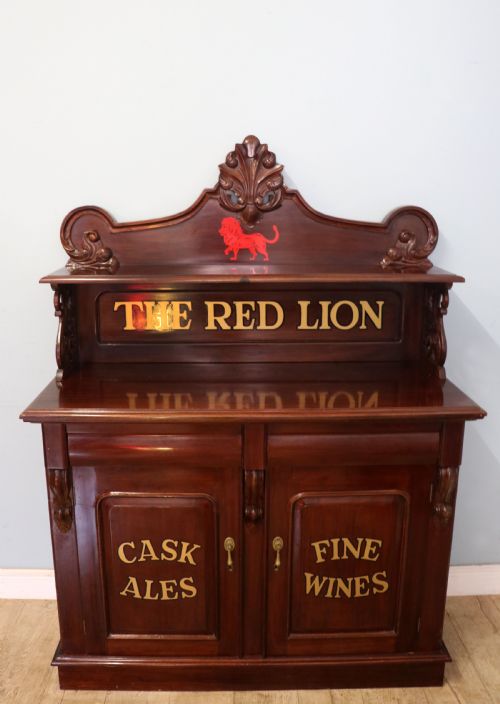


Antique Furniture Sign
An antique furniture sign combines utilitarian trade branding with period cabinetry, offering a tangible piece of commercial history.
Antique Furniture Sign
When you search for an antique furniture sign, you encounter traditional storage forms and display items bearing hand-painted trade lettering, merchant details, or institutional names. These pieces bridge domestic utility and commercial history, often originating from provincial agricultural merchants, schools, or public houses.
The selections you meet most frequently on this page span the Victorian era into the early twentieth century, featuring painted pine chests of drawers, mahogany chiffoniers, and occasional wall signs. Many items display later sign-writing applied to functional furniture rather than dedicated exterior shop boards.
Beyond standard case pieces, the category accommodates specific advertising adaptations, such as early twentieth-century shop advertising chairs and oak veneered bookcase cabinets lettered for corporate entities like the British Broadcasting Company.
How they were made
Construction relies upon traditional cabinet woods including solid mahogany, pine, and oak veneer, complemented by applied decorative elements such as marquetry inlay, brass hardware, and beaten copper panels. Makers selected timbers appropriate to the functional role of the furniture, pairing durable pine for painted surfaces with fine mahogany for formal chiffoniers and side tables.
Antique Furniture Sign Retail Price Guide 2026
Typical asking prices for furniture sign among the pieces listed under this phrase on Sellingantiques today, from the lower quarter to the upper quarter. They describe what is for sale here now, not the wider market.
One signed piece proudly advertises matches for Watsons Matchless Soap, proving that even a chair could moonlight as a billboard.
What varies in quality
The standard of execution in the hand-painted lettering distinguishes straightforward utility pieces from finer examples of trade art. Crisp brushwork, balanced typography, and well-preserved original sign-writing elevate the visual impact of an otherwise domestic chest or sideboard.
Construction integrity and the retention of original surface finishes dictate overall merit within the selection. Pieces retaining their primary painted pine or polished mahogany surfaces alongside legible, period-appropriate commercial inscriptions represent the upper tier of the range.
F. Linke·Jean Faure·Befort Jeune for Mathieu Befort
The Antique Furniture Sign Glossary
- Sign-written
- Lettering applied by hand using traditional sign-writer's brushes and paint directly onto a wooden surface. This method was utilised by tradesmen to brand furniture for businesses, schools, and institutions.
- Chiffonier
- A compact sideboard or low cabinet featuring enclosed cupboards beneath a shelf or drawer. These pieces were common in Victorian interiors and frequently served as surfaces for commercial rebranding.
- Marquetry
- The art of applying decorative pieces of veneer to a structural structure to form geometric or pictorial designs. This technique appears on finer occasional tables alongside specialised sign work.
- Ormolu
- Gilded bronze mounts applied to furniture for decorative effect. This French technique is found on revival pieces within the wider selection.
- Dovetail
- A traditional wood joint formed by interlocking wedge-shaped fingers. It provides strong tensile strength for drawer construction in period case pieces.
Antique Furniture Sign: Frequently Asked Questions
What is an antique furniture sign?
An antique furniture sign typically refers to a piece of period utility furniture or a wall sign bearing hand-painted commercial lettering or institutional names. These items served as functional trade markers for businesses, merchants, and public houses.
The category spans painted pine chests, mahogany chiffoniers, and specialised advertising chairs from the nineteenth and early twentieth centuries, merging practical storage with historic signage.
Were these signs originally made for shops?
Many pieces were standard domestic or commercial furniture that received later sign-writing for specific mercantile enterprises, agricultural merchants, or institutions. Others, such as dedicated advertising chairs and wall signs, were produced specifically for commercial display.
The presence of names like agricultural merchants or public houses indicates how tradesmen repurposed or branded everyday furniture for daily business operations.
How do I care for painted wooden furniture?
Painted furniture requires careful dusting with a soft, dry cloth to protect the delicate surface of the hand-written lettering. Avoid modern chemical cleaners and abrasive cloths that can lift or dull the historic paint layers.
Keep the pieces away from direct sunlight and fluctuating heat sources to prevent the underlying timber from warping and the painted inscriptions from cracking or flaking over time.
How do I identify the period of the sign?
Dating relies upon examining the underlying furniture construction, timber selection, and the typography of the sign-writing. Victorian pine chests and mahogany chiffoniers exhibit joinery techniques and proportions characteristic of their specific decade.
Lettering styles, paint composition, and secondary merchant details also provide clear indicators of whether the piece originates from the nineteenth century or the early twentieth century.