



Antique Fuel Bucket
An antique fuel bucket brings heavy metal and warm timber to the hearth, built to hold coal, logs, or peat while keeping the fireside tidy.
Antique Fuel Bucket
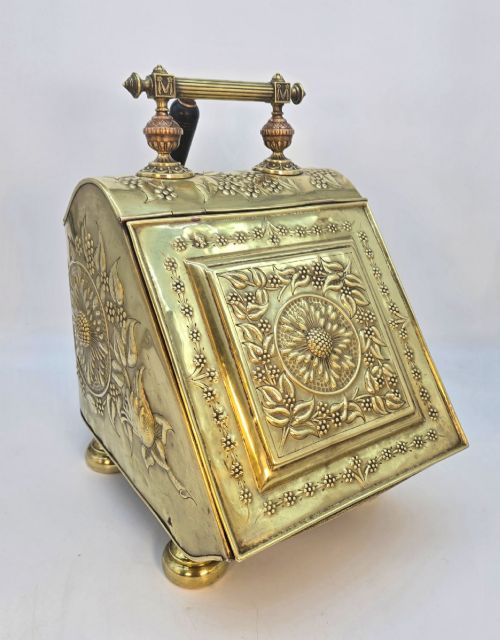
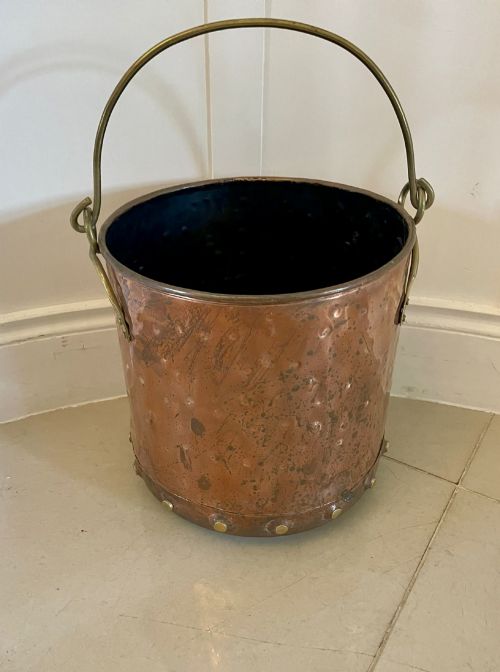
An antique fuel bucket is a sturdy fireside container designed to store coal, logs, or peat for the hearth. These vessels appear in forms ranging from traditional helmet scuttles to lidded bins and coopered peat buckets.
Makers such as Petrus Ramus and Benham & Froud contributed to this lineage of fireside storage. Buyers will also encounter specialised forms like grain measures and purdoniums designed for domestic utility.
Assessing quality and craftsmanship
Quality rests in the weight of the metal and the integrity of the construction, where heavy-gauge copper and substantial brass outlast thinner stamped alternatives. Riveted seams and solid dovetail joints in timber boxes indicate superior maker output.
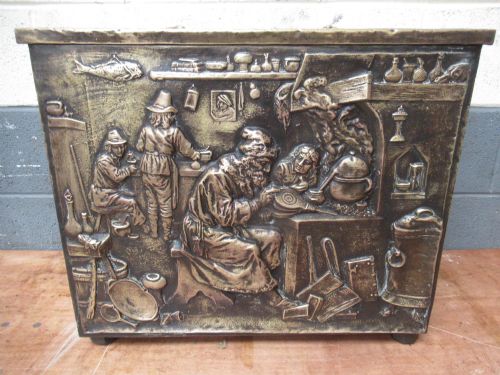
Design ambition separates utilitarian bins from finer parlor pieces, visible in crisp embossing, hand-carved oak panels, or designated maker stamps. Surviving original hardware, such as robust brass swing handles and tight-fitting lids, elevates a piece.
Antique Fuel Bucket Retail Price Guide 2026
Typical asking prices for fuel bucket among the pieces listed under this phrase on Sellingantiques today, from the lower quarter to the upper quarter. They describe what is for sale here now, not the wider market.
Listings show metal fuel buckets spanning the Georgian, Victorian, and Edwardian periods in brass, copper, oak, walnut, and ebonised wood.
Benham & Froud·Petrus Ramus
The Antique Fuel Bucket Glossary
- Coal scuttle
- A fireside vessel with a wide mouth and a hinged handle designed for carrying coal to the grate. Helmet scuttles feature a pointed lip reminiscent of headgear.
- Purdonium
- A box-like cabinet designed to store coal discreetly beside the fireplace, typically housing a metal liner and a drop-down front. These often date from the Victorian period.
- Coopered
- A method of construction using curved wooden staves bound together by metal hoops, traditionally utilised for liquid vessels and peat buckets.
- Repoussé
- A metalworking technique where the design is hammered into relief from the reverse side. This creates raised decorative patterns on copper and brass bodies.
- Grain measure
- A cylindrical agricultural container adapted from utility use to domestic fireside storage. Heavy copper examples often bear capacity numbers on the exterior.
Antique Fuel Bucket: Frequently Asked Questions
How do I date a copper fuel bucket?
Dating relies on manufacturing techniques, style markers, and materials recorded across the Victorian, Edwardian, and Georgian eras.
Hand-riveted joints and heavy gauge metal often suggest earlier nineteenth-century production, while Arts and Crafts designs introduce specific decorative motifs.
Were these buckets only used for coal?
These vessels served multiple domestic fuel needs depending on the region and the household requirements. Coopered timber buckets held dry peat in Scottish homes, while larger brass and copper bins stored logs and kindling.
Some surviving pieces began life as agricultural grain measures before finding a second home by the hearth.
How do I care for antique brass and copper?
Metal fuel buckets benefit from gentle dusting and occasional cleaning to preserve the natural oxidation that develops over decades of use. Avoid abrasive commercial polishes that strip away historical patination.
Timber boxes require standard wood maintenance with appropriate wax to keep dry oak and walnut nourished.