





Antique Fruit Knives
Antique fruit knives are specialist cutlery pieces designed for slicing fresh produce at the table, pairing practical metal blades with decorative handles.
Antique Fruit Knives
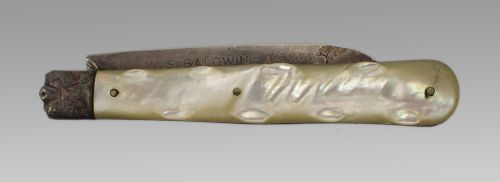
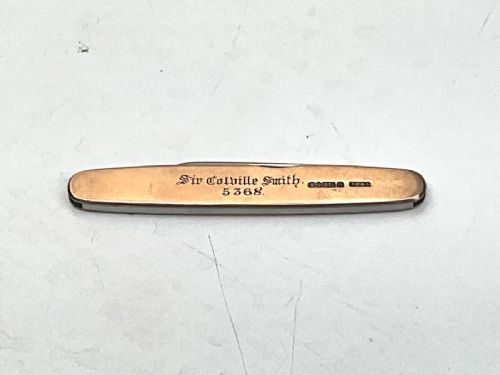
When you search for antique fruit knives, you encounter both folding pocket versions and matched sets intended for formal dessert courses. The pieces appearing here span the eighteenth, nineteenth, and early twentieth centuries, encompassing Victorian, Edwardian, and Georgian eras.
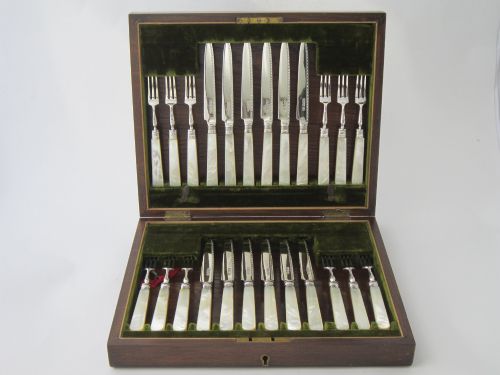
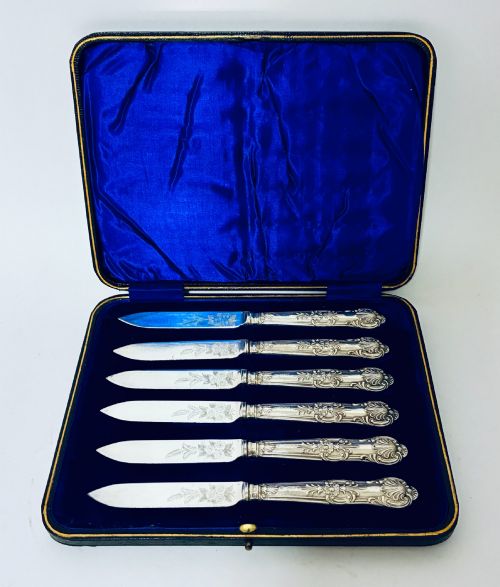
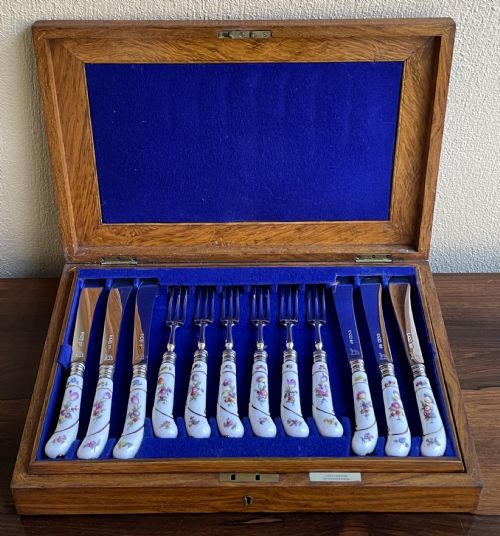
Most examples you meet on this page utilise mother of pearl for the handle, often combined with sterling silver or silver plate blades. Sets frequently arrive complete with original wooden presentation boxes lined in velvet.
Beyond individual folding items, the listings include larger cutlery sets incorporating dessert forks, nutcrackers, and grape scissors alongside the main knives.
Materials and construction methods
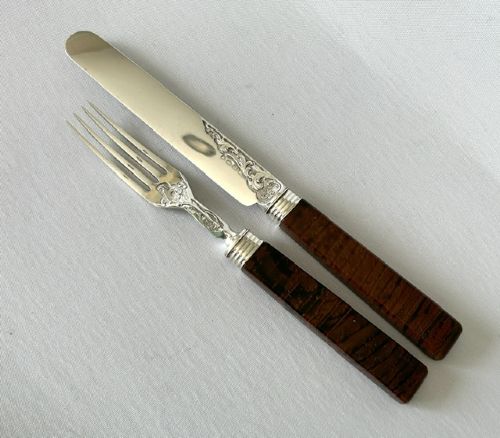
Craftsmen built these items using sterling silver, silver plate, and steel for the blades, frequently applying gilt finishes known as silver gilt. Handles relied heavily on mother of pearl, carved ivory, porcelain, and agate.
Antique Fruit Knives Retail Price Guide 2026
Typical asking prices for fruit knives among the pieces listed under this phrase on Sellingantiques today, from the lower quarter to the upper quarter. They describe what is for sale here now, not the wider market.
Listings feature items from the eighteenth, nineteenth, and early twentieth centuries, utilising mother of pearl, sterling silver, silver plate, steel, oak, and velvet.
Differentiating quality across pieces
Quality shows in the refinement of the blade engraving and the integrity of the handle material, such as smoothly polished mother of pearl free from deep fractures. Matched sets display uniform craftsmanship across every knife and fork in the box.
The presence of an original, fitted presentation box elevates a set, particularly when the interior velvet lining remains well preserved alongside functioning metal clasps.
Aaron Hadfield·Allen And Darwin·Carrington
The Antique Fruit Knives Glossary
- Mother of Pearl
- The iridescent internal layer of pearl oyster shells, widely shaped into smooth handle scales for cutlery. It provides a durable and decorative grip.
- Silver Gilt
- Silver objects coated with a thin layer of gold, sometimes referred to as vermeil. This technique adds a warm golden tone to the metal blades.
- Ferrule
- A metal ring or cap that secures the handle to the blade of a knife. It strengthens the joint where the tang enters the grip.
- Pistol Grip
- A curved handle shape resembling the butt of a flintlock pistol, designed to fit comfortably in the hand during dining.
- Dessert Cutlery
- Specialised forks and knives utilised specifically for eating fruit or sweet courses after the main meal. They are typically smaller than standard dinner implements.
Antique Fruit Knives: Frequently Asked Questions
What were antique fruit knives used for?
These utensils were used during the dessert course of formal meals to slice acidic fruits cleanly without reacting chemically with the food. Sterling silver and gold gilt blades prevented the metallic taste that standard steel knives often left on fresh produce.
Over time, folding pocket versions also became popular for personal use, allowing individuals to carry a dedicated fruit knife during travel or daily outings.
How do I care for mother of pearl handles?
Mother of pearl requires gentle cleaning with warm soapy water and a soft cloth, followed by immediate drying. Avoid harsh chemicals, boiling water, and prolonged soaking, which can weaken the natural adhesive holding the handle components together.
Storing the knives in their original fitted wooden boxes helps protect the delicate shell material from impacts and extreme temperature shifts.
Were these knives made in sets?
Many examples survive as cased sets containing multiple matching knives, often paired with matching forks for dessert dining. These boxed collections were frequently given as wedding gifts or purchased for affluent households.
Individual folding pocket knives also exist alongside these larger dining suites, designed for single users rather than table service.
How can I tell the period of a set?
Dating relies on hallmarks stamped onto the silver components, registry marks, stylistic details of the handles, and the construction of the presentation boxes. Georgian and Victorian pieces often display distinct engraving styles and specific handle shapes like the pistol grip.
Examining the box lining, hinges, and accompanying paperwork or labels can provide further clues regarding the manufacturing decade.