


Antique French Table Tray
These antique french table tray pieces combine display and utility, offering refined surfaces that elevate any interior space.
Antique French Table Tray
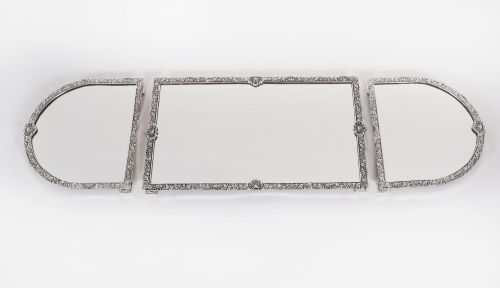
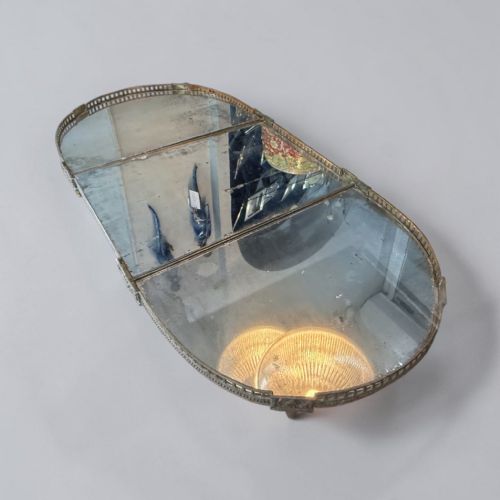
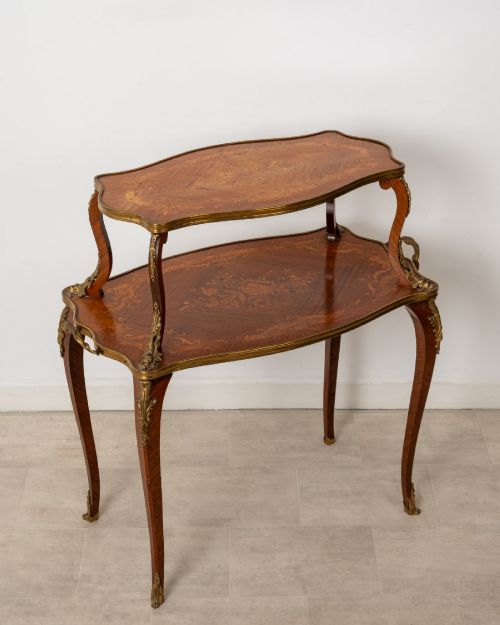
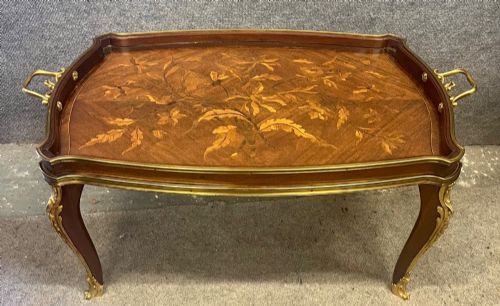
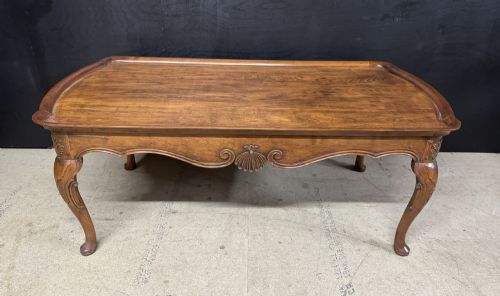
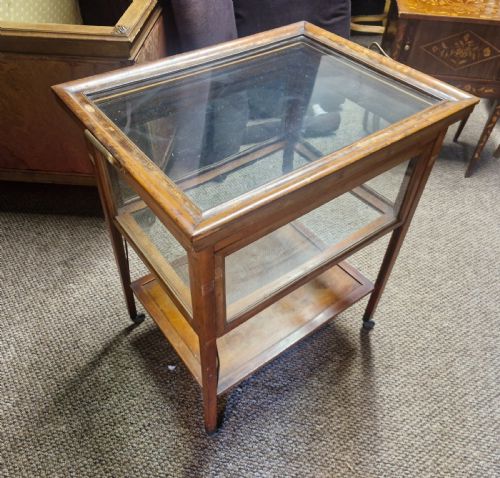
An antique french table tray unites the function of a portable serving surface with the stability of a dedicated stand, appearing primarily across the nineteenth and early twentieth centuries. The selection on this page ranges from compact occasional tables and coffee tables to tiered etageres and removable centrepiece trays.
Makers designed these items to serve various domestic roles, utilising forms such as the Louis XV Revival side table with removable top, the drop-side tea trolley, and the folding faux bamboo table. Buyers encounter traditional cabinet woods alongside specialised display pieces featuring inset glass, onyx, or enamel panels.
Origins stretch from eighteenth century classical occasional pieces up to Art Deco silver plated serving items and folding designs of the late nineteenth century. Oak, walnut, and kingwood dominate the structural framework, while specific items adopt the distinctive proportions of French provincial or chateau aesthetics.
Craftsmanship and Detail
The distinction between standard and exceptional pieces rests upon the precision of the marquetry work and the crispness of the ormolu casting. Superior examples exhibit tightly fitted wood veneers, finely chased metal mounts, and robust structural joints that maintain stability across generations.
The integration of materials also dictates overall merit, particularly in the clarity of champleve enamel work, the weighting of brass galleries, and the quality of inset glass or onyx plates. Pieces that retain their original removable trays and matching stands demonstrate superior historical integrity.
Listings feature items incorporating brass, ormolu, kingwood, walnut, glass, silver plate, mahogany, and champleve enamel across various periods.
Brille Paris·Zwiener·Linke
The Antique French Table Tray Glossary
- Ormolu
- Gilded bronze ornamentation applied to furniture and decorative objects. This technique creates a rich, metallic highlight common on nineteenth century pieces.
- Champleve Enamel
- A technique where troughs are carved into a metal surface and filled with vitreous enamel before firing. It produces vibrant coloured patterns on trays and centrepieces.
- Marquetry
- The art of applying decorative pieces of veneer to a structure to form intricate patterns. Cabinetmakers use various coloured timbers to create pictorial designs.
- Étagère
- A set of open shelves for displaying small objects or serving tea. These multi-tiered units maximise surface space while maintaining a light visual profile.
- Parquetry
- Geometric mosaic woodwork used for flooring and furniture surfaces. It creates repeating patterns using contrasting wood blocks.
Antique French Table Tray: Frequently Asked Questions
How are antique french table trays cleaned?
Dust timber surfaces regularly with a soft, dry cloth to prevent the accumulation of grit in carved details and veneer joints. Avoid modern chemical polishes that can degrade historical wax finishes.
For metal mounts and enamel sections, use a gentle wipe with a dry microfibre cloth. Keep moisture away from exposed wood and delicate brass or ormolu elements.
How do I identify the period of a tray table?
Examine the primary materials, construction techniques, and stylistic revival influences visible in the woodwork and metal mounts. Nineteenth century examples frequently feature rich kingwood veneers and elaborate ormolu, while later pieces adopt cleaner Art Deco silver plated lines.
Look at the underside and interior joints for hand-cut elements or assembly markings that indicate the manufacturing era. Comparing the proportions to documented regional styles helps confirm the historical context.
Where should I place a tray table at home?
These versatile pieces function well as bedside cabinets, side tables beside seating, or decorative centrepieces in a living space. Their compact footprints allow them to fit into smaller rooms without overwhelming the layout.
Keep them away from direct sunlight and strong heat sources to protect wood veneers and enamel work from fading or drying out. Positioning them in stable, low-traffic areas preserves delicate galleries and inlaid surfaces.