

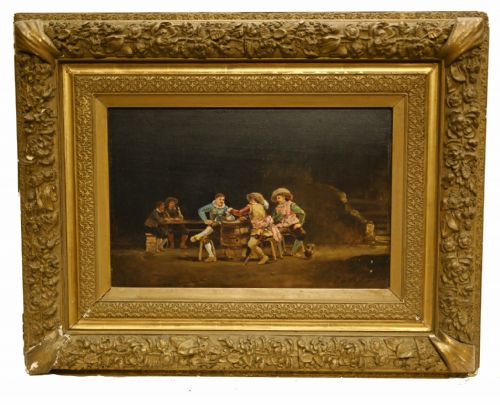


Antique French Signed Artwork
Antique French signed artwork brings together canvases, waterboards and engravings carrying the distinct hand of makers across the nineteenth and twentieth centuries.
Antique French Signed Artwork
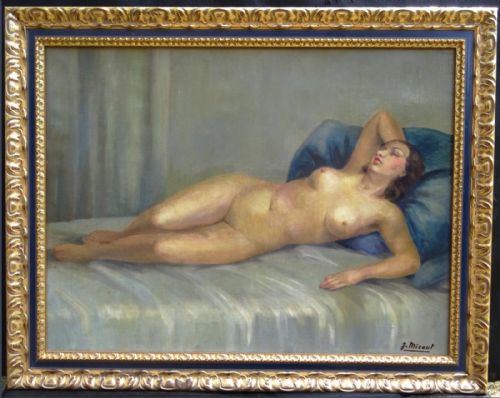
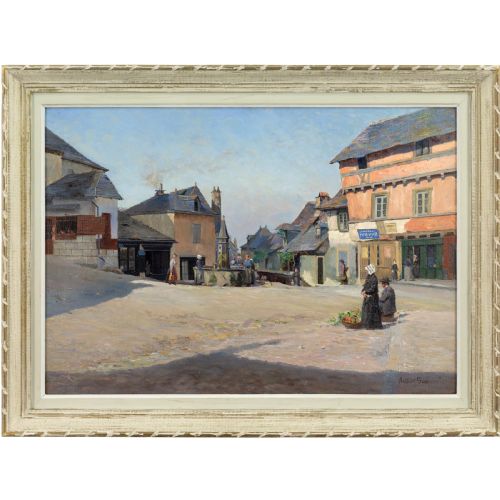
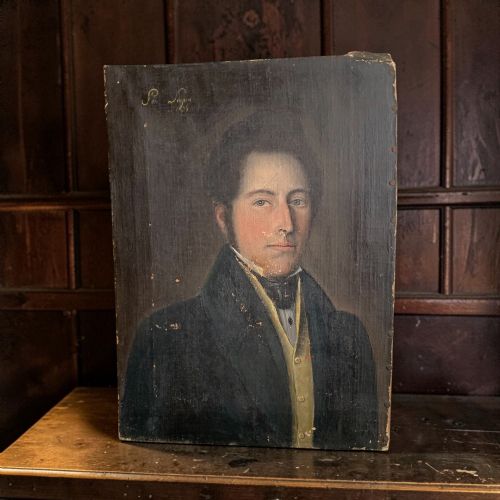
When searching for antique french signed artwork, collectors encounter a diverse range of paintings and works on paper carrying artist signatures. The selection spans the nineteenth century through the mid twentieth century, covering movements from the Barbizon School to Post-Impressionism.
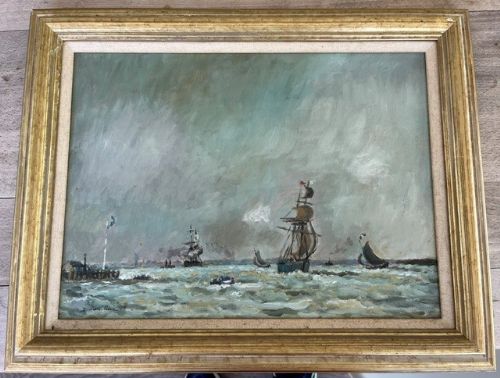
Oil on canvas and oil on board dominate the selection alongside watercolours, engravings and ink drawings on paper. Subjects vary widely from classical portraits and tavern scenes to sunlit Mediterranean landscapes and pastoral village views.
Pieces originating from the nineteenth century often lean towards academic realism and impressionist landscapes. Later twentieth-century examples shift towards post-impressionist plein air work and mid-century seascapes.
Materials and construction methods
Painters applied oil paint to stretched canvas or prepared wooden boards, utilising brushwork and chiaroscuro techniques to build depth. Watercolours and inks were executed on textured paper supports, capturing light and atmosphere directly.
Engravings and etchings employed metal plates inscribed with fine lines, transferred onto paper under pressure in limited editions. Wood framing frequently accompanied canvases to protect edges and complete the presentation.
Antique French Signed Artwork Retail Price Guide 2026
Typical asking prices for french signed artwork among the pieces listed under this phrase on Sellingantiques today, from the lower quarter to the upper quarter. They describe what is for sale here now, not the wider market.
The listings span from the nineteenth century through the 1960s, encompassing oil on canvas, watercolor, etching, and ink drawing.
Distinctions in execution and depth
The finest examples display confident brushwork and a deliberate handling of light that creates genuine spatial atmosphere. Compositional balance and the subtlety of colour tones distinguish master works from routine studio output.
Legibility and placement of the signature contribute to historical value, particularly when tied to documented nineteenth or twentieth-century painters. The preservation of original surface textures without heavy restoration maintains the integrity of the piece.
Arthur Gué·Henri Joseph Harpinies·Paul Viry·Louis Icart·Albert Terry·Antoine Bouvard·Theobald Chartran·Alfred Arthur Brunel de Neuville·William Lee Hankey
The Antique French Signed Artwork Glossary
- Chiaroscuro
- Strong contrasts between light and dark used to give a sense of volume to figures and objects. This technique defines dramatic interior scenes.
- Plein air
- Painting outdoors to capture direct natural light and environmental effects. This method characterises many impressionist landscapes.
- Etching
- A printmaking process where acid cuts lines into a metal plate to hold ink. Artists draw directly into a protective ground before biting.
- Mezzotint
- A printmaking method that produces subtle gradations of light and shade. The copper plate is roughened uniformly to achieve rich dark tones.
- Post-Impressionism
- An artistic movement following impressionism that extended its boundaries while retaining vibrant colour. Artists emphasised symbolic content and expressive form.
Antique French Signed Artwork: Frequently Asked Questions
How do I identify a genuine period signature?
Look for ink or paint application that integrates naturally with the surrounding pigment rather than sitting on top of later touch-ups. Signatures should match the period style and medium of the primary artwork.
Compare the handwriting style and format against known examples by the same maker where possible. Placement in corners is standard, though monograms also appear.
What is the difference between oil on canvas and oil on board?
Oil on canvas involves stretched textile fabric providing a flexible support with distinct weave texture. Oil on board uses a rigid wooden or composition panel base.
Boards were frequently utilised for rapid plein air studies outdoors due to their durability. Canvases offered a traditional surface for larger studio compositions.
How should I care for antique works on paper?
Keep works on paper away from direct sunlight to prevent fading of watercolours and inks. Acid-free mounting and framing protect the paper from yellowing and degradation over time.
Maintain stable indoor humidity levels to avoid warping or mould growth on delicate paper supports. Display pieces in rooms with minimal temperature fluctuations.
Are twentieth-century pieces different from nineteenth-century ones?
Nineteenth-century works tend to reflect academic training, Barbizon realism, or early impressionist outdoor observation. Colour palettes often remain traditional and narrative subjects are common.
Twentieth-century examples, including 1930s post-impressionism and mid-century seascapes, embrace looser brushwork and brighter Mediterranean light. Subject matter shifts towards everyday scenes and abstract tonal balances.