



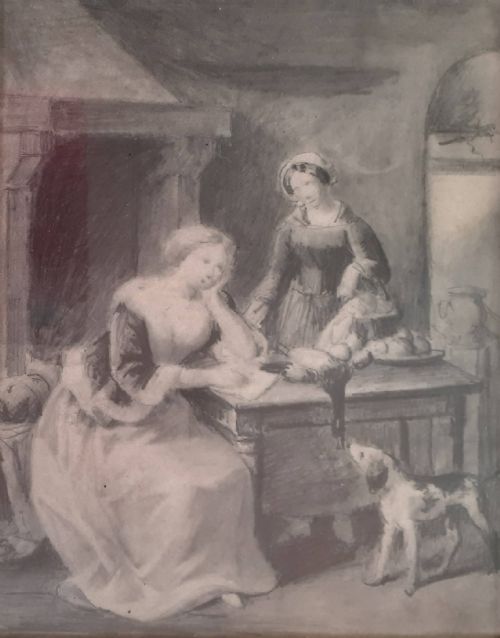


Antique French Pencil Sketch
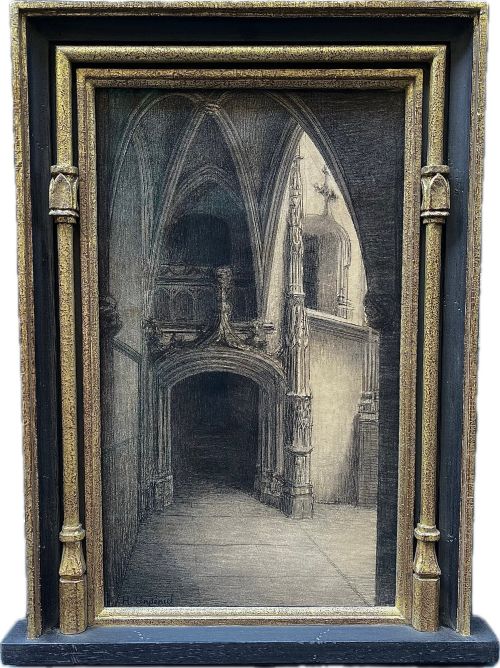
An antique french pencil sketch captures the immediacy of a hand at work, offering collectors a direct window into European draftsmanship from past centuries.
Antique French Pencil Sketch
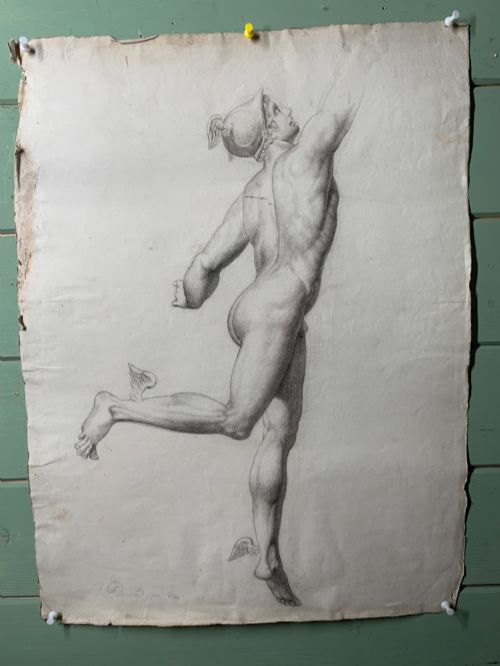
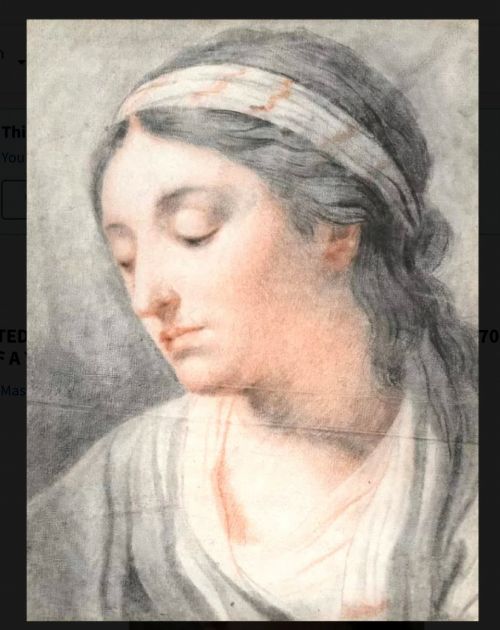
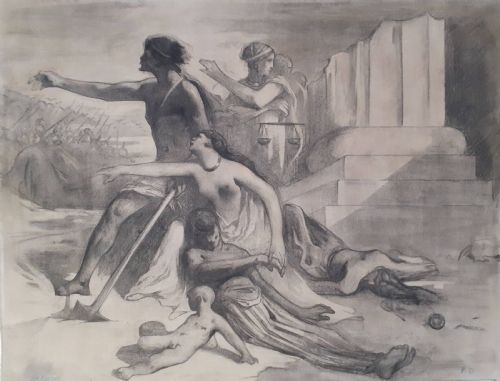
An antique french pencil sketch encompasses original works on paper, ranging from intimate portrait drawings to large-scale academic studies and allegorical scenes. You will frequently encounter graphite, charcoal, and chalk drawings originating from periods spanning the eighteenth century to the early twentieth century.
The selections on this page demonstrate the varied output of French studios and European artists working within distinct traditions, from neoclassical portraiture to avant-garde cubism. These original artworks on paper appear mounted in traditional frames, preserving the delicate mediums employed by the artists.
How they were made
Draftsmen relied primarily on graphite, charcoal, and red chalk applied to various surfaces of paper, including toned paper that provided a middle tone for highlights. Artists built up form through careful shading and line work, occasionally enhancing the composition with gold leaf or mixed chalks to create depth and contrast.
Works from the academic tradition required rigorous preparation through preliminary head studies and anatomical drawings before executing the final sheet. The physical support typically consists of period wood frames housing the fragile paper sheets underneath.
Listings feature works spanning the eighteenth, nineteenth, and early twentieth centuries, executed in graphite, charcoal, chalk, and red chalk on paper.
What varies in quality
The distinction between standard works and master drawings rests on the sureness of the hand, the psychological depth of the subject, and the completeness of the composition. A sheet displaying confident, economical line work and careful anatomical understanding holds greater visual weight than a stiff or formulaic study.
Provenance and documentation elevate certain drawings, particularly when linked directly to documented museum artists or specific historical exhibitions. The preservation of the paper sheet, minimal foxing, and the integrity of the original framing contribute significantly to the standing of any given piece.
Henri Charles Angéniol·Demetrios Galanis·Theobald Chartran·Alexandre Decamps·Fred Lawson·Cecil CP Lawson
The Antique French Pencil Sketch Glossary
- Graphite
- A form of crystalline carbon used as a drawing medium in pencils, producing grey or black marks that can be smudged or layered for tonal variation.
- Chalk
- A soft mineral-based drawing material, often found in red or white, used by artists to build rapid sketches and highlight tonal passages on toned paper.
- Academic Realism
- A style of painting and drawing produced under the influence of European academies of art, emphasising precise anatomical accuracy and classical subject matter.
- Toned Paper
- Paper manufactured with a pre-existing tint, allowing artists to work efficiently by adding both dark mediums and white highlights to a neutral ground.
- Deux Crayon
- A drawing technique utilising two colours of chalk or crayon, typically black and red, on tinted paper to create realistic volume and warmth.
Antique French Pencil Sketch: Frequently Asked Questions
How do I identify the period of a sketch?
Dating relies on stylistic clues, paper characteristics, signatures, and framing materials that correspond to documented artistic movements like the neoclassical period or academic realism.
Examining the watermark on the paper or any handwritten inscriptions on the reverse often provides concrete historical context.
What is the difference between chalk and graphite?
Graphite produces a metallic grey line with precise control, whereas chalk yields a softer, more velvety mark that easily creates broad tonal areas.
Artists frequently combined both mediums on toned paper to balance sharp outlines with atmospheric shading.
Where were these drawings originally created?
Many works originate from French ateliers, art academies, and Parisian studios where artists trained through rigorous life drawing and preparatory studies.
Others stem from broader European travels and plein-air excursions undertaken by academic and avant-garde practitioners.