

Antique French Medallion
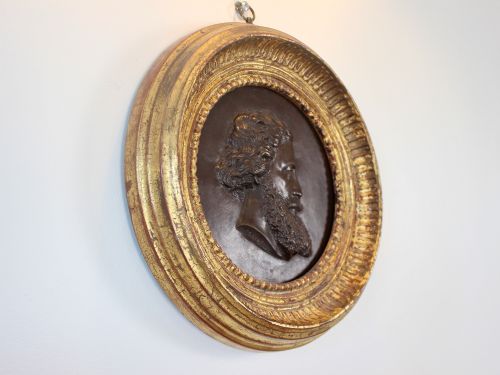
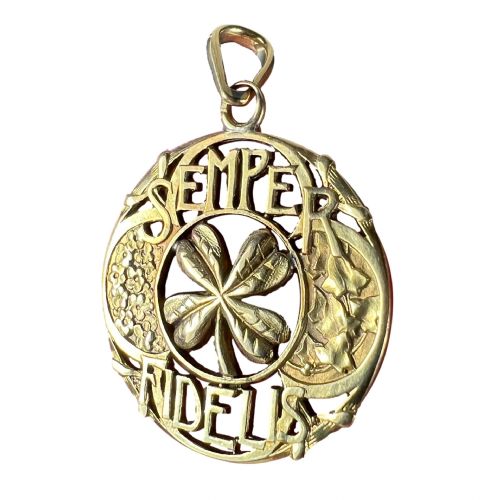
When you handle an antique french medallion, you hold a miniature relief sculpture in precious metal that often carries centuries of devotion or personal symbolism.
Antique French Medallion
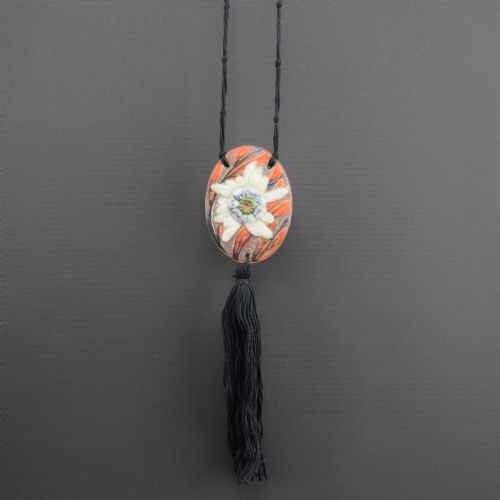
An antique french medallion most commonly appears here as a small pendant, charm, or medal intended to be worn on a chain or kept close as a personal token.
The selections span the nineteenth century through the early twentieth century, encompassing periods such as the Edwardian era, Art Nouveau, and Art Deco.
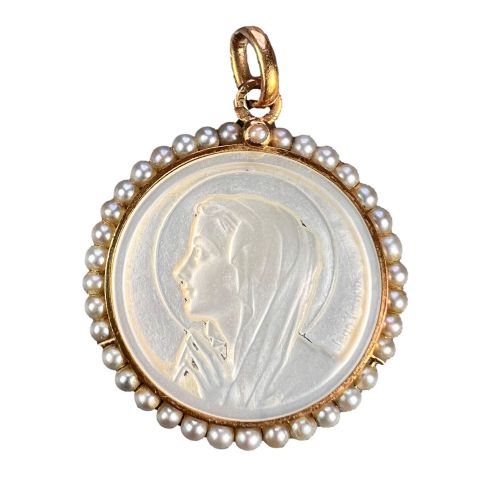
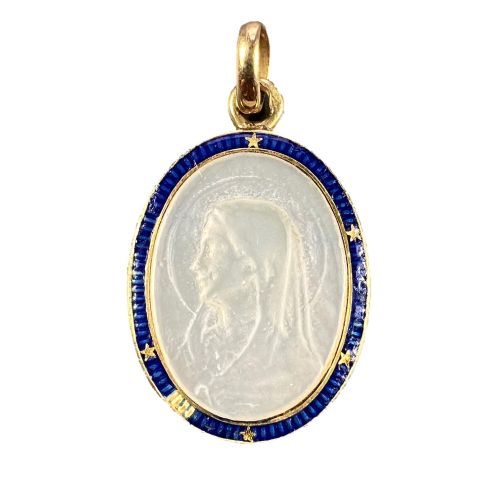
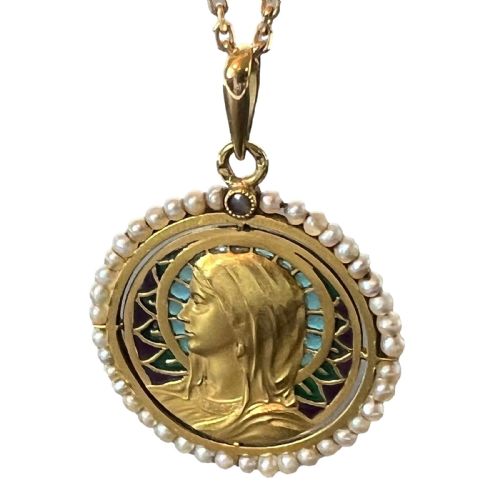
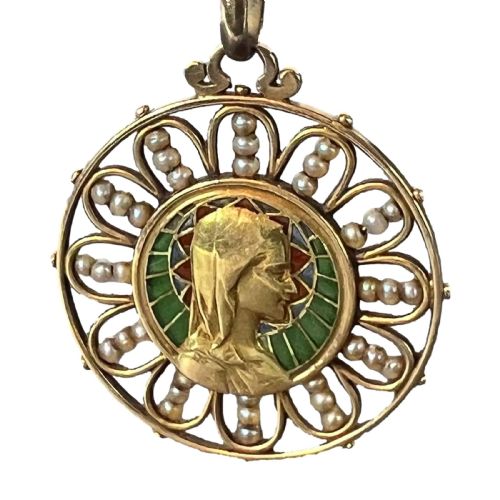
Religious subjects dominate the forms, particularly depictions of the Virgin Mary, the Madonna and Child, and sacred hearts, alongside secular monograms and lucky motifs.
How they were made
Goldsmiths worked primarily in 18k yellow and rose gold, shaping the metal to form intricate bezels and frames for the central reliefs.
Enamelling techniques, including translucent plique-a-jour, brought vivid colour to wings, robes, and floral wreaths surrounding the sacred figures.
Makers integrated natural materials such as mother of pearl, carving delicate mother of pearl plaques to sit within twisted wire or solid gold frames.
Listings feature 18k yellow gold, rose gold, mother of pearl, and enamel across the nineteenth and early twentieth centuries.
What varies in quality
The clarity of the relief sculpture defines the standard of the piece, separating crisp, artist-signed medals from softer, mass-produced stampings.
The execution of applied enamel and the integration of seed pearls determine the level of craftsmanship invested in the work.
Signed pieces by known medallists carry distinct artistic provenance that elevates them above unsigned workshop output.
Clement Messier·Thiebaut Freres·Emile Monier·Paul Brandt·Emile Dropsy
The Antique French Medallion Glossary
- Medallion
- A large medal or a circular or oval ornament resembling a medal. These objects often served as devotional pendants or commemorative plaques.
- Plique-a-jour
- A enamelling technique where the enamel is applied without a backing, creating a stained-glass effect that lets light pass through the translucent colour.
- Mother of pearl
- The iridescent internal layer of certain mollusc shells. Carvers used this material to create luminous backgrounds for religious figures.
- Relief
- A sculptural technique where the figures project from a flat background. High relief creates strong shadows and depth within a very small compass.
- Giltwood
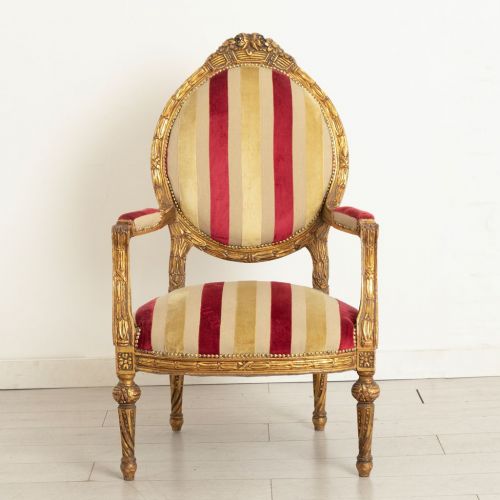
- Wood that has been treated with gold leaf or gesso and gold paint. This finish appears on larger decorative frames and furniture mounts associated with the period.
Antique French Medallion: Frequently Asked Questions
What is an antique french medallion?
These pieces are small wearable works of art, typically struck in 18k gold, featuring sculpted religious or symbolic imagery from nineteenth and early twentieth-century France.
They served primarily as personal devotional objects, christening gifts, or tokens of affection, often engraved on the reverse with dates and initials.
How do I wear a medallion pendant?
You can suspend these charms from a fine gold chain to wear them close to the collarbone as a traditional pendant.
Their lightweight construction and small scale make them suitable for everyday wear, either alone or layered with other gold chains.
How do I date an antique medal?
Dating relies on stylistic clues such as the sweeping organic lines of Art Nouveau or the geometric precision of Art Deco, alongside hallmarks stamped on the gold.
Many pieces also bear the signature of the sculptor or medallist, which helps narrow the period of creation.
What materials are used in these pendants?
Goldsmiths relied heavily on 18k yellow and rose gold to form the bodies and suspension loops of the medals.
Enamel, seed pearls, and carved mother of pearl frequently appear as complementary materials to add texture and colour to the central designs.