




Antique French Ewers
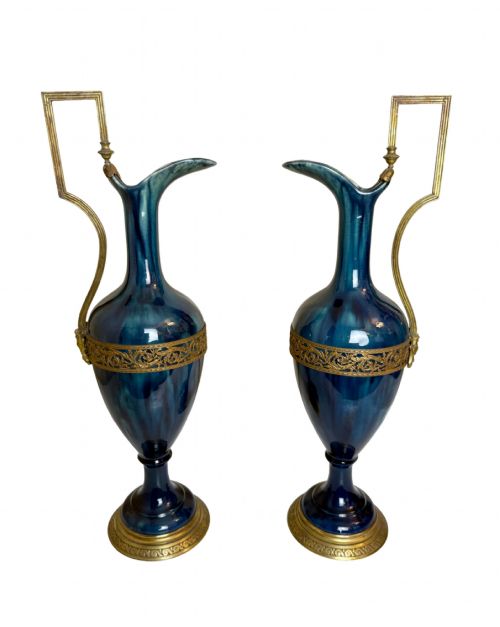
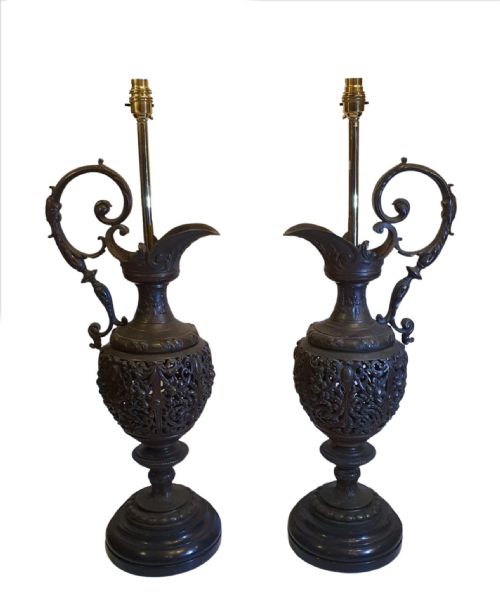
These antique French ewers are decorative vessels and table lamps created in metal, porcelain, and glass, offering classical elegance for any room.
Antique French Ewers
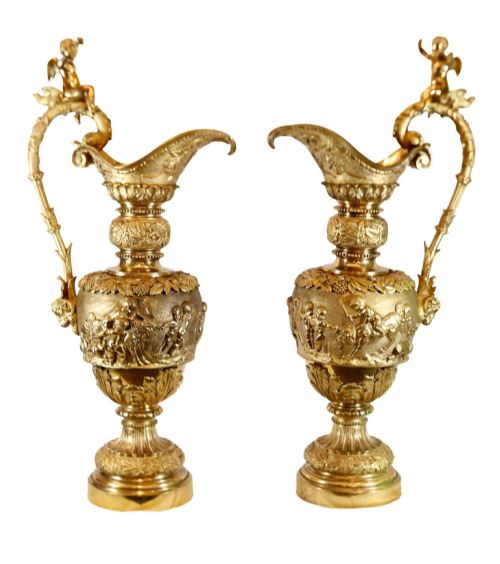
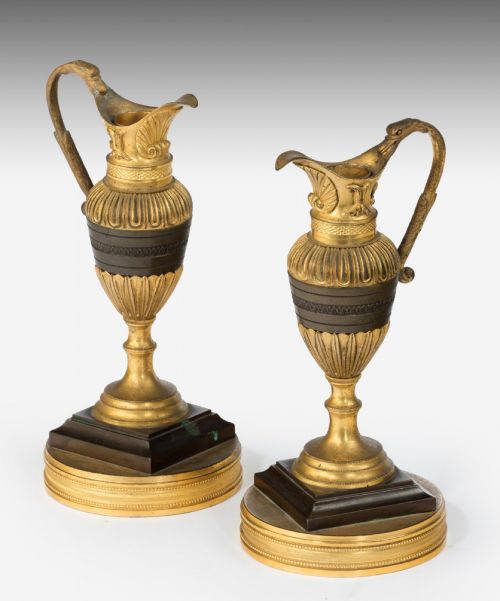
Antique French ewers originate as ornamental water jugs, wine pitchers, and decorative objects drawing on classical, Renaissance, and Rococo traditions. When exploring antique French ewers on this page, buyers frequently encounter 19th-century specimens formed from gilt bronze, ormolu, porcelain, and glass.
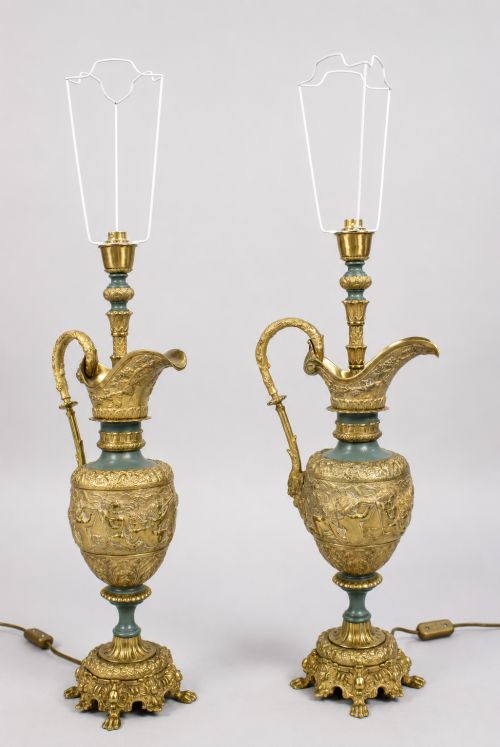
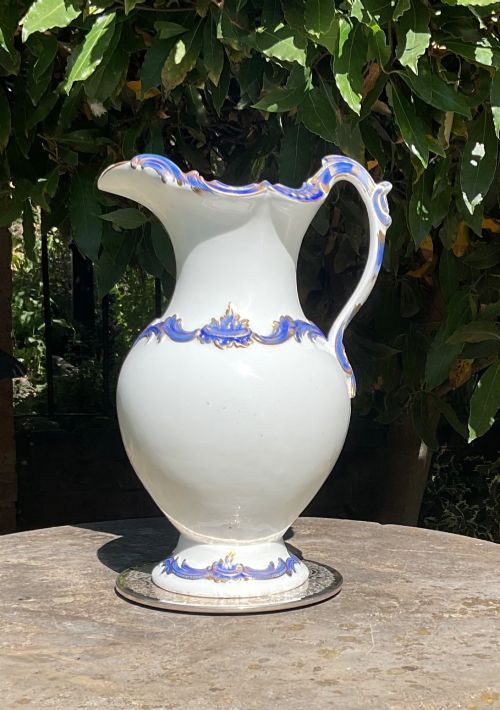
The selection ranges from miniature porcelain vessels to monumental wine ewers and paired examples adapted as table lamps. Makers and manufacturers utilised diverse stylistic revivals during the Victorian period, including Neoclassical and French Rococo designs.
How they were made
Artisans constructed these vessels using cast bronze, gilt metal, and ormolu, frequently pairing metal mounts with hand-painted porcelain or blown glass bodies. Techniques involve detailed chasing of metal components alongside ceramic glazing and enamelling.
Makers such as Baccarat and Christofle integrated crystal glass with latticinio decoration or silver plate, while potteries like Gien, Choisy-le-Roi, and Sarreguemines shaped faience and fine porcelain with mythological figures and cherubs.
Some grand wine ewers feature cherubs and mythological figures holding court among the gilding.
What varies in quality
The refinement of the casting and the depth of the chasing on gilt bronze and ormolu mounts set finer examples apart from simpler productions. Hand-painted ceramic details and the clarity of glass or crystal elements determine the upper tier of the range.
Completeness and matched pairing also influence the piece, particularly where original metal mounts are integrated with porcelain or where vessels have been converted into table lamps.
Choisy-le-Roi·Sarreguemines·Baccarat·Christofle
The Antique French Ewers Glossary
- Ewer
- A large jug or pitcher with a wide spout and handle, traditionally used for pouring water or wine.
- Ormolu
- Gilded bronze ornamentation applied to furniture, clocks, and decorative vessels during the 18th and 19th centuries.
- Latticinio
- A glass-making technique featuring fine white glass threads embedded within clear crystal or glass bodies.
- Faience
- Tin-glazed earthenware produced in France, often decorated with pictorial scenes and mythological figures.
- Spelter
- A zinc alloy frequently used as a substitute for bronze in decorative metalwork and figures.
Antique French Ewers: Frequently Asked Questions
What were antique French ewers used for?
These vessels originally served practical functions for pouring water or wine at the table, alongside purely decorative display purposes in formal rooms.
Over time, many surviving examples were later adapted into table lamps while retaining their sculptural form and ornamentation.
How do I style an ewer at home?
Ewers work well placed on sideboards, mantels, or console tables where their height and sculptural handles create a strong focal point.
Paired examples also function effectively as balanced table lamps, casting warm light while displaying 19th-century craftsmanship.
How can I tell the period of an ewer?
Dating relies on identifying stylistic revivals such as French Rococo, Neoclassical, or Art Nouveau, combined with material choices like gilt bronze, porcelain, and glass.
Maker marks on the base or mounts from factories like Baccarat or Gien provide further chronological markers.
Are these ewers made of solid bronze?
Many examples use cast bronze or gilt metal mounts combined with porcelain, glass, or faience bodies rather than being cast entirely in one metal.
Some items utilise spelter as a base metal finished with bronze or gilt coatings.