




Antique Font Lamp
An antique font lamp brings together practical nineteenth-century lighting and rich coloured glass, offering a warm and decorative centrepiece for a room.
Antique Font Lamp
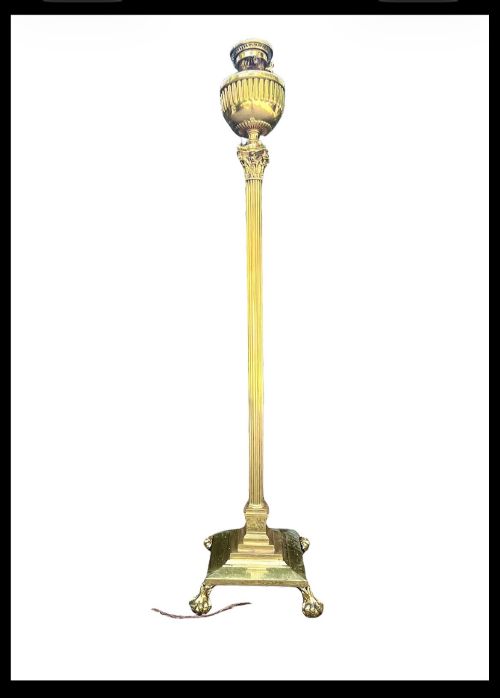
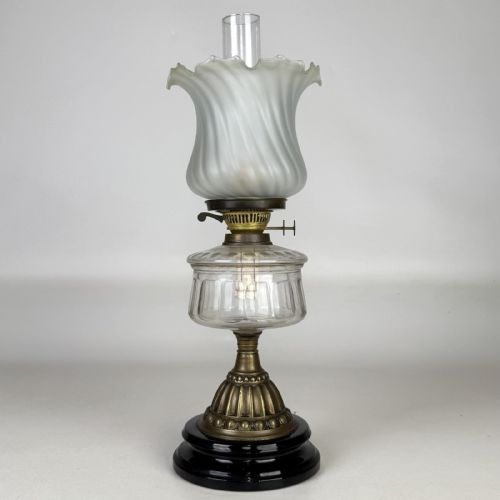
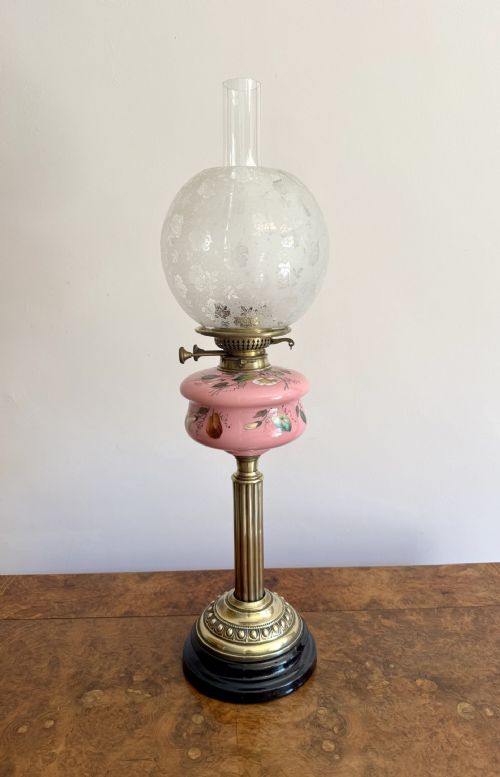
An antique font lamp is primarily a table oil or paraffin lamp designed during the Victorian and Edwardian periods, typically featuring a distinct fuel reservoir mounted on a sturdy metal or ceramic base. You will frequently encounter brass and glass combinations on this page, often paired with matching shades and decorative columns.
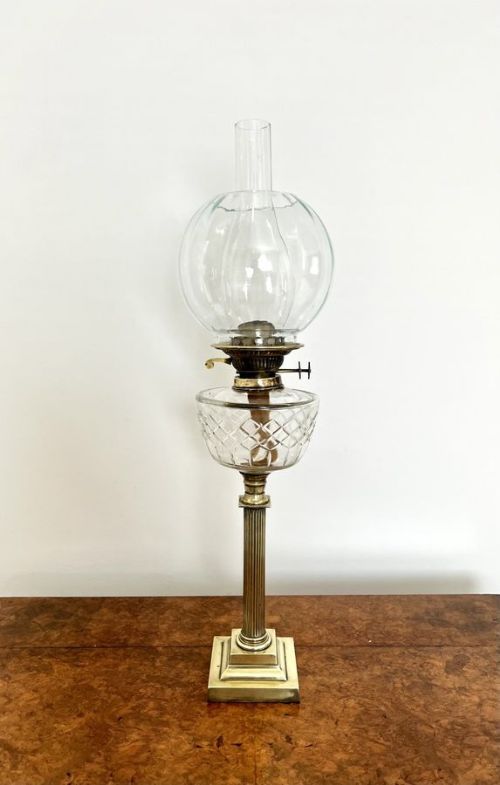
The objects span from the 1860s through to the early twentieth century, showing a clear evolution in domestic lighting styles. Most examples rely on heavy brass bases, sometimes with telescopic mechanisms or Corinthian column detailing, supporting vibrant glass vessels.
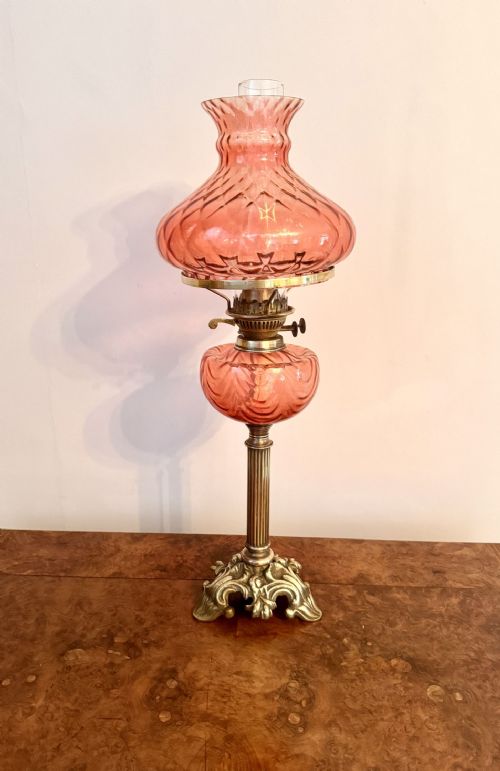
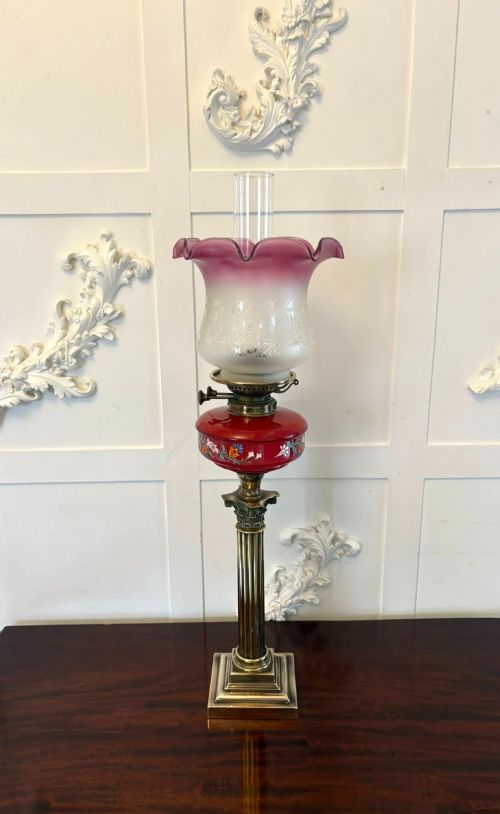
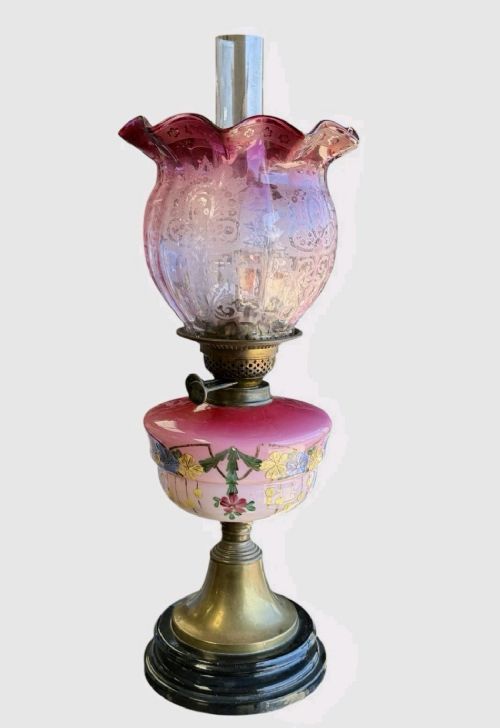
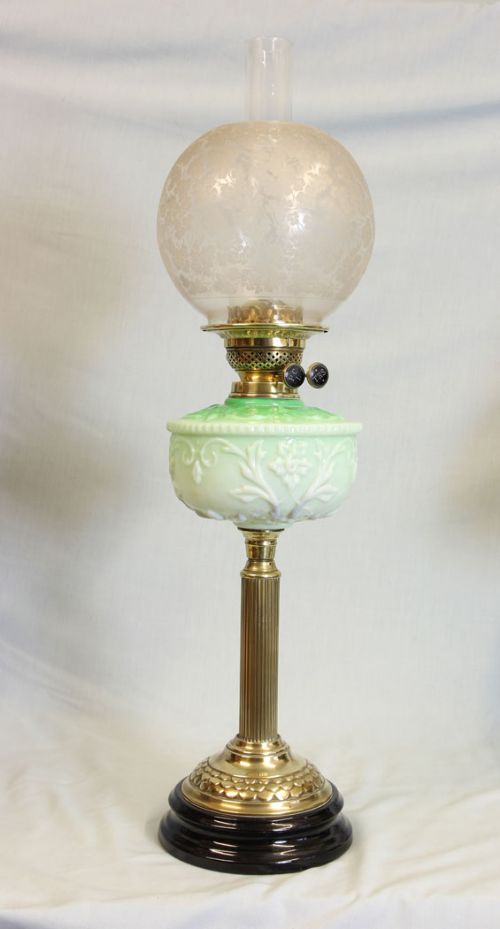
Coloured glass plays a central role in these pieces, with cranberry, blue, pink, and green fonts appearing regularly alongside hand-painted or etched shades. These lamps represent a period when functional household items doubled as ornate parlour decorations.
How they were made
Makers constructed these lamps using durable metals such as brass for the structural columns and bases, providing the necessary weight to support the upper weight of the oil reservoir and shade. Many columns feature classical architectural details like Corinthian orders cast into the metal.
The oil fonts and shades utilise specialist glassmaking techniques, notably cranberry glass and milk glass, alongside hand-painted enamel decoration and deep cutting. Metalwork and glass components were joined securely to contain paraffin safely during use.
Antique Font Lamp Retail Price Guide 2026
Typical asking prices for font lamp among the pieces listed under this phrase on Sellingantiques today, from the lower quarter to the upper quarter. They describe what is for sale here now, not the wider market.
Some Victorian households relied on telescopic brass columns so the light could follow the knitting as daylight faded.
What varies in quality
Quality in these lamps rests on the heft of the brass casting and the depth and clarity of the glass font and shade. Better examples incorporate substantial architectural columns or fine cut glass rather than plain pressed vessels.
Young's
The Antique Font Lamp Glossary
- Cranberry glass
- A rich red-pink transparent glass produced by adding gold chloride to the molten batch. It appears frequently in Victorian table lamps.
- Corinthian column
- An architectural column style featuring ornate, acanthus-leaf capitals often replicated in the brass stems of nineteenth-century lamps.
- Telescopic lamp
- A lighting piece designed with an adjustable central shaft that allows the overall height of the lamp to be raised or lowered.
Antique Font Lamp: Frequently Asked Questions
How do I date an antique font lamp?
Dating relies on examining the materials, burner types, and overall style of the brass and glass components. Victorian examples often display heavier brass castings and rich cranberry glass, while later pieces shift towards Edwardian aesthetics.
Looking closely at the construction methods and any stamped burner manufacturer names helps narrow the decade of production between the 1860s and the early twentieth century.
Were these lamps used for lighting?
These pieces served as primary indoor lighting sources before widespread electricity, burning paraffin or oil to illuminate Victorian and Edwardian sitting rooms.
Today, they are typically preserved as decorative objects or cautiously converted for modern electrical use while retaining their original burners and shades.
How do I safely clean a glass font?
Cleaning requires warm water and mild soap, avoiding harsh abrasives that might damage hand-painted enamel or delicate etched surfaces on the glass. Removable fonts should be detached carefully from their brass bases before washing.
Ensuring the glass is completely dry before reassembly protects both the historic material and any metallic collars or fittings.
Can I use modern oil in these lamps?
Burning modern paraffin requires checking the condition of the internal wick mechanism and ensuring the glass font has no hidden cracks or structural flaws. Many collectors choose to display them unlit to preserve the original components.
If you intend to burn oil, consult a specialist to inspect the burner and collar assembly for secure containment.