



Antique Folk Landscape
These antique folk landscape pieces capture unpretentious rural views and local scenes through the eyes of untutored painters and makers.
Antique Folk Landscape
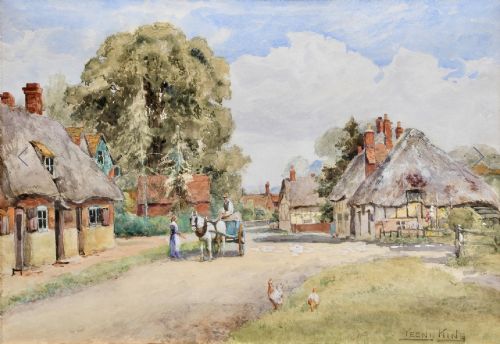
When you search for antique folk landscape, you encounter an array of provincial oil paintings, topographical views, and rural street scenes created outside the academic tradition. The examples appearing here span from the eighteenth century through the twentieth century, bringing together Georgian and Victorian works.
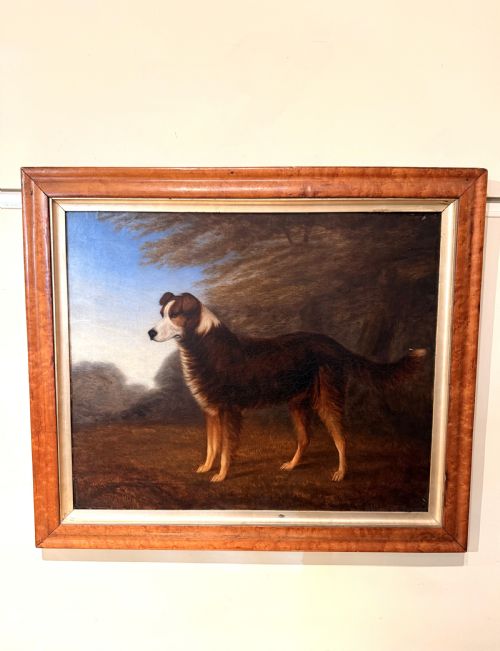
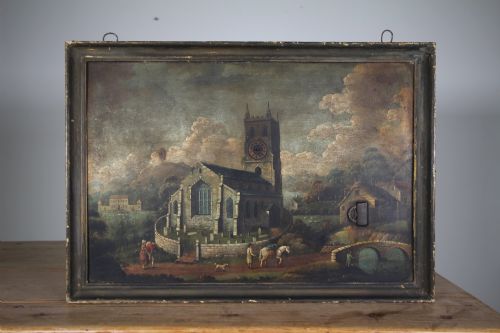
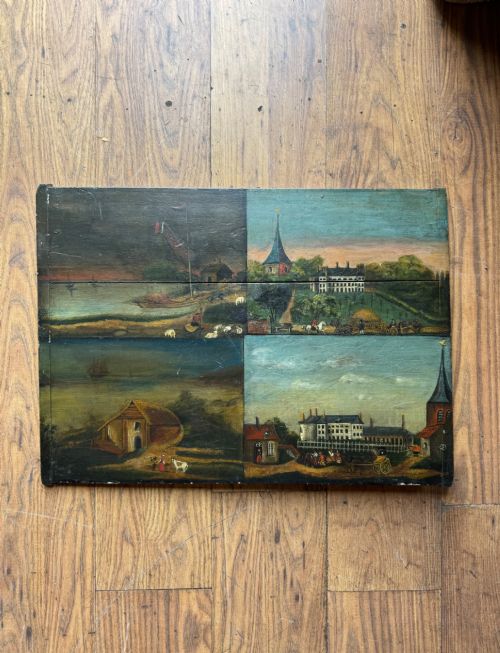
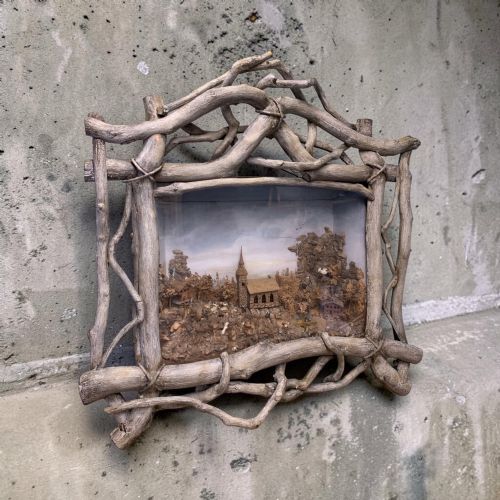
Most pieces take the form of oil paintings on canvas, board, or tin, alongside dimensional creations like dioramas and slate plaques. These works record local landmarks, country churches, coastal communities, and domestic animals without the strict perspective rules of fine art academies.
The makers of these items worked in regional pockets across Britain and beyond, capturing everyday existence in places such as Staplecross and rural Welsh slate quarries. They offer a direct visual record of past communities rather than the grand visions of court painters.
Materials and construction
Painters applied oil paint directly onto canvas, wood panels, tin sheets, and board, often using whatever supports were readily available locally. These humble materials contribute to the distinct texture and weathered surface quality of each piece.
Three-dimensional works incorporate unexpected local resources such as carved Welsh slate, shells, cork, and twigs to build up layered dioramas and wall plaques. These components reflect the resourcefulness of regional artisans utilising materials found close to home.
Antique Folk Landscape Retail Price Guide 2026
Typical asking prices for folk landscape among the pieces listed under this phrase on Sellingantiques today, from the lower quarter to the upper quarter. They describe what is for sale here now, not the wider market.
The listings span the eighteenth, nineteenth, and twentieth centuries, incorporating oil paint, canvas, wood, Welsh slate, and metal tin.
Assessing quality and character
Quality rests in the conviction of the brushwork and the clarity of the composition, where naive perspective achieves a compelling visual balance rather than clumsy execution. The most successful pieces possess a confident directness that holds the viewer's attention across the entire surface.
The integrity of the original surface, whether unlined canvas or untouched slate, preserves the authentic character of the object. Works that retain their period framing and unaltered pigments stand apart from those with heavy interventions.
Thomas James Lloyd·William Shayer·James G. Faulds
The Antique Folk Landscape Glossary
- Naive art
- Visual expression created by artists without formal academic training, often characterised by flattened perspective and intense local colour. This approach prioritises direct observation and narrative storytelling over academic rules.
- Topographical painting
- A work that depicts a specific real-world location with local accuracy, often recording buildings, bridges, and topography before modern development. These pieces serve as historical documents of particular towns and countryside.
- Diorama
- A three-dimensional scene built up from physical objects, such as shells, cork, and twigs, arranged within a framed box or backing. This technique creates physical depth in domestic wall art.
- Primitive
- A descriptive term for early or provincial art created outside mainstream stylistic conventions, showing bold simplification of form. It highlights the unpretentious nature of the craftsmanship.
Antique Folk Landscape: Frequently Asked Questions
What is antique folk landscape?
Antique folk landscape encompasses unpretentious paintings and dimensional works depicting rural scenes, villages, and coastal views created by untutored makers.
These pieces emphasise regional character and direct storytelling over formal academic rules.
How were these paintings displayed?
Many of these works hung in domestic parlours, rural cottages, and provincial homes as everyday decoration rather than grand salon art.
Dimensional pieces like shadow boxes and slate plaques served as striking wall focal points in nineteenth-century interiors.
How do I date a folk landscape?
Dating relies on examining the materials, such as canvas types, board construction, and the style of framing or pigments used by the maker.
Historical clues within the scene, including clothing styles and architecture, also help narrow down the period of creation.
Are these works signed by artists?
Many pieces remain entirely unsigned because the makers operated outside the commercial art market and academic structures of the period.
When signatures or inscriptions do appear, they often connect the work to specific regional painters or local topographical subjects.