




Antique Folk Art Glass
Antique folk art glass gathers hand-blown vessels, bottled dioramas, and painted wares carrying the vernacular touch of makers from past centuries.
Antique Folk Art Glass
When you search for antique folk art glass, you encounter eclectic items spanning the eighteenth, nineteenth, and early twentieth centuries. These objects range from decorated bottles and decanters to witch balls and detailed maritime dioramas housed within glass.
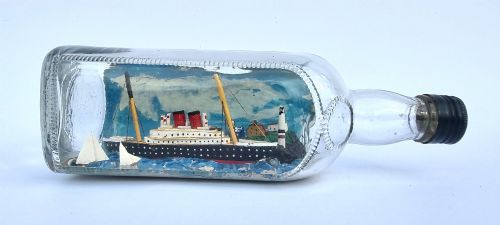
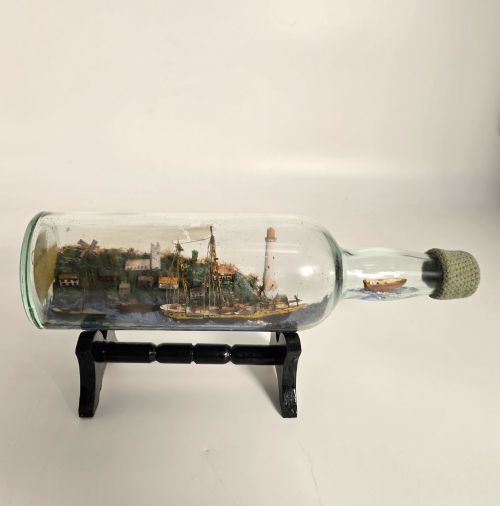
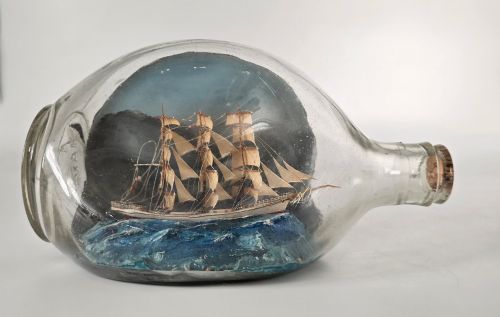
The most common examples on this page are ships in bottles and glass vessels displaying enamel paint or reverse painting techniques. Maritime pieces from the Victorian era sit alongside Georgian and continental European flasks.
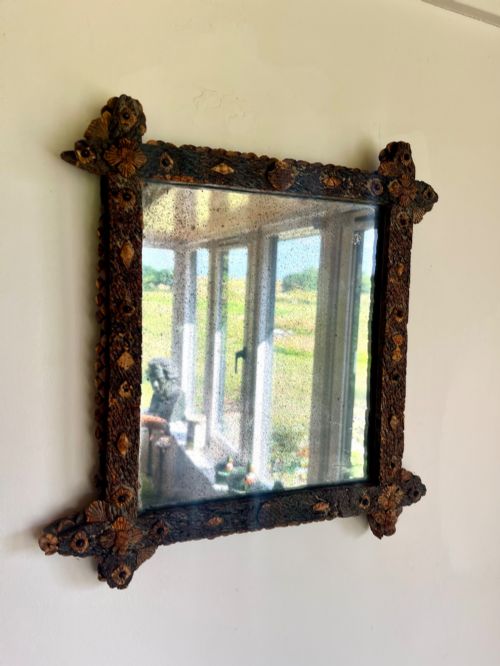
Other domestic and decorative items, such as mirrors framed in cork or leaded windows with figurative designs, broaden the scope of this vernacular material. Each piece reflects the independent skill of makers working outside formal academic traditions.
Materials and construction
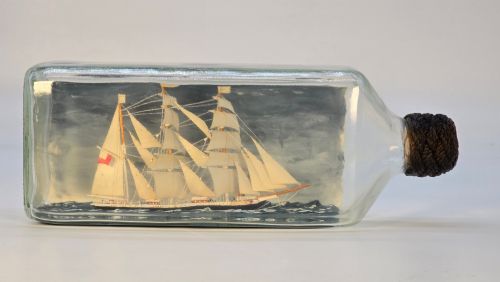
Makers utilised clear and coloured glass as the primary medium, frequently combining it with wood, cork, paint, and enamel. Inside bottles, components carved from wood and rigged with thread recreate complex sailing vessels and religious scenes.
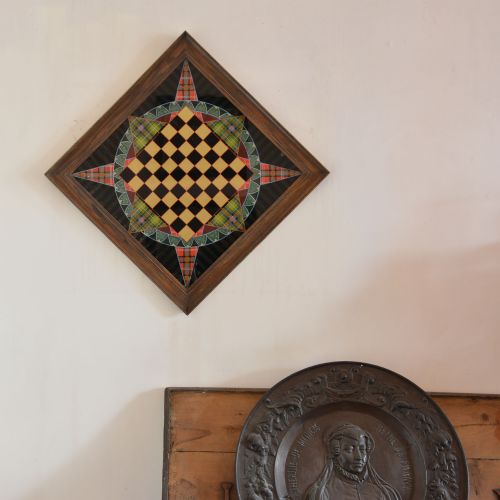
Surface decoration relies on polychrome enamel painting, reverse glass painting, and potichomania techniques to simulate oriental porcelain. Lead came joins panels of glass in windows, while wooden frames utilise cork and paint for textural contrast.
Several bottles manage to house full three-mast sailing ships, proving that patience and tiny fingers defy the laws of spatial logic.
Evaluating quality and execution
Quality in these pieces rests upon the intricacy of internal construction and the stability of the materials over time. Finer bottled dioramas display precise rigging and varied components that suggest patient, skilled handiwork rather than hurried assembly.
The artistic merit of the surface painting separates standard utility vessels from superior decorative examples. Crisp enamel brushwork, well-preserved pigments, and balanced composition elevate painted decanters and reverse glass panels.
The Antique Folk Art Glass Glossary
- Diorama
- A three-dimensional scene enclosed within a case or bottle, often depicting maritime vessels or figurative subjects. These miniature displays require immense patience to assemble through narrow container necks.
- Witch ball
- A spherical glass ornament traditionally hung in windows to ward off evil spirits and malicious witcheraft. Nineteenth-century examples often feature vibrant internal colouration achieved through techniques like potichomania.
- Potichomania
- An interior craft popular in the nineteenth century involving the application of coloured paper cutouts to the inside of glass vessels. The finished object mimics the appearance of expensive oriental porcelain.
- Reverse glass painting
- An artistic technique where the image is painted directly onto the back of a glass panel and viewed from the front. This process imparts a glossy, reflective finish to games boards and decorative pictures.
- Whimsey
- An intricate object carved or constructed by hand as a pastime, often by sailors or prisoners of war. These pieces demonstrate high ingenuity using simple materials such as glass, wood, and thread.
Antique Folk Art Glass: Frequently Asked Questions
What is a ship in a bottle?
A ship in a bottle is a maritime diorama built with collapsible masts that are pulled upright using attached threads after insertion through the narrow neck.
Craftsmen, including sailors and prisoners, created these decorative objects during the eighteenth and nineteenth centuries as pastimes or commemorative pieces.
How do I care for antique glass?
Keep delicate glass objects away from direct sunlight and sudden temperature changes to protect painted surfaces and internal cork components.
Dust gently with a dry, soft cloth and avoid chemical cleaners that might damage aged enamels or fragile exterior decoration.
What are witch balls used for?
Witch balls were historically hung in cottage windows to catch negative energy, entrap evil spirits, and protect the household from misfortune.
Victorian examples frequently display bright coloured glass or mirrored interiors designed to mesmerise and deflect harmful influences.
How can I date these pieces?
Dating relies on stylistic clues, the type of glass manufacturing, and accompanying materials like old cork, thread, and wooden mounts.
Victorian maritime scenes and eighteenth-century continental enamelled flasks each exhibit distinct production methods characteristic of their specific eras.