




Antique Folding Board
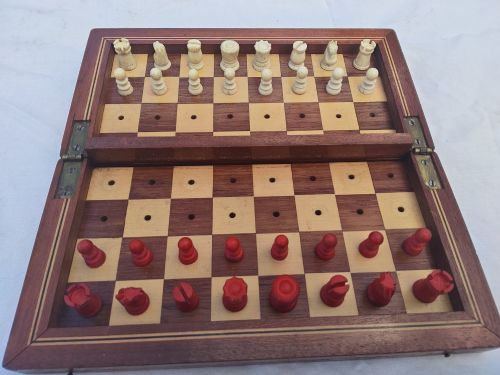
These antique folding board pieces are portable games surfaces and travel sets designed for play on the move.
Antique Folding Board
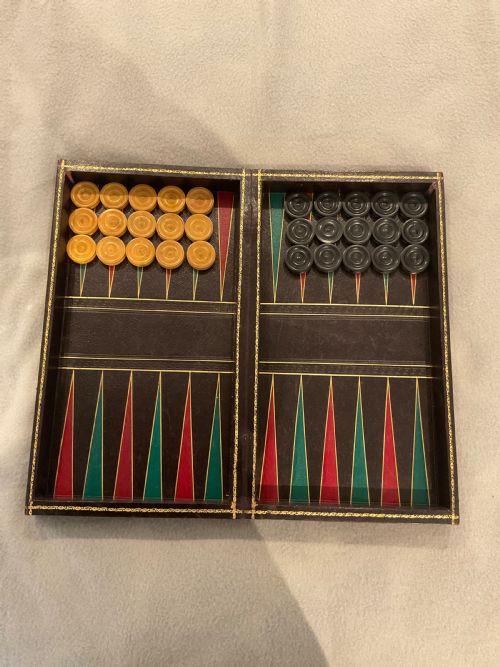
An antique folding board serves travellers and home players alike, offering surfaces for chess, backgammon, and other traditional pastimes. When you search for antique folding board items, you encounter portable leather cases, faux book boxes, and wooden boards dating from the nineteenth and early twentieth centuries.
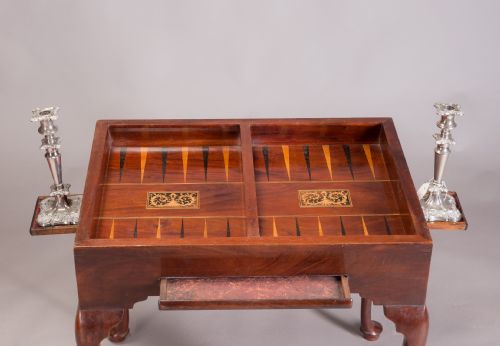
The selection here ranges from compact travelling chess sets with bone pieces to elaborate burr walnut compendiums and leather-bound library boards. Many examples double as decorative storage boxes when closed, folding neatly to protect the pieces stored inside during transit.
How they were made
Wood provides the structural core for these folding boards, utilising timbers such as mahogany, boxwood, and burr walnut. Craftsmen shaped these sturdy bases to withstand frequent opening and closing during travel.
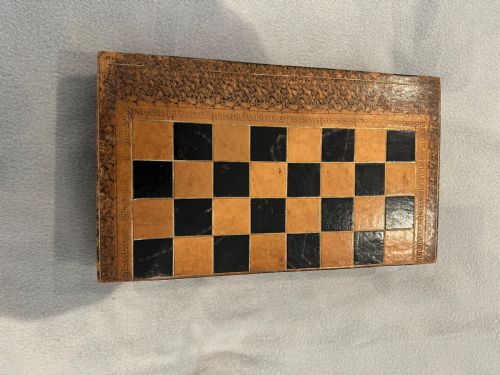
Leather and gilt tool work frequently cover the exterior surfaces, often styled to resemble leather-bound books or library volumes. Interior squares and playing lines utilise inlaid woods, painted finishes, or gold leaf detailing.
Antique Folding Board Retail Price Guide 2026
Typical asking prices for folding board among the pieces listed under this phrase on Sellingantiques today, from the lower quarter to the upper quarter. They describe what is for sale here now, not the wider market.
Several folding boards successfully disguise themselves as innocent library books, ready to spring open into a battlefield of chess.
What varies in quality
The refinement of the materials and the precision of the joinery separate standard items from superior examples. Finely turned bone pieces, intricate mother-of-pearl inlays, and crisp gold leaf tooling indicate higher workshop standards.
Durability of the hinges and the snugness of the folding mechanism dictate everyday usability. Better pieces maintain secure closures and straight wooden panels that do not warp significantly over time.
The Antique Folding Board Glossary
- Compendium of games
- A fitted box containing equipment and boards for multiple different pastimes. These multi-game sets became particularly popular during the Victorian era for household entertainment.
- Staunton style
- A standardised design of chess pieces introduced in the mid-nineteenth century. The pieces feature distinct, highly recognisable shapes that remain the tournament standard today.
- Burr walnut
- A prized wood veneer showing intricate, swirling grain patterns caused by tree growths. Cabinet makers utilised this timber on luxury boxes and games compendiums.
- Faux book
- An object constructed to resemble a leather-bound volume when closed. Makers employed this decorative disguise for games boards to sit neatly on library shelves.
Antique Folding Board: Frequently Asked Questions
What games do these boards support?
These folding boards primarily support chess and backgammon, frequently combining both games into a single portable case with a dual-sided interior.
Some examples also accommodate bagatelle, draughts, or form part of larger compendiums featuring multiple pastimes.
How do I date a folding board?
Dating relies on material combinations, construction methods, and stylistic cues such as Victorian or Edwardian tooling. Faux book designs and specific wood choices like burr walnut point to nineteenth-century production.
Hardware such as brass hinges and the style of accompanying bone or turned wooden pieces provide further chronological markers.
Were these boards meant for travel?
Many examples were specifically engineered for portability during journeys by train, carriage, or ship. Travelling sets often integrated locking mechanisms or secure compartments to keep pieces anchored.
Other larger library boards stayed in fixed rooms, styled as leather-bound books to blend with academic decor.
How should I care for leather boards?
Leather-bound surfaces and gilt tooling require protection from direct sunlight and excessive dryness to prevent cracking. Gentle dusting with a dry cloth maintains the finish without harming the delicate gold leaf.
Wooden components benefit from stable indoor humidity and minimal exposure to moisture.