






Antique Floral Suzani
An antique floral suzani brings hand-embroidered Central Asian artistry into a room, offering rich silk motifs on cotton or silk grounds.
Antique Floral Suzani
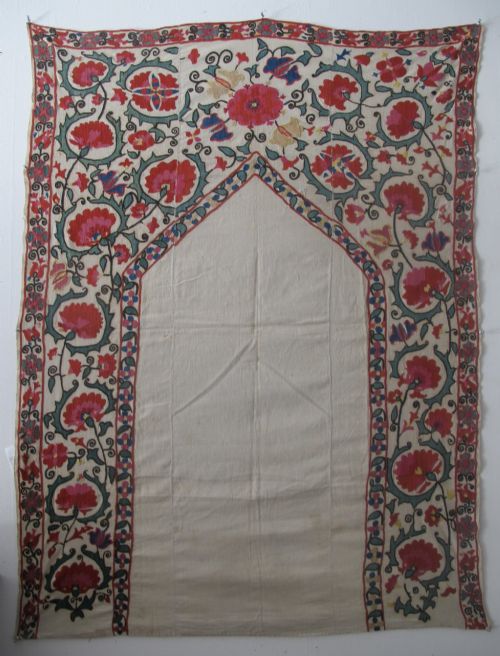
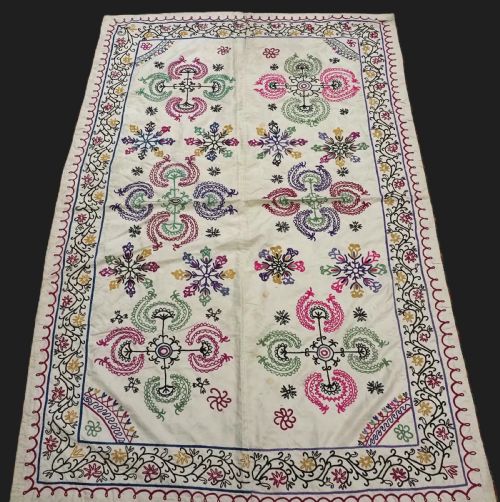
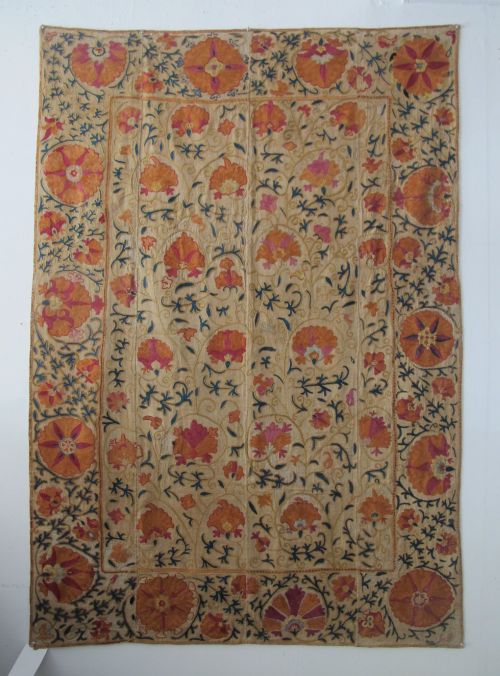
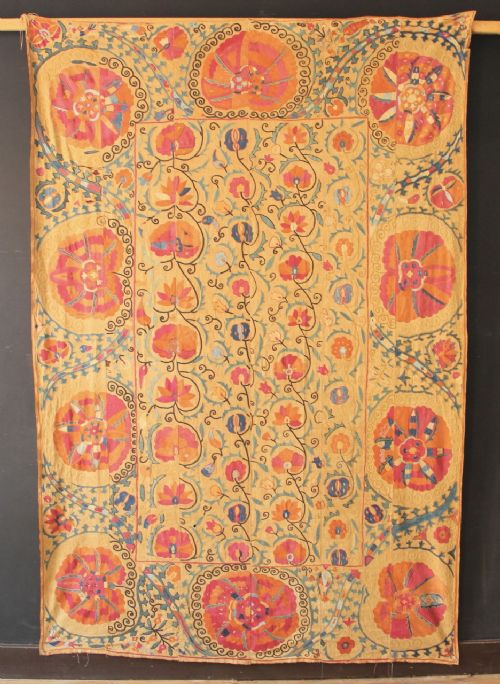
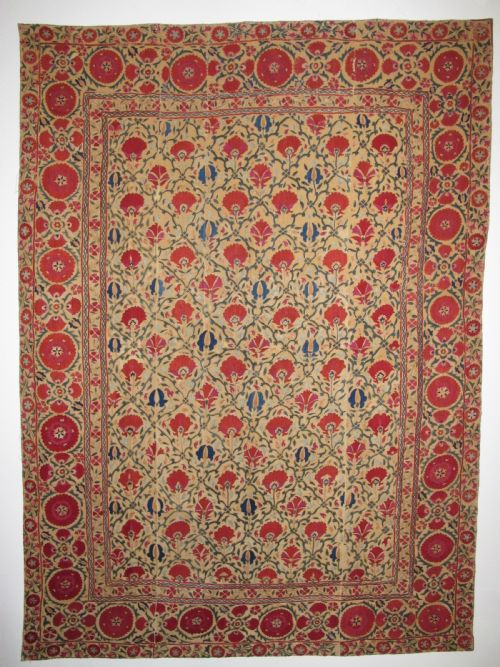
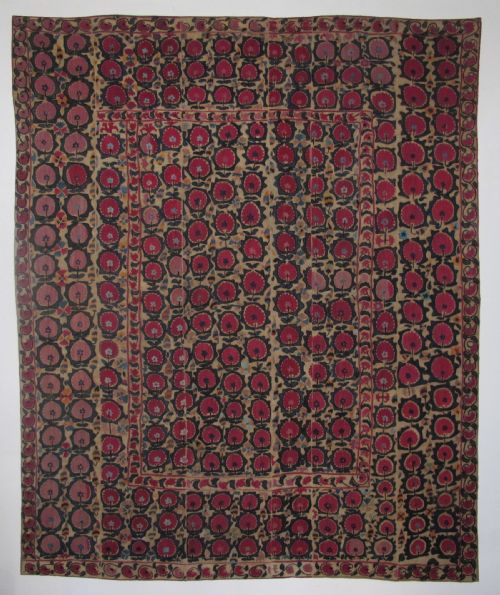
An antique floral suzani is a traditional embroidered textile originating from Central Asia, primarily created in regions such as Uzbekistan with influences from Bokhara, Samarkand, and Shakhrisabz. These pieces function as wall hangings, covers, and decorative panels, showcasing rich botanical motifs.
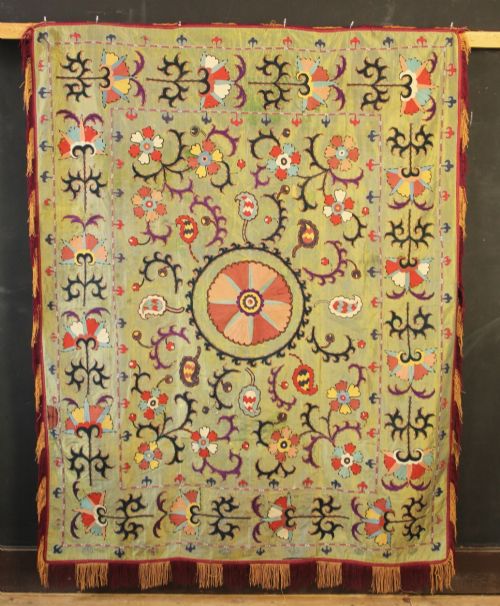
The versions most commonly met on this page date from the nineteenth century through to the early twentieth century, spanning periods from roughly eighteen hundred to nineteen hundred and thirty. They appear in various formats, including larger medallion variants, prayer formats, and smaller nim sizes.
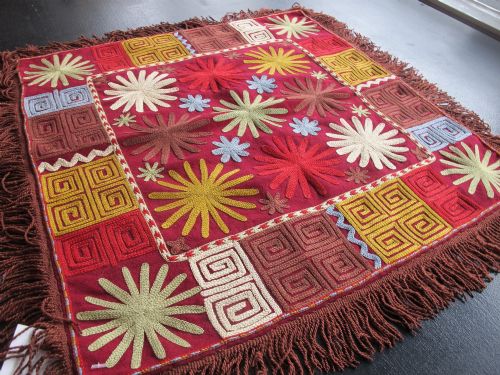
Makers utilised specific regional designs, resulting in pieces associated with Lakai, Tajik, and Uzbek traditions. The visual language relies heavily on floral patterns and traditional Central Asian folk art motifs worked across various textile grounds.
Materials and construction methods
Needlework forms the core of these textiles, executed using vibrant silk thread for the detailed embroidery. Artisans worked these threads onto woven foundations of cotton, silk, or wool, and occasionally velvet.
Ground fabrics vary from red or yellow cotton grounds to fine silk grounds, supporting dense surface stitching. The interplay between the silk embroidery and the supporting textile ground defines the visual texture of each panel.
Antique Floral Suzani Retail Price Guide 2026
Typical asking prices for floral suzani among the pieces listed under this phrase on Sellingantiques today, from the lower quarter to the upper quarter. They describe what is for sale here now, not the wider market.
Some nineteenth century artisans embroidered tiny architectural doors into their floral patterns, presumably just in case visiting mice wanted a quick exit.
Evaluating quality and execution
The distinction between tiers of work rests on the fineness of the needlework and the complexity of the design layout. Dense silk embroidery executed with precise control marks the upper tier of execution.
Harmony of colour choice and the intricacy of regional patterns, such as architectural elements or large medallion variants, distinguish individual pieces. The integrity of the ground fabric and the preservation of the silk thread density guide an assessment of overall execution.
The Antique Floral Suzani Glossary
- Suzani
- A type of embroidered Central Asian textile panel traditionally made in Uzbekistan as part of a bride's dowry. The word derives from the Persian term for needle.
- Nim
- A smaller format version of a suzani, often measuring roughly half the dimensions of a full-scale wall hanging. These compact panels share the same embroidery techniques.
- Bokhara
- A historic city and regional centre in Uzbekistan known for producing distinctive embroidered textiles. Pieces from this area often display specific floral and architectural motifs.
- Lakai
- A Central Asian tribal group whose embroidery is characterised by bold, dynamic geometric and floral designs. Lakai work often employs distinct colour combinations and smaller formats.
Antique Floral Suzani: Frequently Asked Questions
How were suzanis used historically?
These textiles served primarily as ceremonial hangings, wall decorations, and functional covers within traditional Central Asian homes. Families created them to mark significant life events, often incorporating them into dowries.
They were displayed on interior walls or draped over furniture and bedding. Their scale ranged from intimate nim sizes to large wall panels designed for prominent display.
How do I care for an antique textile?
Protect the fabric by keeping it away from direct sunlight, which can fade the natural silk threads and cotton grounds. Gentle vacuuming through a mesh screen can help remove surface dust without disturbing the embroidery.
Professional textile conservation is recommended for any cleaning needs. Mounting should be handled carefully to distribute the weight evenly across the entire panel.
What defines a nim suzani?
A nim suzani is simply a smaller version of the standard wall hanging, usually produced in a reduced scale. These pieces offer the same level of silk embroidery within a more compact footprint.
They suit smaller wall spaces while maintaining the traditional floral and medallion motifs found in larger examples.
Where were these textiles made?
Production was centered in historical regions of Central Asia, notably across modern-day Uzbekistan in cities and areas like Samarkand, Bokhara, and Shakhrisabz. Different towns and tribal groups developed distinct design vocabularies.
Workshops and nomadic groups such as the Lakai contributed specific regional variations in palette, ground material, and stitch density.