



Antique Floral Ewer
An antique floral ewer is a decorative pouring vessel adorned with botanical motifs, sought after for its sculptural form and hand-painted detail.
Antique Floral Ewer
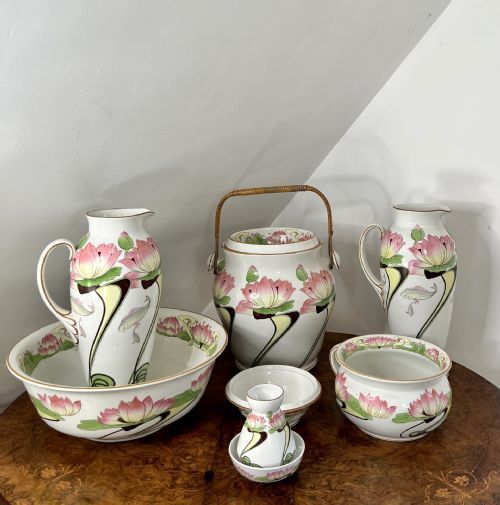
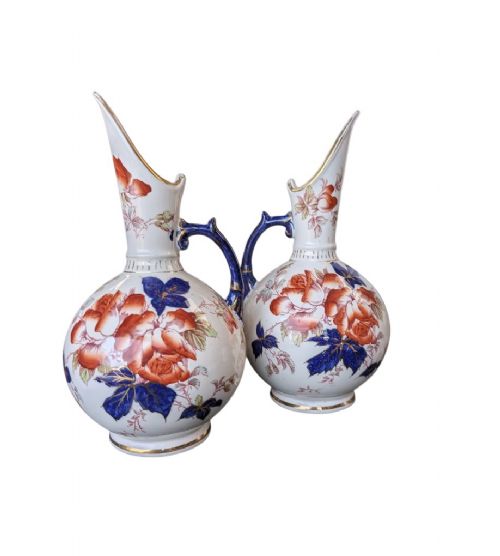
An antique floral ewer is a pitcher-form vessel originally designed for display or washing, though many surviving examples function purely as decorative ornaments. When searching for an antique floral ewer, buyers most frequently encounter porcelain and pottery pieces originating from the Victorian, Edwardian, and Art Nouveau periods. These objects range from cabinet-sized wine ewers with elaborate handles to large wash-set pitchers intended for domestic chambers.
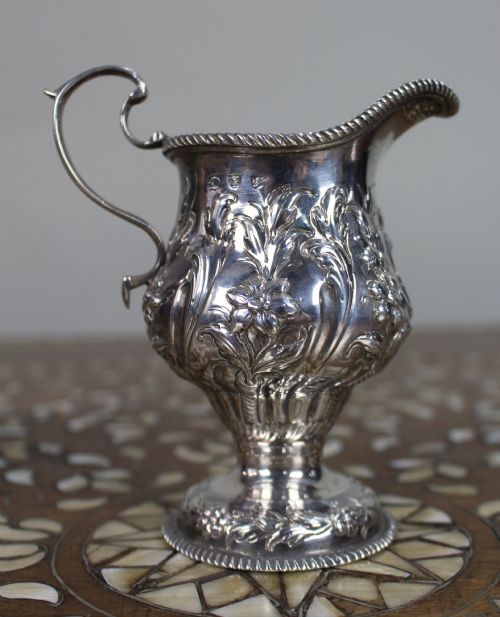
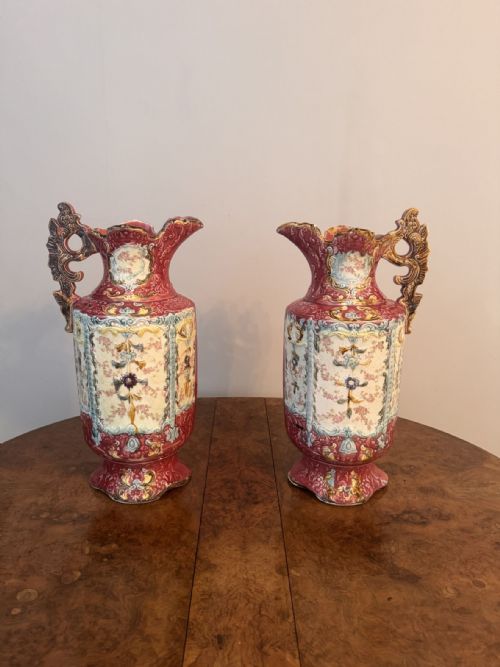
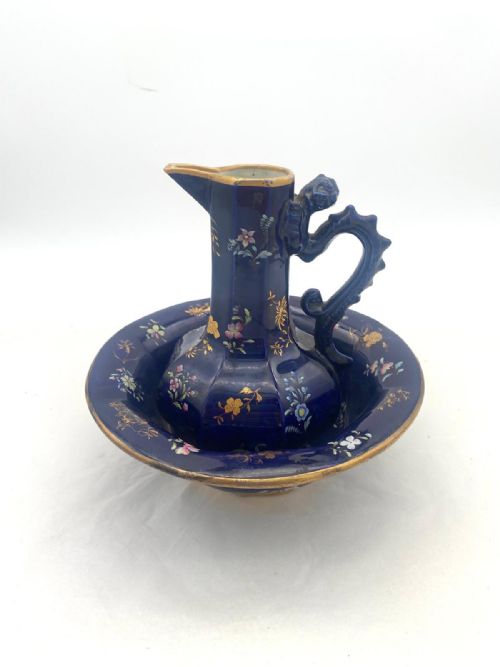
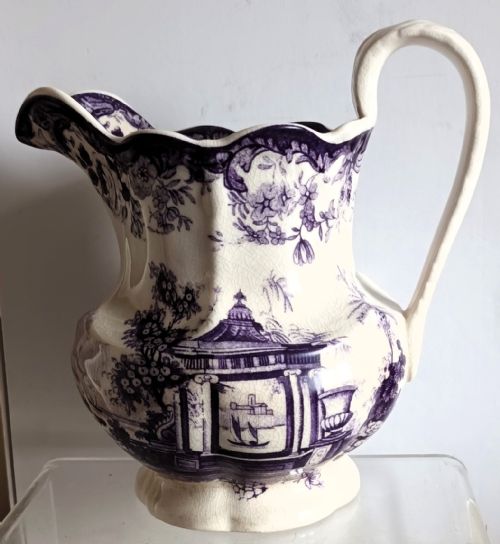
The inventory on this page spans several centuries, touching upon 18th-century porcelain cream jugs as well as massed groups of late 19th-century ceramic ware. Botanical decoration dominates the surface ornament, appearing as transfer-printed magenta patterns, hand-painted blush ivory panels, and raised floral relief designs. Forms include bulbous cleft jugs, pedestalled vessels, and matching basin sets produced by major English and continental potteries.
How they were made
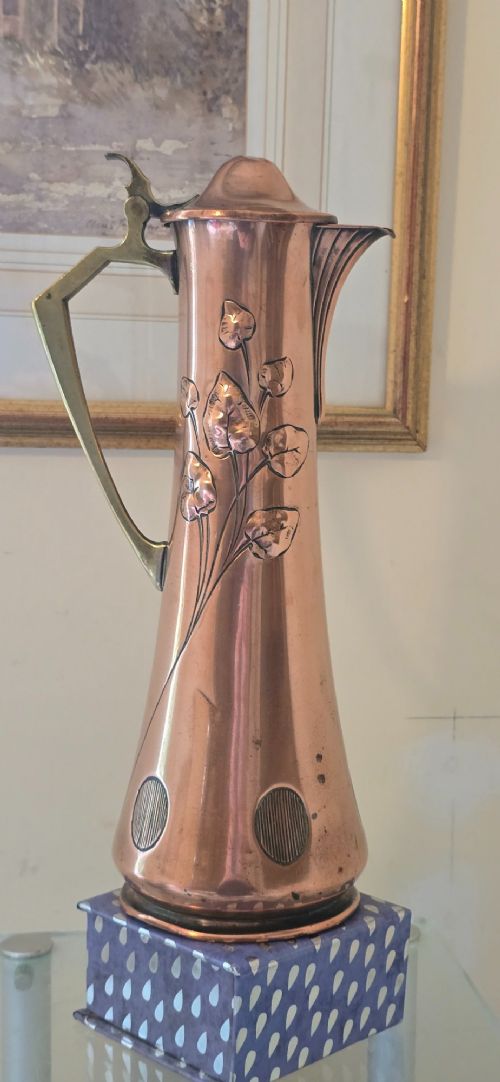
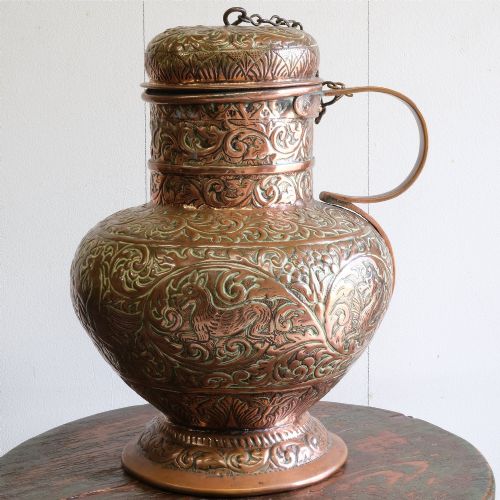
Makers of the period utilised ceramic bodies such as porcelain, earthenware, and ironstone, shaping them via mould-pressing or throwing before applying intricate glazes. Surface decoration relied heavily on hand-painting, transfer-printing, and enamelling, often combined with applied gold leaf, gilding, or copper and brass relief work. Metal vessels from this selection demonstrate silversmithing, copper-beating, and silver-plate techniques alongside cloisonné enamelling.
Porcelain ewers frequently underwent multiple kiln firings to set transfer-printed botanical transfers beneath or above the glaze. Artisans added finishing touches through delicate hand-applied enamel highlights, floral encrustations, and contrasting metallic gilding on handles and rims.
Antique Floral Ewer Retail Price Guide 2026
Typical asking prices for floral ewer among the pieces listed under this phrase on Sellingantiques today, from the lower quarter to the upper quarter. They describe what is for sale here now, not the wider market.
The listings show ceramic and metal ewers spanning the 18th, 19th, and early 20th centuries, with notable concentrations in Victorian and Edwardian periods.
What varies in quality
Quality in these vessels rests upon the crispness of the moulding, the dexterity of the hand-painting, and the preservation of delicate surface details like gilding and enamel. Superior examples exhibit finely articulated relief work, balanced proportions, and maker marks that indicate skilled factory production rather than generic output.
The application of botanical motifs dictates much of the visual success of each piece. Fluid, hand-executed floral panels and intact gold leaf elevate certain jugs into cabinet status, whereas standard transfer-printed bedroom ware prioritises utility and robust domestic construction.
Royal Worcester·Doulton Burslem·Minton·Christofle·Coalport
The Antique Floral Ewer Glossary
- Ewer
- A large jug with a wide spout and handle, traditionally used for holding water or wine.
- Blush Ivory
- A ceramic finish developed in the late 19th century featuring a soft, matte cream ground tinted with subtle pink and gold shading.
- Transfer-printed
- A decoration technique where an engraved metal plate transfers a design onto paper, which is then stamped onto the ceramic body before glazing.
- Cloisonné
- An enamelling method where metal wires form small compartments on a surface, which are subsequently filled with coloured paste and fired.
- Gilding
- The application of a thin layer of gold leaf or gold dust to the surface of porcelain, pottery, or metalware.
Antique Floral Ewer: Frequently Asked Questions
What is an antique ewer used for?
Historically, ewers served practical functions for washing hands at the table or pouring water into matching basins during the Victorian toilette. Over time, many evolved into purely decorative cabinet pieces, prized for their sculptural handles and elaborate spouts.
Today, collectors display them on sideboards, mantels, or within vitrines as focal points of interior decoration. Their distinct profiles make them versatile ornaments that contrast effectively against modern or traditional room settings.
How do I identify a Royal Worcester ewer?
Royal Worcester pieces often feature specific factory ciphers, puce or green printed date marks, and distinct decorative schemes like blush ivory or raised floral enamelling. Examining the base helps determine the exact production decade through standard pottery registration numbers.
The potting style typically displays refined neoclassical or Art Nouveau proportions, frequently accompanied by heavy gilding on the handle and rim. Signature body types include the Harper, Empress, and Owen shapes recorded in period catalogues.
Are Art Nouveau ewers different from Victorian ones?
Art Nouveau ewers favour asymmetrical organic lines, whiplash curves, and stylised floral relief designs inspired by natural plant forms. Victorian examples tend towards more symmetrical historic revival styles, including Rococo, Gothic, and classical influences.
Materials also shift slightly, with Art Nouveau makers frequently incorporating mixed metals, copper, brass, and pewter alongside pottery. Victorian pieces lean heavily towards ornate porcelain, bone china, and expansive transfer-printed wash sets.