
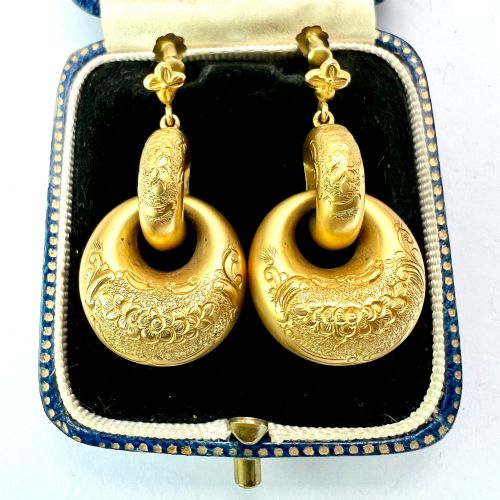


Antique Floral Earrings
These antique floral earrings span Georgian paste to mid-century diamonds, offering botanical motifs set in gold, silver, and platinum.
Antique Floral Earrings
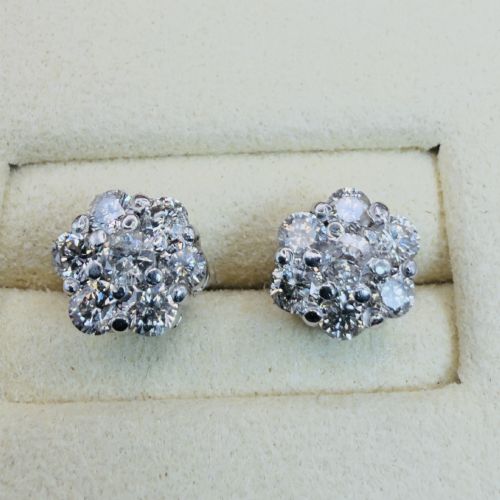
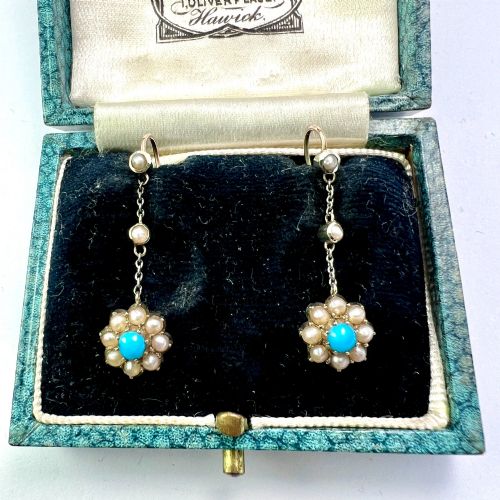
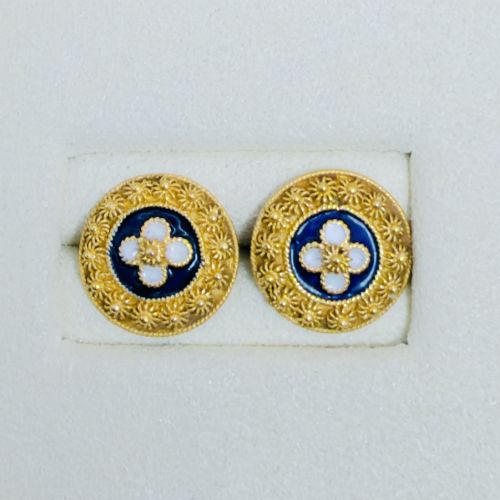
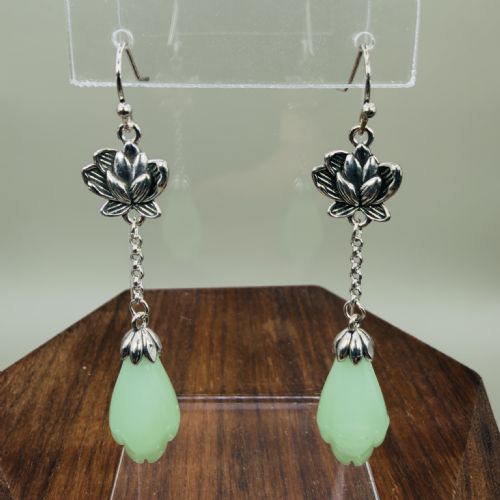
Antique floral earrings encompass shoulder-skimming drops, clusters, and studs shaped around botanical motifs. When you search for antique floral earrings, you encounter designs shaped like flowers, leaves, and scrolling vines.
The pieces appearing across these periods range from early Georgian paste flower settings to intricate Victorian cluster designs and mid-century diamond daisy configurations. Most examples utilise traditional metals combined with precious or semi-precious stones.
Makers across the Georgian, Victorian, Edwardian, and later twentieth-century eras interpreted botanical themes through distinct regional aesthetics. These range from French Art Nouveau creations to traditional British cluster work.
How they were made
The construction of these jewels relies heavily on yellow gold, white gold, silver, and platinum paired with gemstones. Goldsmiths utilised 9ct, 14ct, 15ct, and 18ct gold alloys alongside silver settings to support stones.
Makers secured diamonds, pearls, turquoise, amethysts, pastes, and rubies directly into metalwork using early prong, collet, and bezel techniques. Individual components were soldered or hinged together to create movement in drop and dangle formats.
What varies in quality
The standard of an item rests on the precision of the stone setting and the delicacy of the botanical carving or shaping. Master jewellers achieved superior depth in floral petals and seamless integration of metals.
Quality also appears in the selection and matching of natural gemstones, such as uniform pearls, well-cut diamonds, and vibrant coloured stones like turquoise and amethyst. Better examples retain their original hook, dormeuse, or screw-back fittings.
The Antique Floral Earrings Glossary
- Cluster earrings
- Settings featuring a central stone surrounded by a ring of smaller gems, frequently forming a flower shape.
- Dormeuse
- A type of secure sleeping earring featuring a hinged wire fitting popular in continental Europe during the nineteenth and early twentieth centuries.
- Paste
- Hand-cut glass used as a gemstone substitute in Georgian and Victorian jewellery to mimic diamonds or coloured stones.
- Rose cut
- An antique diamond cut featuring a flat base and a domed crown with triangular facets arranged in a symmetrical pattern.
- Pique
- A method of inlaying gold or silver into tortoiseshell, seen in specific Victorian decorative pieces.
Antique Floral Earrings: Frequently Asked Questions
How do I date antique floral earrings?
Dating relies on examining the metal alloys, stone cuts like rose cut or old mine cut, and the distinct stylistic markers of periods such as Georgian, Victorian, Edwardian, and Art Deco.
Construction methods and backings also provide clear evidence of the decade in which the piece was fabricated.
Are these earrings suitable for daily wear?
Many sturdy gold and diamond configurations withstand regular wear if handled with care, particularly heavier studs and robust dangles. Delicate seed pearl or antique paste designs require gentleness to protect fragile settings and organic materials.
Checking the security of claw settings and closures ensures safe everyday use.
What is the difference between a drop and a cluster?
Cluster earrings focus the design into a compact geometric or floral arrangement that sits directly on or close to the earlobe. Drop configurations incorporate suspended elements that hang below the ear, creating movement.
Some sophisticated designs combine both styles by featuring a floral cluster top with a suspended drop beneath.
How should I clean antique jewellery?
Maintenance depends entirely on the specific materials present in the botanical setting. Diamond and gold pieces tolerate gentle warm soapy water, while pearls, turquoise, and tortoiseshell demand dry wiping to prevent moisture damage.
Harsh chemical dips and ultrasonic cleaners destroy organic gems and historical pastes.