



Antique Floral Desk Lamp
These antique floral desk lamps and related table lights bring period illumination to a room, spanning Victorian oil lamps to Art Deco designs.
Antique Floral Desk Lamp
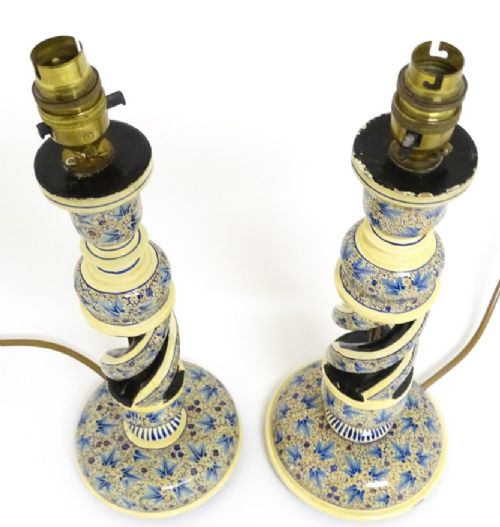
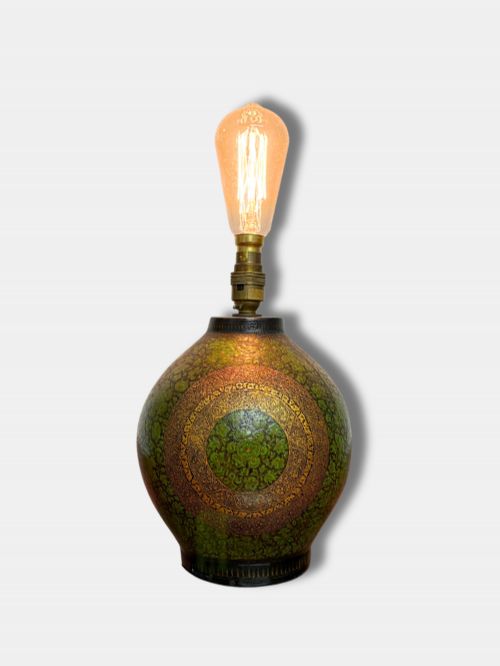
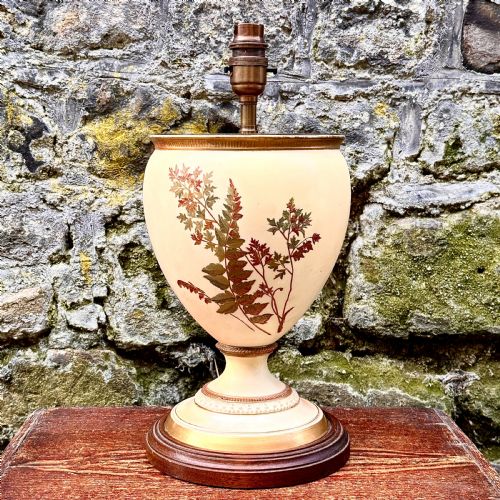
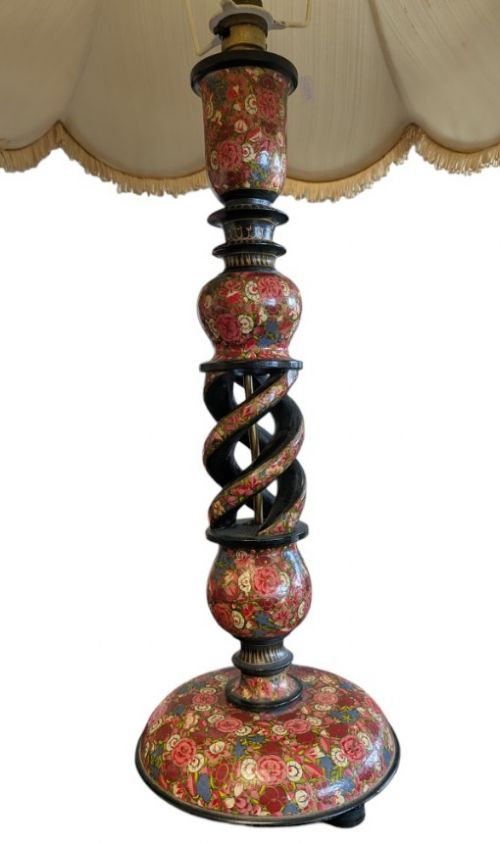
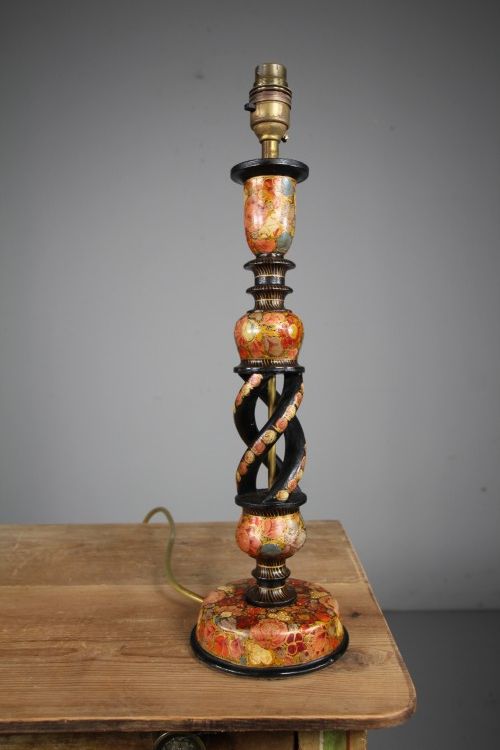
An antique floral desk lamp search covers lighting fixtures and companion pieces from the nineteenth and early twentieth centuries, including Edwardian, Art Nouveau, and Art Deco periods. Many examples originate from Kashmiri workshops, featuring hand-painted floral motifs on various forms produced around nineteen twenty.
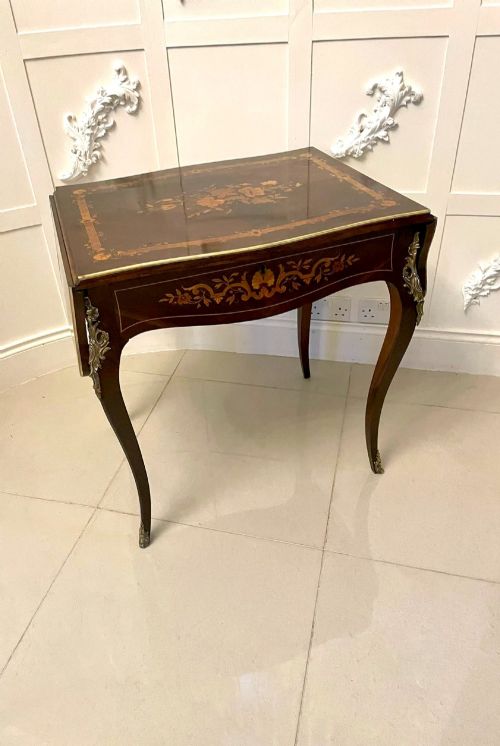
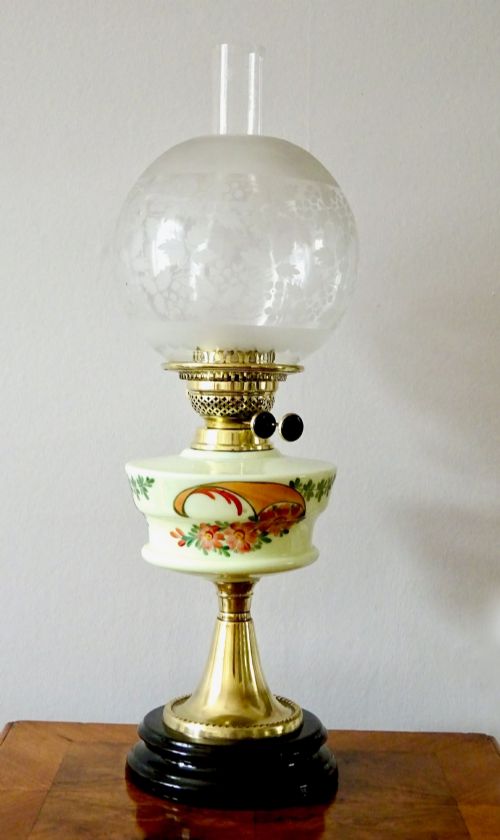
The selection includes converted oil lamps, porcelain and ceramic vessels mounted as lamps, and metal figures paired with glass shades. Alongside direct table lamps, the evidence shows related writing tables and centre tables that served as surfaces for desk illumination.
Materials and construction
The lamps utilise a mix of metals, ceramics, and wood, combining brass, bronze, gilt bronze, wrought iron, and ormolu with porcelain, faience, Cloisonné, and frosted glass. Bases and bodies frequently incorporate rosewood, burr walnut, lacquer, or papier-mâché.
Surface decoration relies on hand-painted floral details, enamel work, and marquetry inlay. Many pieces adapt earlier vases, ginger jars, or oil lamp reservoirs into electrified lamp bodies.
Several Kashmiri lamps from nineteen twenty quietly double as tall torchbearers for your paperwork.
Quality and execution
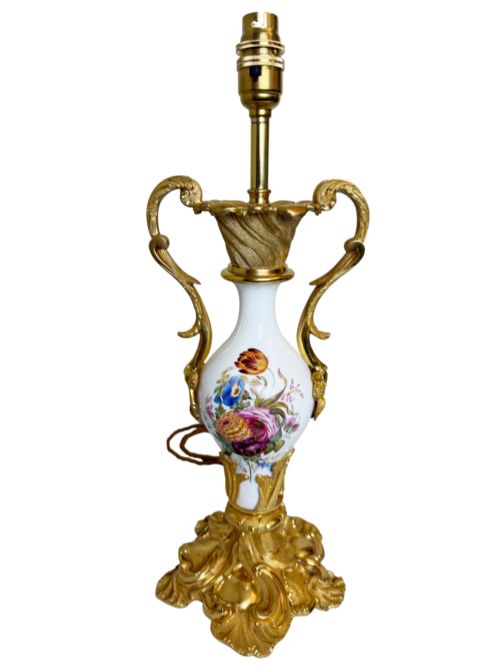
Quality shows in the crispness of hand-painted floral details and the weight and finish of the metal mountings, such as ormolu or cast bronze. Fine examples display careful integration of converted elements, like Chinese porcelain vases or Cloisonné work, ensuring stable proportion and balanced form.
The sophistication of decorative styles, from French Art Deco wrought iron with Daum shades to detailed Kashmiri lacquerwork, determines the standing of an individual piece.
Royal Worcester·Daum
The Antique Floral Desk Lamp Glossary
- Cloisonné
- An enamelwork technique where thin metal wires form raised barriers on a metal surface to hold coloured enamel pastes. This method produces intricate patterns seen on various oriental style lamp bases.
- Ormolu
- Gilt bronze ornamentation applied to furniture and decorative objects. It provides a bright golden metallic finish popular in French nineteenth-century design.
- Faience
- Tin-glazed earthenware decorated with opaque colours. It offers a smooth surface for hand-painted floral motifs on period lamp bases.
- Marquetry
- The art of applying decorative pieces of veneer to a structure to form designs. This technique appears on nineteenth-century rosewood and walnut tables listed alongside the lamps.
Antique Floral Desk Lamp: Frequently Asked Questions
What periods do these lamps come from?
The lighting fixtures span the nineteenth century through the early decades of the twentieth century. Key periods represented include Victorian, Edwardian, Art Nouveau, and Art Deco.
Dates cluster around eighteen sixty to nineteen thirty, encompassing both converted oil burners and early electric fittings.
Are these lamps converted from older items?
Many lamps utilise repurposed vessels, including Chinese porcelain vases, ginger jars, and Cloisonné pieces. These bodies were fitted for illumination during or after their period of manufacture.
Other items began as oil or paraffin lamps before receiving modern electrical wiring.
Where do the hand-painted lamps originate?
A distinct group of table lamps originates from Kashmir, dating to the early twentieth century and the eighteen eighties. These wooden and lacquered pieces feature characteristic hand-painted floral decoration.
European examples often employ French or English ceramic and metal techniques.
How do I match a lamp to period furniture?
Consider the primary materials and stylistic motifs, such as pairing a rosewood marquetry table with a classical bronze or floral-painted lamp. Art Deco wrought iron pieces suit geometric interiors, while porcelain and brass fit traditional desks.
Height and scale relative to the desk or side table guide the choice.