





Antique Floor Standing Cabinet
An antique floor standing cabinet provides grounded storage and display, appearing most often here as a timber corner cupboard from the Georgian and Victorian eras.
Antique Floor Standing Cabinet
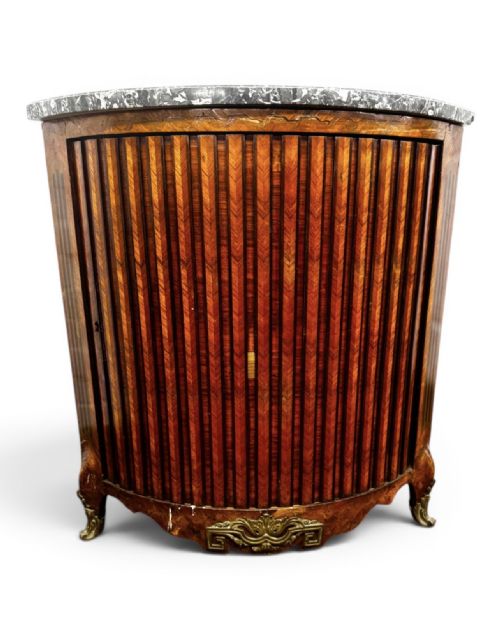
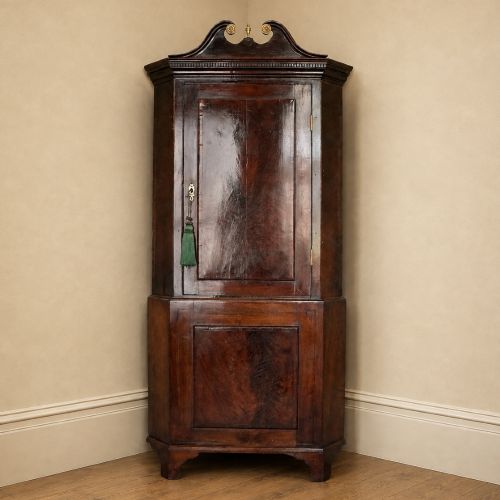
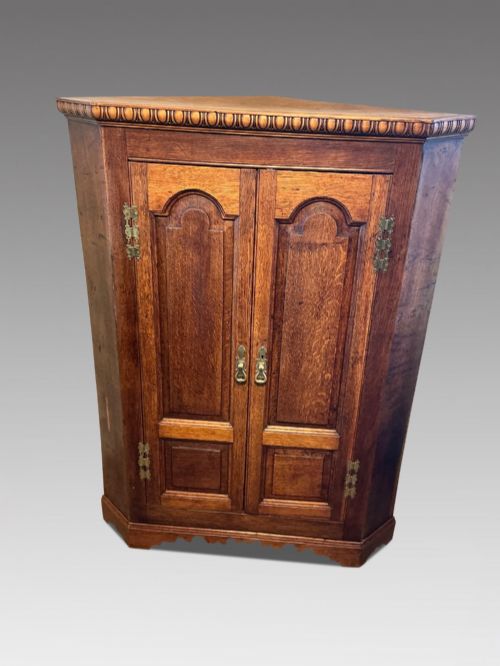
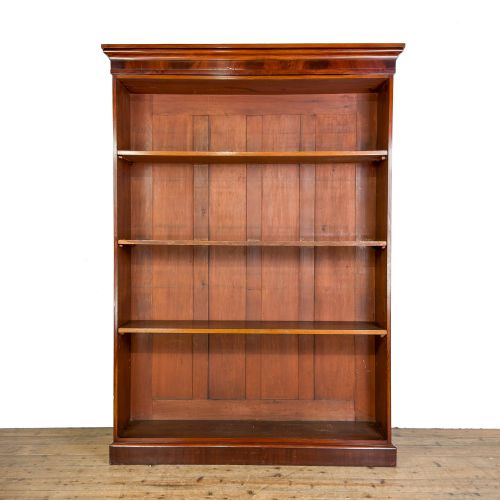
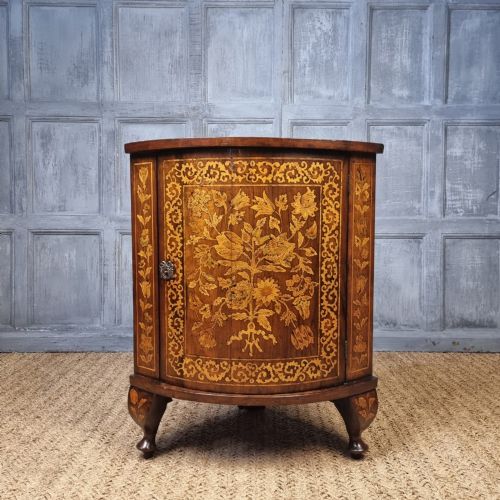
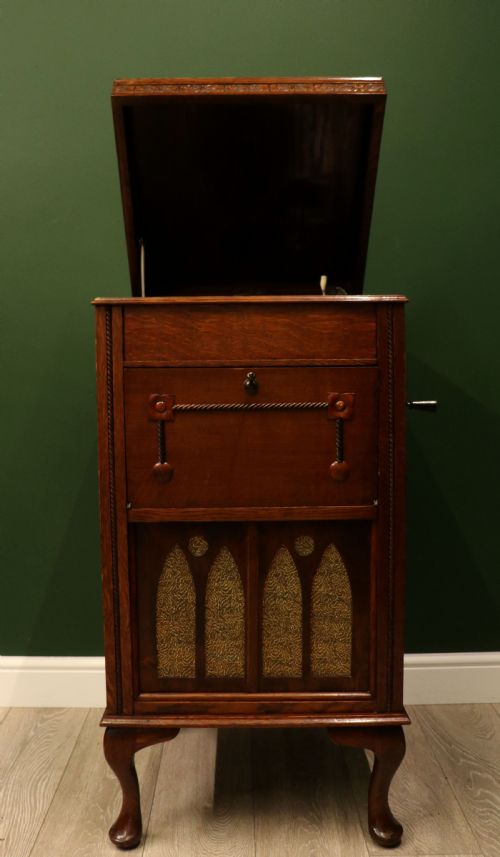
An antique floor standing cabinet is a substantial piece of furniture designed to utilise room corners or wall space for storage and display. The selection here leans heavily towards standing corner cupboards, alongside bookcases, music boxes, and related functional forms.
The pieces span several centuries, with Georgian and 19th Century examples forming the backbone of the selection. Buyers will frequently encounter mahogany and oak constructions, often built in two distinct parts to facilitate movement and placement within domestic interiors.
How they were made
Cabinet makers relied primarily on solid timbers such as mahogany, oak, and walnut, frequently enhanced by decorative veneers like satinwood and fruitwood. Structural integrity relied on traditional joinery, while brass hardware provided functional hinges and locks.
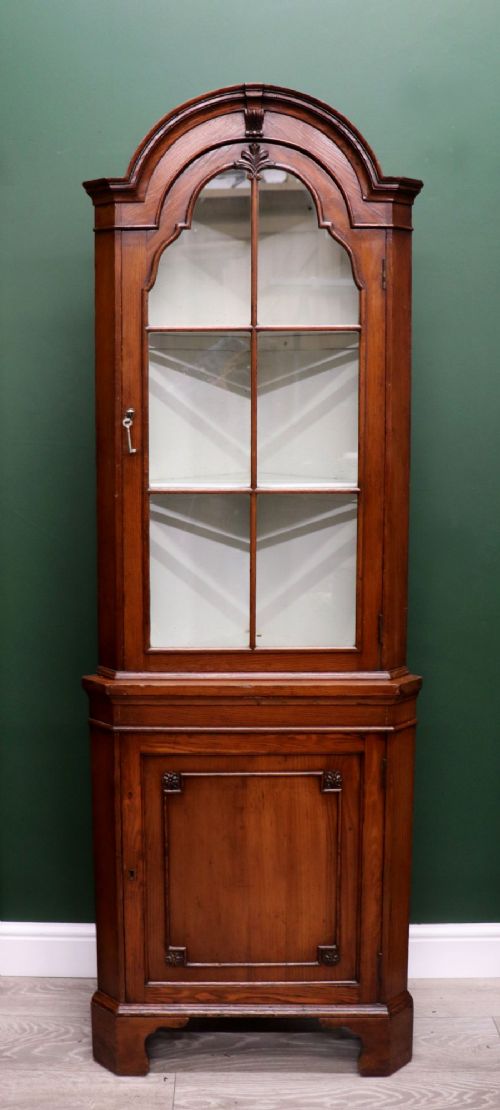
Surface decoration involved meticulous marquetry inlay, marquetry panels, and polished finishes that highlighted the natural grain of the wood. Glass was also integrated into doors for display cabinets and bookcases, requiring precise glazing bars.
Antique Floor Standing Cabinet Retail Price Guide 2026
Typical asking prices for floor standing cabinet among the pieces listed under this phrase on Sellingantiques today, from the lower quarter to the upper quarter. They describe what is for sale here now, not the wider market.
Listings feature woods including oak, mahogany, walnut, satinwood, and yew, spanning the Georgian, Victorian, and Edwardian eras.
What varies in quality
Quality in these cabinets rests upon the selection of timber and the precision of the cabinetmaker's joinery. Superior examples demonstrate finely figured wood grains, crisp marquetry work, and well-fitted doors that maintain their alignment over centuries.
The architectural presence of a piece, such as robust cornice mouldings and well-proportioned paneling, separates standard utilitarian cupboards from finer country house or urban commissions. Original brass fittings and undisturbed structural parts also elevate a piece.
U Phone of Leeds·Lochmanns·Waring and Sons·Chubb
The Antique Floor Standing Cabinet Glossary
- Marquetry
- Decorative veneer work using various coloured woods to create pictorial or geometric patterns on the surface. This technique was often applied to the doors of high-status cabinets.
- Astragal
- A small semi-circular moulding used on glazed cabinet doors to hold individual panes of glass in place. Fine astragals create delicate geometric lattices across the front of a bookcase or display cabinet.
- Cornice
- The ornamental moulding running around the top edge of a tall cabinet. It provides a visual cap to the architectural design of the piece.
- Yew
- A dense, heavily figured timber used by cabinet makers for specific regional pieces. Its rich grain adds distinct character to the finished furniture.
- Two-part
- Construction method where a tall cabinet is built in an upper and lower section for easier transport. This is commonly found in large Georgian and Victorian corner cupboards.
Antique Floor Standing Cabinet: Frequently Asked Questions
How do I place a corner cabinet?
A floor standing corner cabinet fits directly into the 90-degree angle of a room, making efficient use of otherwise dead space. Ensure you measure the wall depth and ceiling height accurately before placement.
These cabinets often come in two stacked sections, which helps when moving them through narrow hallways or up stairs during installation.
What is the difference between oak and mahogany?
Oak is a heavy, durable timber with a prominent grain, commonly associated with earlier Georgian and country house pieces. Mahogany offers a smoother, richer reddish-brown surface that became popular for more formal urban furniture.
Both materials require consistent indoor humidity levels to prevent warping and to keep the cabinet doors hanging true.
How do I date a cabinet?
Dating relies on observing construction methods, timber choices, and stylistic cues such as inlay patterns or cornice designs. Georgian pieces generally feature clean classical proportions, while Victorian versions often incorporate heavier mouldings and darker finishes.
Checking the interior secondary woods and backboards also provides clues about the period of manufacture.
Can these cabinets hold heavy books?
Many of these pieces, particularly the bookcases and large corner cupboards, were built to store heavy volumes and household goods. The internal shelving is typically supported by fixed wooden glides or robust brackets.
It remains wise to check the condition of internal shelf supports before loading them with a heavy library.